What Are the Largest Private Equity Funds?


Updated on 10 August 2026
The world's largest private equity funds are Blackstone ($1.27 trillion under management), Apollo Global Management ($938 billion) and KKR ($758 billion), followed by Carlyle, TPG and Ardian, the leading French firm with $200 billion under management. This article breaks down the 2026 ranking, the main strategies and how to invest through Finary One.

- The global ranking is led by US firms (Blackstone, Apollo, KKR), whose combined assets exceed $3.7 trillion.
- In France, Ardian dominates the sector by far with $200 billion under management, ahead of Eurazeo (€40 billion) and the public player Bpifrance.
- Direct access to these funds remains reserved for institutional investors; individuals go through dedicated vehicles such as FCPR (a French venture-capital investment fund), FPCI (its professional-investor equivalent), or a wealth-management offering.
- Finary One gives access to funds managed by these firms from €1,000,000 in investable assets, through a dedicated private manager.
- Investing in private equity involves a long horizon of 7 to 10 years and a risk of capital loss, with no guarantee of future performance.
Private Equity Decoded: Why Look at the Largest Funds?
A Simple Definition of Private Equity and Its Key Mechanisms
With private equity, you invest in unlisted companies, far from the stock markets. Instead of buying listed shares, you become a partner in a promising company before it becomes known to the wider public.
Private equity funds are managed by specialised firms. Their role goes beyond investing: they take an active part in the strategy and management of the companies they back. The investment horizon typically runs from 3 to 10 years.
The Main Private Equity Investment Strategies
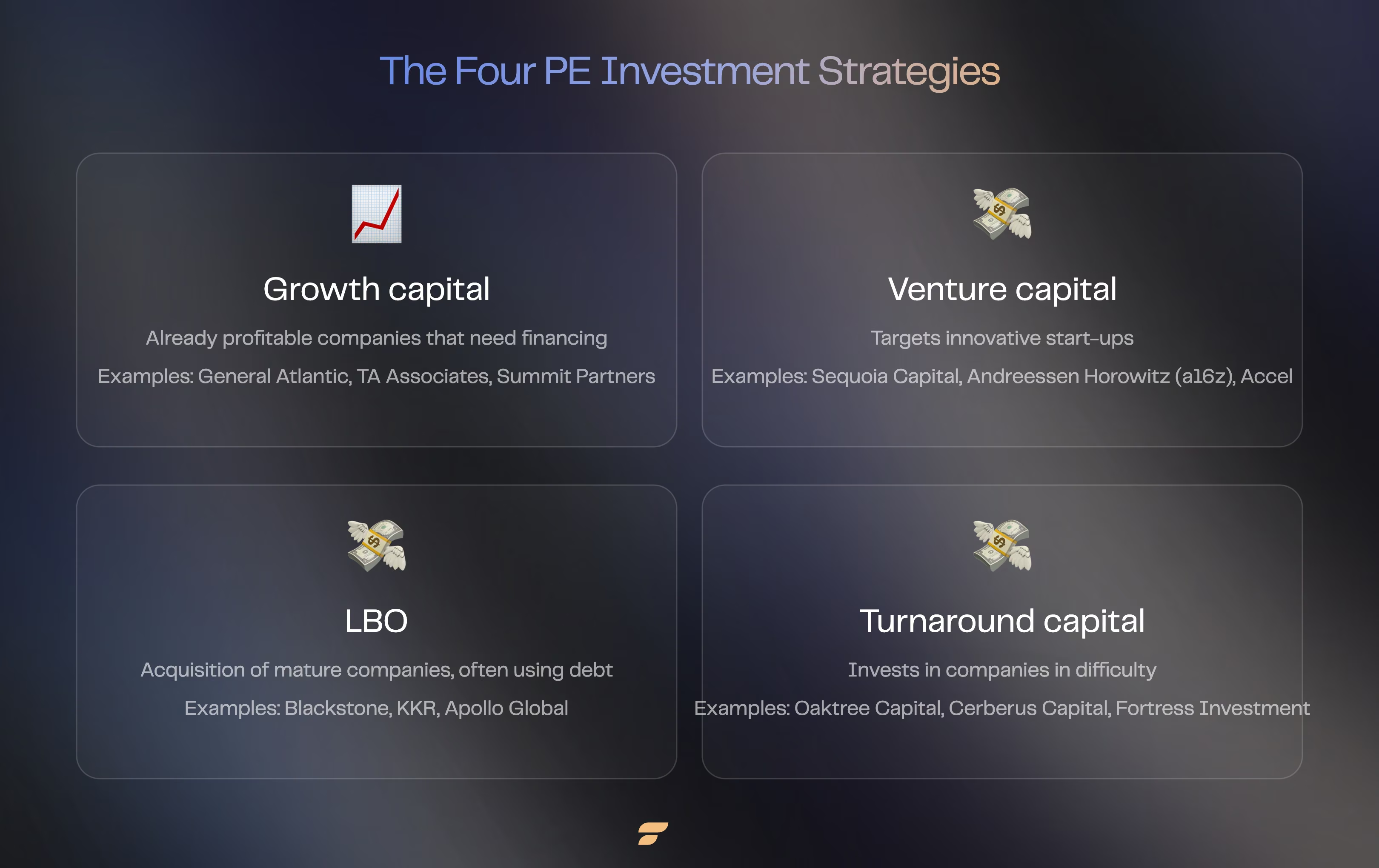
- Venture capital (VC): targets innovative start-ups, often before they turn a profit.
- Growth capital: aimed at already profitable companies that need funding to accelerate their growth.
- Leveraged buyout (LBO): the acquisition of mature companies, often using financial leverage.
- Turnaround capital: invests in companies in difficulty to restructure them.
What Is the 2026 Ranking of the World's Largest Private Equity Funds?
The 2026 global ranking is led by the American firm Blackstone, with $1.27 trillion in assets under management, followed by Apollo Global Management and KKR.
Who Are the Global PE Giants? The Ranking by AUM
Here is an overview of the leading funds, ranked by assets under management:
| Fund | AUM | Reporting date |
|---|---|---|
| Blackstone | $1,270 billion | 31/12/2025 |
| Apollo Global Management | $938.4 billion | 31/12/2025 |
| KKR | $758 billion | 31/03/2026 |
| Carlyle Group | $441 billion | 31/12/2024 |
| TPG | $245.9 billion | 31/12/2024 |
| CVC Capital Partners | €212 billion | 30/06/2026 |
| Ardian | $200 billion | accessed 10/08/2026 |
| Bain Capital PE | $78.7 billion | 2024 |
Sources: 2025 annual reports (Form 10-K filed with the SEC) for Blackstone and Apollo Global Management, Q1 2026 results for KKR, official CVC Capital Partners and Ardian data accessed in August 2026. Assets under management are subject to change.
These figures show the scale of these institutions: Blackstone alone manages more than $1.2 trillion, far ahead of its closest rivals, Apollo Global Management and KKR.
Investment Strategy and Sector Focus
Blackstone favours an "asset-light" model, focused on managing funds for third parties. Apollo has integrated its insurance arm, Athene, to mobilise long-term insurance capital. KKR follows a conglomerate strategy.
Preferred sectors: technology, healthcare, financial services, the energy transition, and infrastructure.
Private Equity in France: Who Are the Largest Funds?
Ranking of the Leading French PE Funds
French private equity rests on solid leaders. Ardian dominates this sector, both in France and globally, with $200 billion in assets under management or advised (official website, accessed 10 August 2026).
Eurazeo also stands out with €40 billion in assets under management as of 30 June 2026. Bpifrance plays a central role as the public player, funding the French entrepreneurial ecosystem.
The International Reach of French Players
Their strength often lies in specialised expertise. Opale Capital, a subsidiary of Tikehau Capital, is a good example. Through Finary One, it gives access to funds managed by global leaders such as Blackstone, Goldman Sachs or Lexington Partners.
Likewise, Cedrus & Partners offers, with its Private Stars Selection IV fund, a strongly internationally oriented investment solution.

How Does Finary One Give Access to the Largest Private Equity Funds?
Blackstone, KKR, Apollo, Carlyle, EQT: together, these giants manage more than $3.7 trillion (see the table above and the EQT data as of 30/06/2026). But access to their funds remains reserved for institutional investors and significant wealth. Finary One opens up this asset class to investors with €1,000,000 in investable assets.
- Access to funds from the largest firms (Blackstone, KKR, Apollo, EQT, Ardian, Eurazeo) through vehicles suited to the French market, with a personalised review.
- A dedicated private manager who selects funds suited to your profile, your tax situation and your horizon, and structures the right wrapper (Luxembourg life insurance, securities account).
- A 360° view that integrates your positions in these funds with your overall allocation, measures concentration and anticipates capital calls across several vintages.
Learn more about Finary One → Reserved for investors with €1,000,000 in investable assets. Investing carries risks, including the risk of capital loss.
How Do the Largest Private Equity Funds Work?
A private equity fund raises capital from investors, deploys it over 3 to 10 years in unlisted companies, then distributes the gains on exit, following a cycle known as the J-curve.
Understanding the Life Cycle and Compensation of a Private Equity Fund
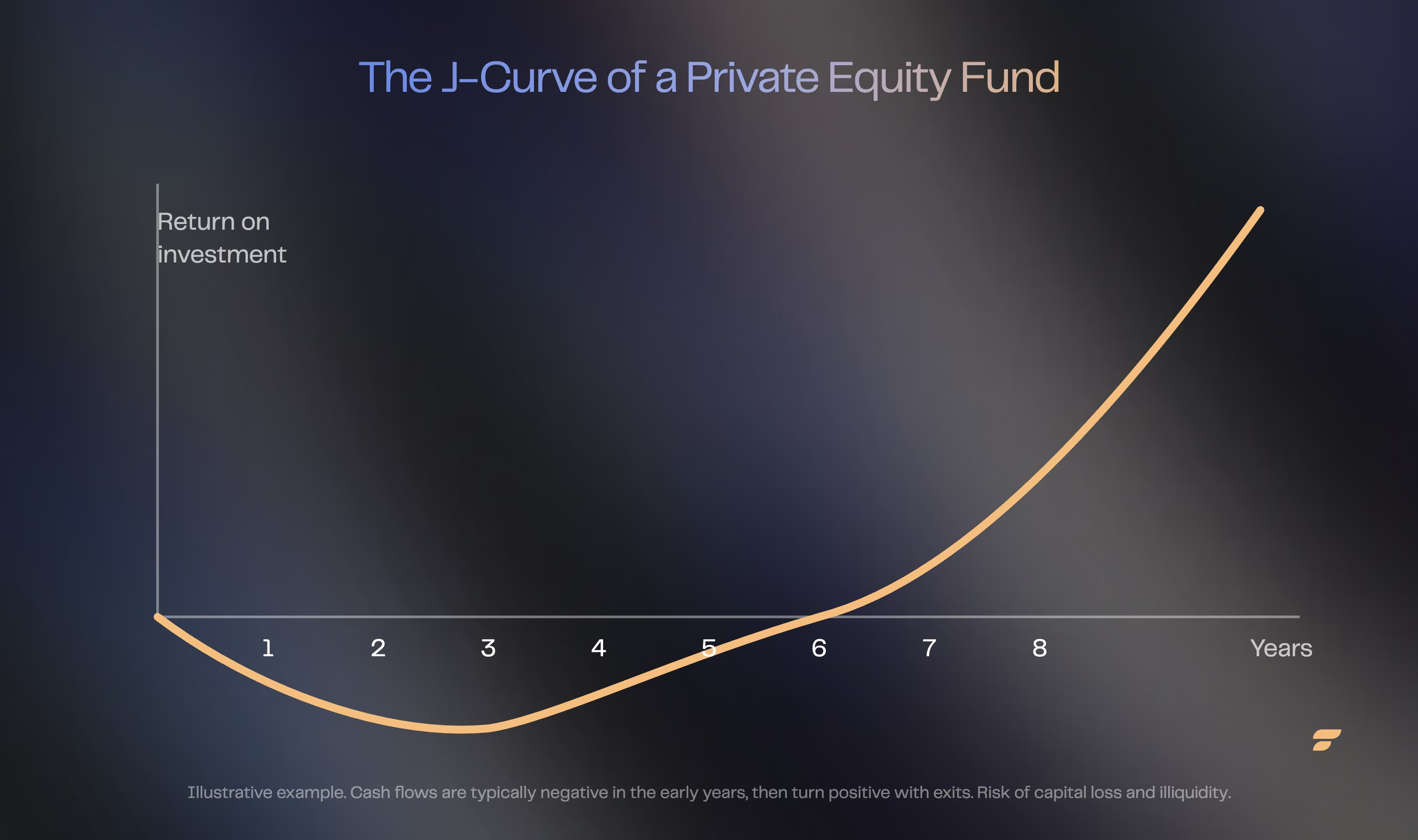
A fund's life cycle generally lasts around ten years. This mechanism creates the "J-curve": cash flows start out negative, then turn positive as distributions are paid.
Compensation rests on two mechanisms: management fees (1.5-2% a year) and carried interest (typically 20% of profits, after a hurdle rate).
Historical Private Equity Performance
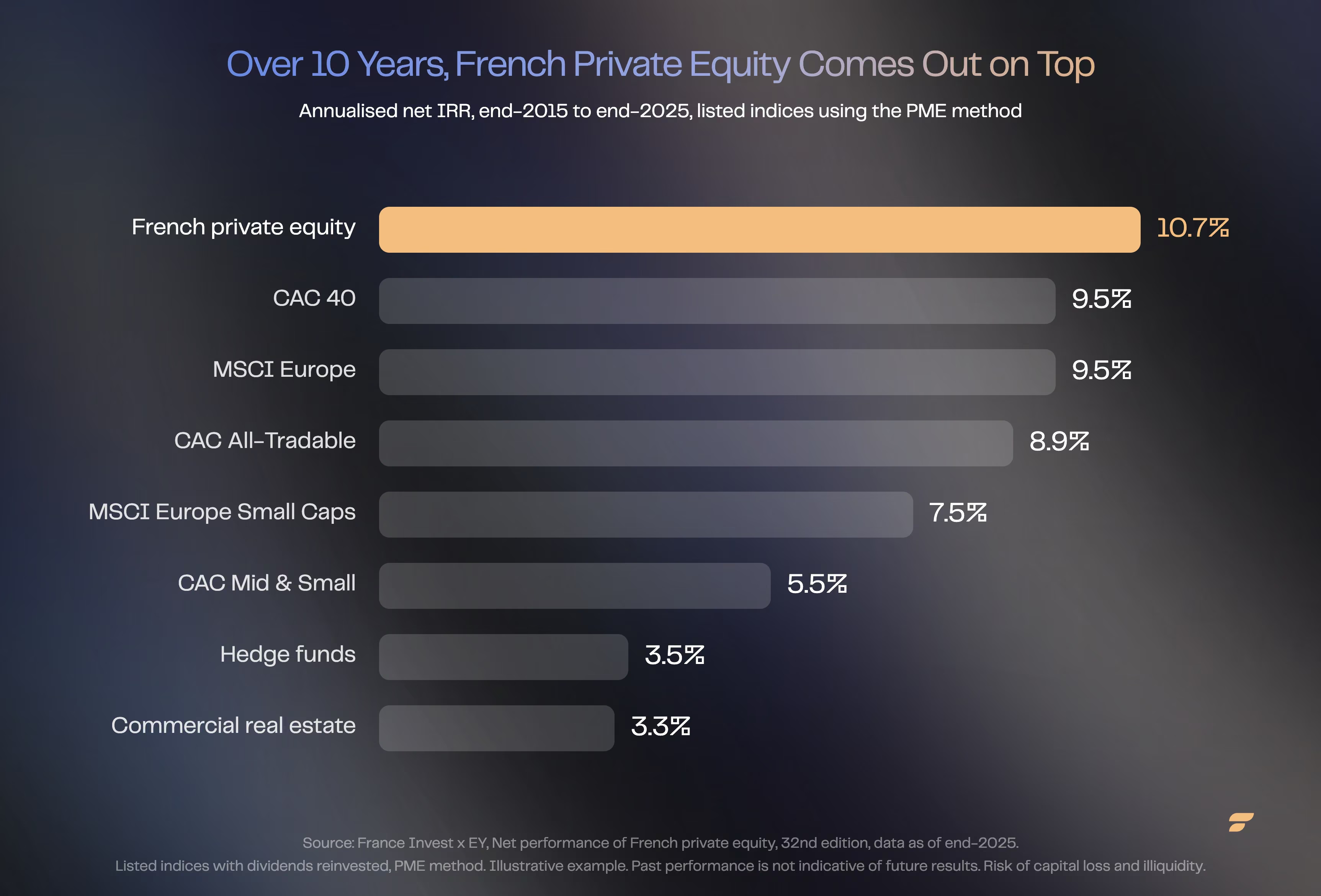
In terms of returns, private equity can offer return potential that is often higher than listed equity markets. The funds available through Finary One offer indicative target net IRRs provided by the managers, which vary by strategy and vintage (not guaranteed). These figures are based on the past performance of similar strategies, with no guarantee for the future.
How to Invest in the Largest Private Equity Funds
In France, several types of funds allow you to invest in PE:
- FCPR: at least 50% in unlisted securities
- FCPI (a French innovation investment fund): 60% in innovative companies
- FIP (a French regional investment fund): 60% in regional SMEs
- FPCI: a minimum entry ticket of €100,000
Investment can also go through Luxembourg life insurance. This option is available to eligible Finary One clients (at least €1,000,000 in investable assets and declared financial wealth above €2.5 million).
Advantages and Risks to Consider
Advantages: high return potential, diversification, impact on the real economy, access to specialised expertise.
Risks: illiquidity (7-10 years), risk of capital loss, a long horizon, multiple fees, and complex strategies. To better understand these challenges, read our full analysis of private equity risk.
Private Equity: An Evolving Market
The largest private equity funds are redrawing the boundaries of modern investing. While Blackstone, KKR and their French counterparts such as Ardian continue to dominate the market, the emergence of solutions like Finary One is democratising access to an asset class once reserved for institutional investors.
Frequently Asked Questions
What Is the Largest Private Equity Fund in the World?
Blackstone is the largest private equity fund in the world, with $1.27 trillion in assets under management as of 31 December 2025, according to its annual report filed with the SEC. It is ahead of Apollo Global Management ($938 billion) and KKR ($758 billion).
What Is the Largest French Private Equity Fund?
Ardian is the largest French private equity fund, with around $200 billion in assets under management according to its official website. It is ahead of Eurazeo, which manages €40 billion as of 30 June 2026, and the public player Bpifrance.
What Is the Difference Between Private Equity and Venture Capital?
Venture capital is a branch of private equity that targets innovative start-ups before they turn a profit, carrying a high risk of loss but significant upside potential. Private equity in the broader sense also includes growth capital and LBOs, which target more mature, profitable companies.
How Can You Invest in a Private Equity Fund With €1,000,000?
From €1,000,000 in investable assets, Finary One gives access to funds managed by major firms such as Blackstone or Ardian, through suitable vehicles (FPCI, Luxembourg life insurance) and a private manager who structures the allocation based on the investor's profile and horizon.
How Long Does It Take to Get Your Money Back From a Private Equity Investment?
The horizon of a private equity fund generally runs from 7 to 10 years, following the J-curve: cash flows are negative in the early years while the fund invests, then turn positive as portfolio companies are sold.
Sources
Apollo Global Management, Inc., 2025 annual report (Form 10-K), SEC, filed 25/02/2026
KKR & Co., investor relations, assets under management as of 31/03/2026
Carlyle Group, 2024 annual report (Form 10-K), SEC, filed 27/02/2025
TPG Inc., 2024 annual report (Form 10-K), SEC, filed 18/02/2025
CVC Capital Partners, official website, assets under management as of 30/06/2026
Ardian, official website, assets under management or advised
Eurazeo, official website, assets under management as of 30/06/2026
EQT, official website, assets under management as of 30/06/2026
AMF, PSCA whitelist, Finary SAS
Finary, Finary One page, access conditions and eligibility threshold
Regulatory disclaimers: Promotional communication. Investing carries a risk of partial or total capital loss. Past performance is not a reliable indicator of future performance. This article is provided for information and educational purposes only; it does not constitute personalised investment advice, a buy or sell recommendation, or tax advice. This investment carries a liquidity risk (resale not guaranteed, long horizon) and a risk of capital loss. Income and valuations are not guaranteed. Before investing, read the Key Information Document (KID) and, where relevant, consult an authorised adviser. Finary SAS, an investment firm authorised by the ACPR (no. 19283), member of AMAFI. Insurance broker registered with ORIAS (no. 21001279), member of the CNCGP (association approved by the AMF). Crypto-Asset Service Provider (CASP) authorised by the AMF under the MiCA regime, references no. A2026-026 and no. N2026-008.