Private Equity Investment Vehicles in France: The Complete Guide for Investors

Updated on 7 August 2026
A private equity investment vehicle, whether a retail fund, a tax wrapper, a platform or a direct investment, is what lets an individual invest in unlisted companies in France. This guide compares their entry ticket, lock-up horizon and taxation.

- Private equity is grouped into four families of vehicles: retail funds (FCPR, FCPI, FIP — French venture-capital and innovation funds), tax wrappers (life insurance, PER — France's retirement savings plan), platforms/ETFs, and direct investment (FPCI, a French professional private-equity fund).
- The lock-up horizon ranges from 5 to 12 years depending on the vehicle, and the entry ticket runs from €100 to €100,000 and up.
- Finary One supports investors with at least €1,000,000 in investable assets in selecting and structuring these vehicles.
What Is Private Equity?
The term private equity refers to investing in unlisted companies, letting individuals back SMEs, startups or growth companies, often at key stages before they go public.
Unlike traditional financial markets, these investments generally stay locked up for several years. But they offer the chance to support the real economy and play an active role in a company's trajectory.
Popular in recent years for its historical performance and its low correlation with listed markets, private equity has won investors over with attractive returns and the chance to diversify their wealth. That said, performance gaps between funds are wide, and manager selection remains decisive: not every investment succeeds equally. According to the France Invest/EY study on the net performance of French private equity (2025), the net internal rate of return reaches 12.4% a year over 10 years, against 8.9% for the CAC 40 over the same period.
Private Equity Investment Vehicles at Finary One
Finary One helps clients choose the right vehicle for investing in private equity based on their wealth, tax situation and goals. Not a one-size-fits-all solution, but an architecture designed to optimise the risk/return balance after fees and tax, with no guarantee of results.
- A personalised, figure-based comparison of every accessible private equity vehicle (FCPR, FPCI, evergreen funds, secondary funds, ETFs, institutional platforms), applied to your own situation.
- A dedicated wealth advisor who proposes the right wrapper (Luxembourg life insurance, a securities account, a holding patrimoniale, i.e. a French wealth-holding company) based on your tax situation and horizon.
- A 360° view of your wealth that lets you balance liquidity, expected performance and overall exposure to unlisted assets, all within a single platform.
Learn more about Finary One → Reserved for investors with at least €1,000,000 in investable assets. Investing carries risks, including the risk of capital loss.
What Are the Different Vehicles for Investing in Private Equity?
Private equity is structured around four families of vehicles: retail funds (FCPR, FCPI, FIP), tax wrappers (life insurance, PER), innovative vehicles (digital platforms, ETFs) and direct investment (holding companies, business angels, FPCI, secondary funds).
Retail Funds for Investing in Private Equity
Private equity has opened up widely to individual investors over the past fifteen years thanks to FCPR, FCPI and FIP funds. Each offers an alternative to the stock market, with its own distinct features.
The FCPR (Fonds Commun de Placement à Risques, a French venture-capital fund) stands out for its versatility. It invests at least 50% in unlisted companies, with no sector restriction. This strategic freedom comes with a specific tax treatment, including a capital-gains exemption after 5 years. Liquidity, however, remains very limited, which calls for a rigorous fund selection.
The FCPI (Fonds Commun de Placement dans l'Innovation, a French innovation-focused venture fund) mainly targets innovation, with 70% of the portfolio invested in innovative companies. The French state encourages this investment with an upfront tax reduction. However, this fund carries a higher risk and sometimes less transparency for the saver.
The FIP (Fonds d'Investissement de Proximité, a French regional investment fund) invests in regional SMEs, often low-profile but essential to the local economy. It offers a tax benefit similar to the FCPI, but performance depends heavily on the manager's ability to spot promising companies.
These three funds have democratised access to private equity. Even so, choosing the right manager, understanding the strategy and accepting illiquidity remain essential. Careful analysis should always outweigh a passing trend.
Accessing Private Equity Through Tax Wrappers
Life insurance and the PER (Plan d'Épargne Retraite), France's retirement savings plan, have become key tools for combining private equity with tax optimisation. These wrappers, once limited to euro funds and standard unit-linked funds, now include unlisted vehicles, often via dedicated unit-linked funds.
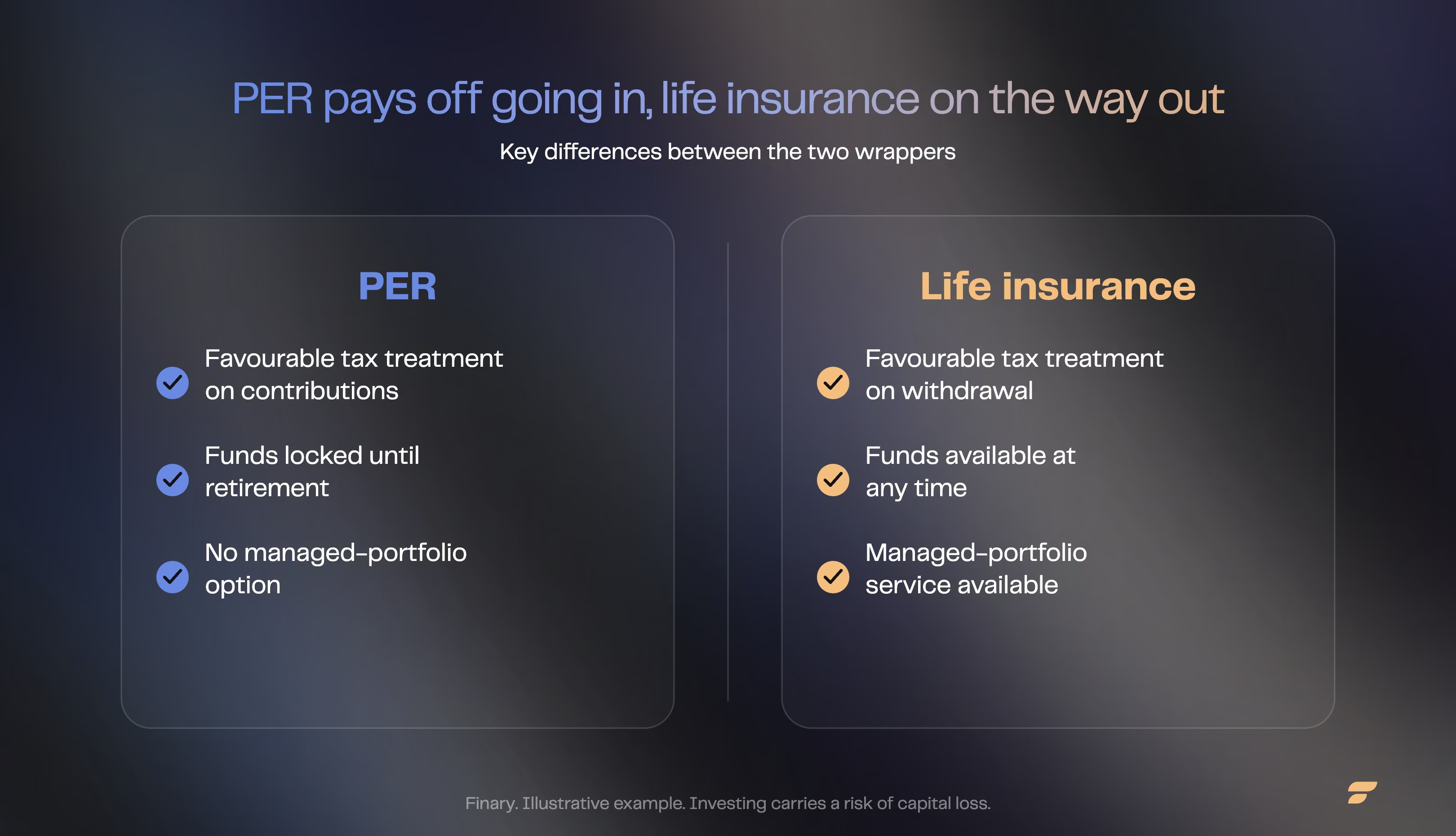
Life insurance offers great flexibility. It lets you fold private equity into a broader wealth strategy, with benefits such as easier estate transmission, lighter taxation after 8 years, and the ability to switch funds without immediate taxation.
That said, the share of private equity within a policy is often capped at 10-15%, and management fees stack on top of the underlying funds' own fees. Access to Luxembourg funds through high-end policies, such as those offered by Finary One, shows how much the market has matured.
The PER appeals to investors looking for an immediate tax deduction. Investing in private equity through a PER means a long horizon, with funds locked up until retirement. In exchange, it offers an upfront deduction and favourable tax treatment on withdrawal. This vehicle suits investors who take a long-term view and accept trading liquidity for the tax benefit.
Either way, aligning the investment horizon, risk tolerance and overall wealth strategy is essential. The quality of the chosen fund and fee transparency remain decisive factors.

Innovative Private Equity Vehicles
The digital era has made private equity more accessible. Online platforms let investors access institutional funds with smaller entry tickets. This model, inspired by crowdfunding, opens up funds once reserved for family offices. Even so, it pays to stay alert to fee transparency, sourcing quality and the platform's soundness.
Private equity ETFs combine liquidity and diversification. Investing in an ETF means betting on a basket of listed asset managers or on indices of private equity firms. These ETFs offer good liquidity and contained fees (between 0.4% and 0.75% a year). That said, the exposure remains indirect: you invest in the performance of the asset managers, not directly in the unlisted companies.
Accessing private equity through these innovative vehicles often narrows your choice of managers. Unlike a direct investment where you freely pick your fund, digital platforms and ETFs expose you to a limited number of asset managers.
Buying shares of listed asset managers such as Blackstone or Ardian lets you ride the sector's growth while benefiting from market liquidity. This option suits those who want exposure to the private equity trend without the illiquidity.
Direct Private Equity Investment and Specialised Funds
Direct investment is aimed at experienced investors. Setting up a holding company or investing directly in an SME or a startup means getting involved in the life of the business, sometimes even sitting on its board. This model offers maximum control and a tailored tax treatment (the parent-subsidiary regime, the pacte Dutreil family-business transfer relief).
What Is a Business Angel ? A business angel is a private investor who puts their own money into startups or innovative companies, usually at the early stage. Business angels also bring their experience, network and advice to help these young companies grow quickly. There are also business angel clubs, groups of investors who pool their efforts to select, fund and support high-potential projects together, while spreading the risk and sharing resources.
Evergreen funds innovate by offering partial liquidity and permanent access, unlike funds with a fixed lifespan. This model appeals to those who want to smooth their entry point and avoid the classic private equity “J-curve”, marked by early underperformance linked to fees and gradual deployment of capital.
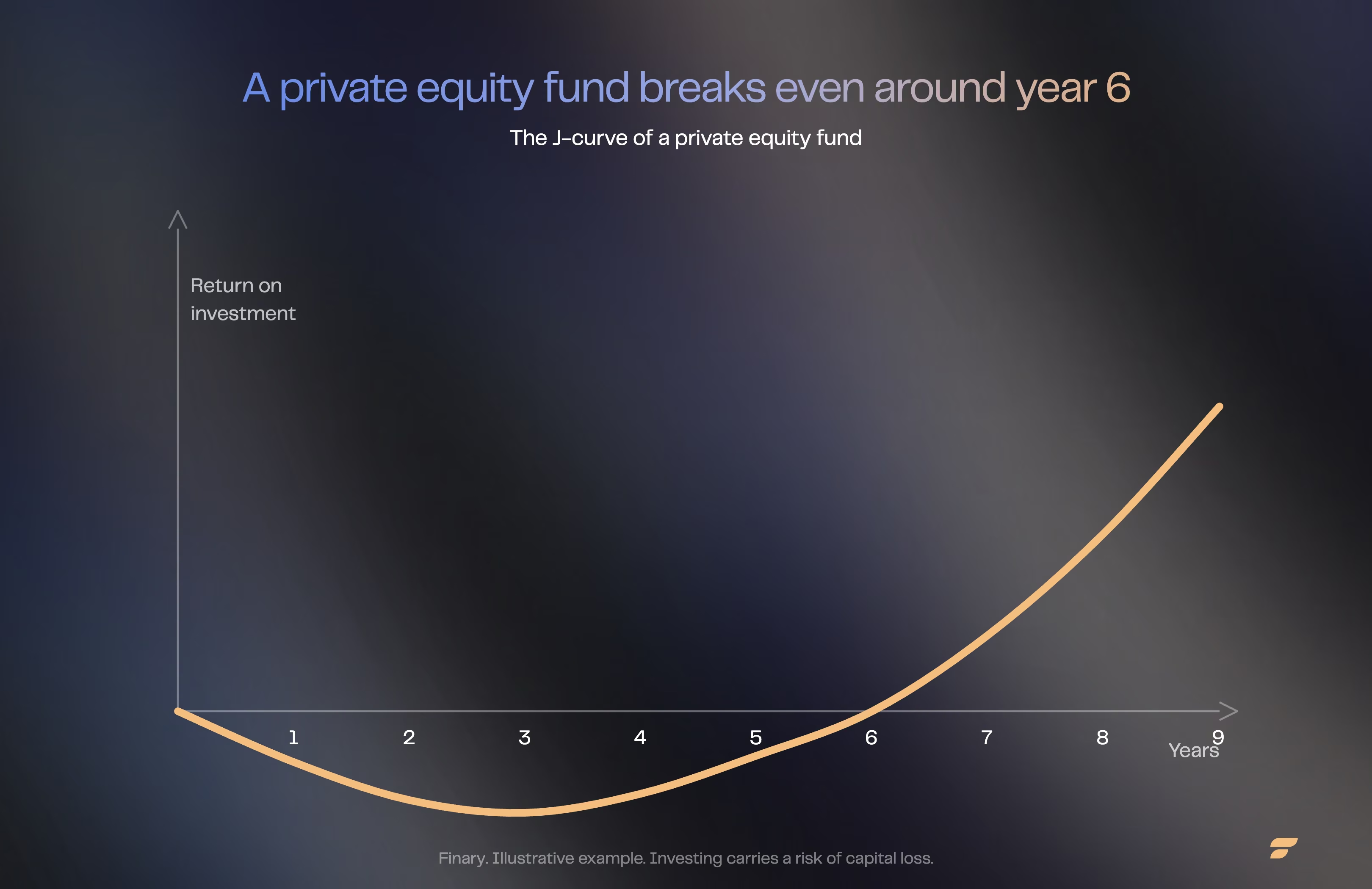
Secondary funds shorten the holding period. By buying stakes in existing funds, they offer better visibility on the underlying assets. The investment horizon is shorter (2 to 5 years) and visibility on the underlying assets is greater, but the entry ticket remains high.
The FPCI (Fonds Professionnel de Capital Investissement, a French professional private-equity fund for qualified investors) offers maximum flexibility, with a tailor-made strategy and a broader investment universe. The entry ticket often exceeds €100,000. This vehicle suits those looking to build a sophisticated allocation, accepting the regulatory complexity and the need for expert guidance.
Each vehicle, from the most accessible to the most sophisticated, fits a distinct wealth-planning logic. The choice doesn't depend on returns alone, but also on your outlook on your own wealth, your capacity to accept illiquidity, and your interest in innovation or in staying close to the real economy.
How to Choose the Private Equity Vehicle That Fits Your Profile?
Choosing a private equity vehicle comes down to three criteria: the entry ticket you can commit, the lock-up horizon you accept, and the tax objective you're after (a tax reduction, an upfront deduction, or simple capital growth).
Private Equity Vehicles Compared: Entry Ticket, Explicit and Hidden Fees, Potential Liquidity
The entry ticket directly shapes the opportunities you can access and the quality of the selection. For example, an FCPR or an FCPI is accessible from as little as €500, while an FPCI or an institutional evergreen fund often requires €100,000 or more.
Digital platforms lower the barrier to €1,000 or less, but the quality of what's on offer varies widely.
Fees aren't always transparent. On top of management fees (typically 1.5% to 2.5% a year for traditional funds), you should budget for:
- performance fees (20% of the gain above a certain threshold, known as the “hurdle rate”),
- entry and exit fees,
- sometimes extra fees within wrappers such as life insurance or the PER.
Private equity ETFs post lower fees (0.4% to 0.75%), but their exposure to unlisted assets remains indirect.
Liquidity is often the main challenge. An FCPR locks up funds for 5 to 10 years, while an FPCI ties up capital for longer, typically between 8 and 12 years, with no early exit. ETFs and some evergreen funds offer monthly or quarterly liquidity, but that can reduce the potential return. Crowdequity platforms sometimes offer a secondary market, but reselling shares remains rare.
This table summarises the main features:
| Investment vehicle | Entry ticket | Annual fees (excl. perf.) | Performance fee | Liquidity |
|---|---|---|---|---|
| FCPR/FCPI/FIP | €500 | 2% | 20% | 5-10 years |
| FPCI | €100,000 | 1.5-2.5% | 20% | 8-12 years |
| Life insurance (PE unit-linked) | €1,000 | 0.8-1.2% (wrapper) + fund fees | 15-20% | Medium (withdrawal) |
| PE ETF | €100 | 0.4-0.75% | None | Daily |
| Digital platforms | €1,000 | 1-2% | 10-20% | Variable |
| Secondary funds | €100,000 | 1.5-2% | 10-20% | 2-5 years |
The biggest differences lie in the specific clauses, transaction fees, performance-based commissions, and above all the manager's ability to generate net performance above the public index.
A Detailed Tax Analysis of Private Equity Vehicles: Income Tax, IFI, Flat Tax, Tax-Deferral Mechanisms
Private equity taxation varies by vehicle. Since the 2026 Finance Act, “classic” FCPI and FIP funds no longer carry an upfront income-tax reduction. Only FCPI funds invested in Jeunes Entreprises Innovantes (JEI, young innovative companies) and Corsican or overseas-territory FIP funds keep a capped 30% tax reduction on the amount invested, with a lock-up of at least five years. Capital gains remain exempt from income tax after five years, but stay subject to social contributions.
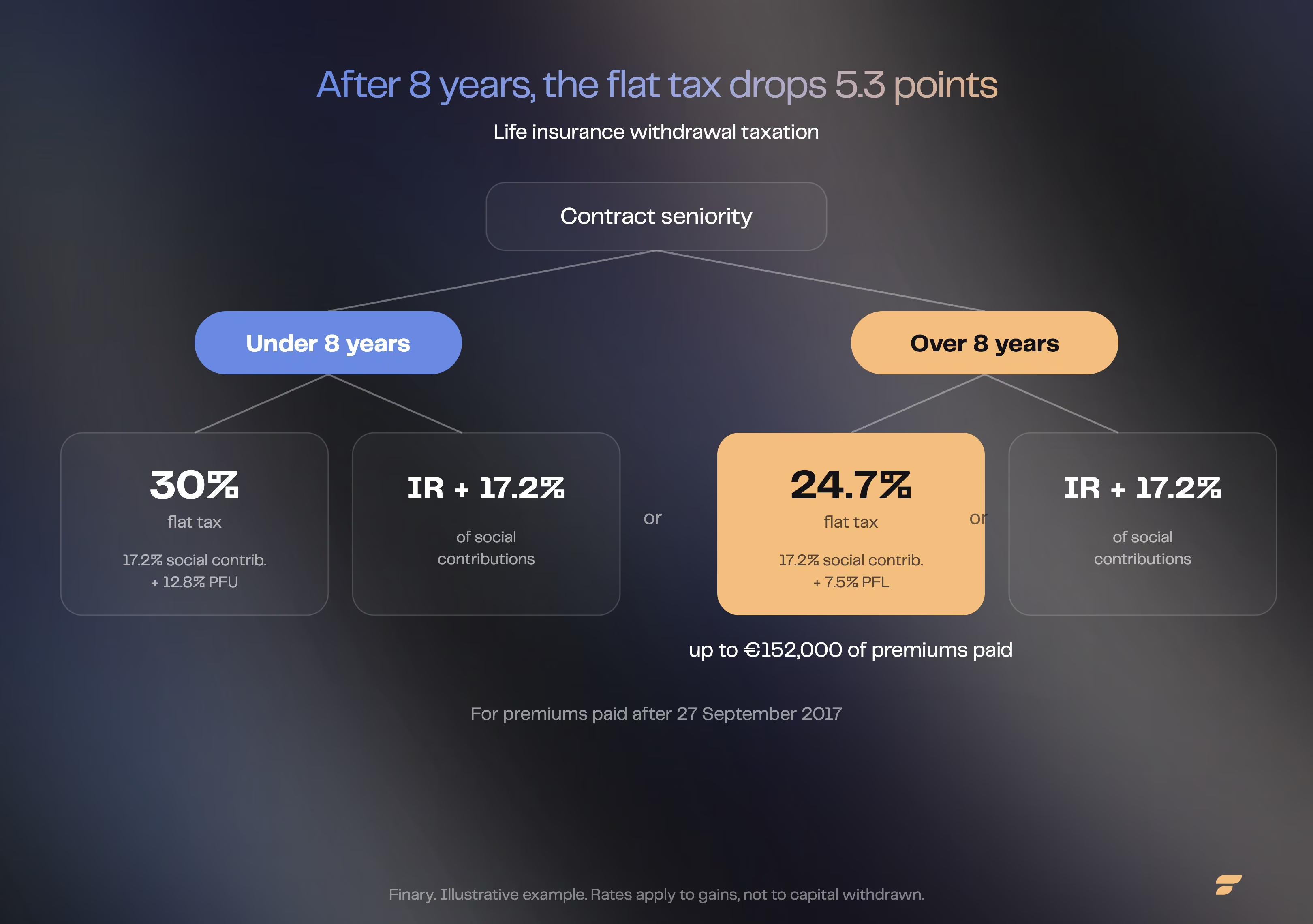
Life insurance, valued for its flexibility, allows investing in private equity through unit-linked funds. After eight years, the tax burden eases thanks to an annual allowance on gains, then a reduced income-tax rate of 7.5% (up to €150,000 of premiums paid per person) or 12.8% beyond that, plus 17.2% in social contributions, for a total flat tax of 24.7% or 30%.
The PER lets you deduct contributions from taxable income, but locks up funds until retirement except in cases of early release. Taxation on withdrawal depends on the payout method (lump sum or annuity).
The securities account applies the 31.4% flat tax on capital gains (12.8% income tax and 18.6% social contributions since 1 January 2026), with no particular advantage.
Holding companies, reserved for entrepreneurs, allow a partial dividend exemption (the parent-subsidiary regime) and ease certain transmission strategies, but require more complex management.
As for the IFI (Impôt sur la Fortune Immobilière, France's real-estate wealth tax), fund units invested more than 75% in unlisted SMEs escape the tax base, under certain conditions. Tax-deferral mechanisms (report d'imposition, under article 150-0 B ter of the French General Tax Code (CGI)) sometimes allow capital-gains taxation to be deferred upon reinvestment, but call for careful analysis.
Taxation should never be the sole deciding factor: a tax break doesn't make up for weak performance or poorly managed risk.
Your Step-by-Step Decision Guide
Choosing a private equity vehicle calls for an analysis tailored to your profile. The points below are given for guidance only and do not constitute personalised advice.
Here is a simple decision framework:
- Investment horizon:
- < 5 years: avoid traditional private equity
- 5-10 years: secondary funds, ETFs
- 10 years: traditional funds, FPCI
- Risk tolerance:
- High: direct funds, crowdequity
- Moderate: diversified funds, life insurance
- Low: ETFs, secondary funds
- Tax objective:
- Income-tax reduction: FCPI/FIP
- Estate transmission: holding company, life insurance
- Capital growth: PER, securities account
- Amount to invest:
- < €10,000: platforms, ETFs
- €10,000-100,000: life insurance, retail funds
- €100,000: FPCI, institutional funds, direct investment
This process should evolve along with your situation, the regulations and what the market offers.
The Evolution of Private Equity Vehicles
The private equity landscape is evolving quickly towards greater accessibility and transparency, widening access to an asset class that was historically institutional and remains reserved for sophisticated investors who accept illiquidity and the risk of capital loss.
With the rise of digital platforms, looser regulation and financial-product innovation, private equity can be considered, after checking it suits your personal situation, as part of a diversified wealth allocation. Guidance from a Conseiller en Investissements Financiers (CIF), an independent financial adviser regulated in France, is recommended.
Frequently Asked Questions
What Is the Minimum Entry Ticket for Private Equity?
The entry ticket depends on the vehicle chosen: from as little as €100 through a private equity ETF, or €500 through an FCPR/FCPI/FIP, versus €1,000 on average on digital platforms and through life insurance, and €100,000 or more for an FPCI or an institutional evergreen fund.
What Is the Tax Treatment of an FCPI in 2026?
Since the 2026 Finance Act, “classic” FCPI funds no longer carry an upfront income-tax reduction. Only FCPI funds invested in Jeunes Entreprises Innovantes (JEI) and Corsican or overseas-territory FIP funds keep a capped 30% tax reduction on the amount invested, subject to a lock-up of at least five years.
Can You Exit a Private Equity Fund Before Its Maturity?
In principle, no, for an FCPR, an FCPI, a FIP or an FPCI, which are locked up for 5 to 12 years with no guaranteed early exit. Private equity ETFs and some evergreen funds, however, offer daily-to-quarterly liquidity, and some crowdequity platforms provide a secondary market, though reselling shares there remains rare.
Is Private Equity Accessible Through a PER?
Yes. The Plan d'Épargne Retraite can include private equity unit-linked funds. Contributions are deductible from taxable income, but the funds stay locked up until retirement, except in cases of early release provided for by law.
From What Level of Wealth Does Finary One Support a Private Equity Investor?
Finary One is reserved for investors with at least €1,000,000 in investable assets. A dedicated wealth advisor then helps compare vehicles (FCPR, FPCI, Luxembourg life insurance, ETFs) based on the client's wealth and tax situation.
Sources
French General Tax Code, article 150-0 B ter (tax-deferral mechanism)
Autorité des marchés financiers (AMF)
Commissariat aux Assurances (CAA), Luxembourg
2026 Finance Act (removal of the IR-PME tax reduction for classic FCPI and FIP funds)
Regulatory disclaimers: Marketing communication. Investing carries a risk of partial or total capital loss. Past performance is not a reliable indicator of future performance. This article is provided for information and educational purposes only; it does not constitute personalised investment advice, a buy or sell recommendation, or tax advice. Before investing, read the Key Information Document (KID) and, where relevant, consult an authorised adviser. Finary SAS, an investment firm authorised by the ACPR (no. 19283), member of AMAFI. Insurance broker registered with ORIAS (no. 21001279), member of the CNCGP (association approved by the AMF). Crypto-Asset Service Provider (CASP) authorised by the AMF under the MiCA regime, references no. A2026-026 and no. N2026-008.