What Are the Different Types of Private Equity Funds?


Updated on August 10, 2026
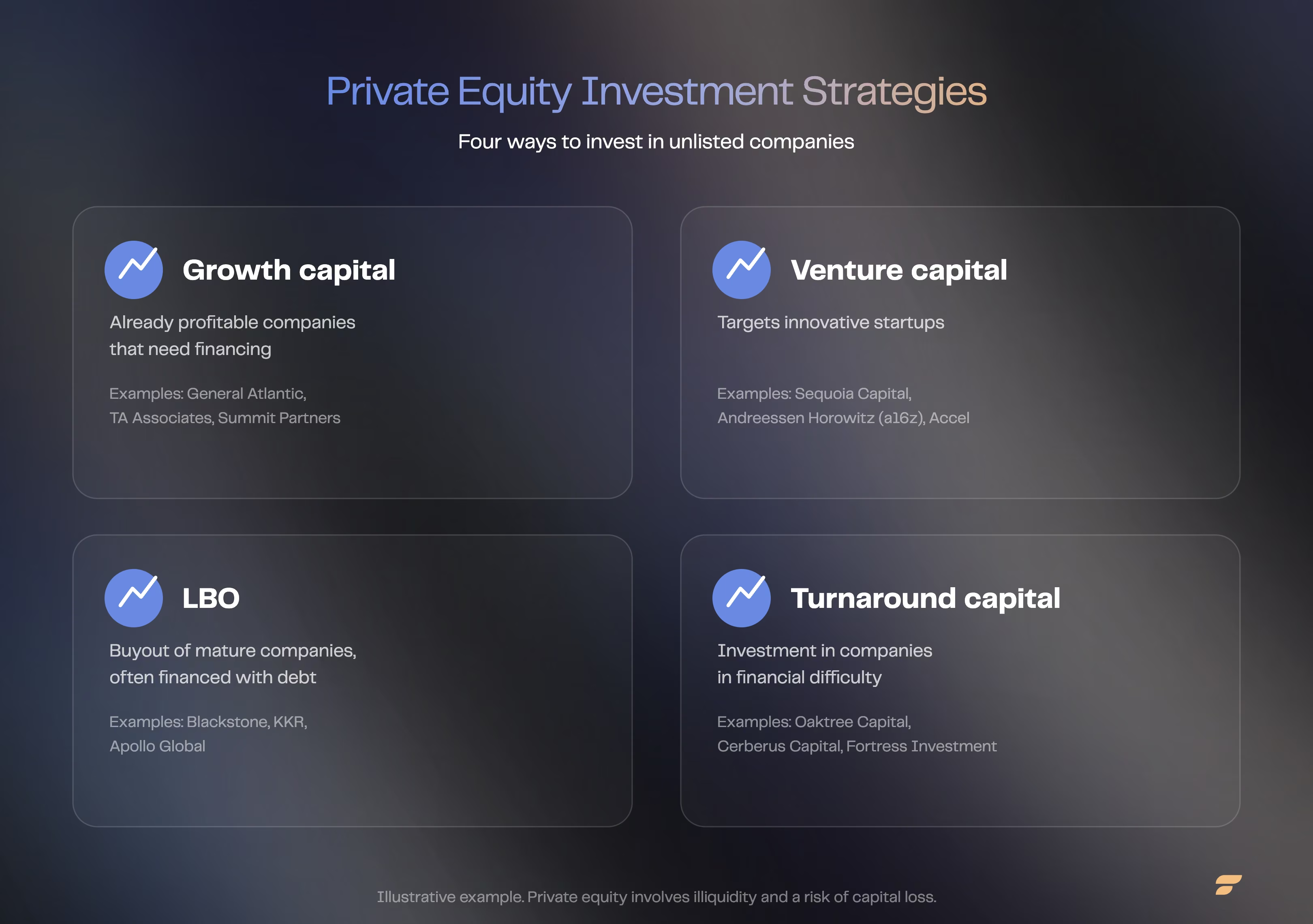
Confusing a buyout fund with a venture capital vehicle is like confusing a century-old company with a startup. In private equity, each type of fund follows a different logic: venture capital, growth capital, buyout (LBO), turnaround capital, private debt, secondary funds and fund of funds, each with its own risk profile and horizon.

- Minimum tickets, investment horizons (3 to 12 years depending on the strategy) and target IRRs vary widely from one fund type to another.
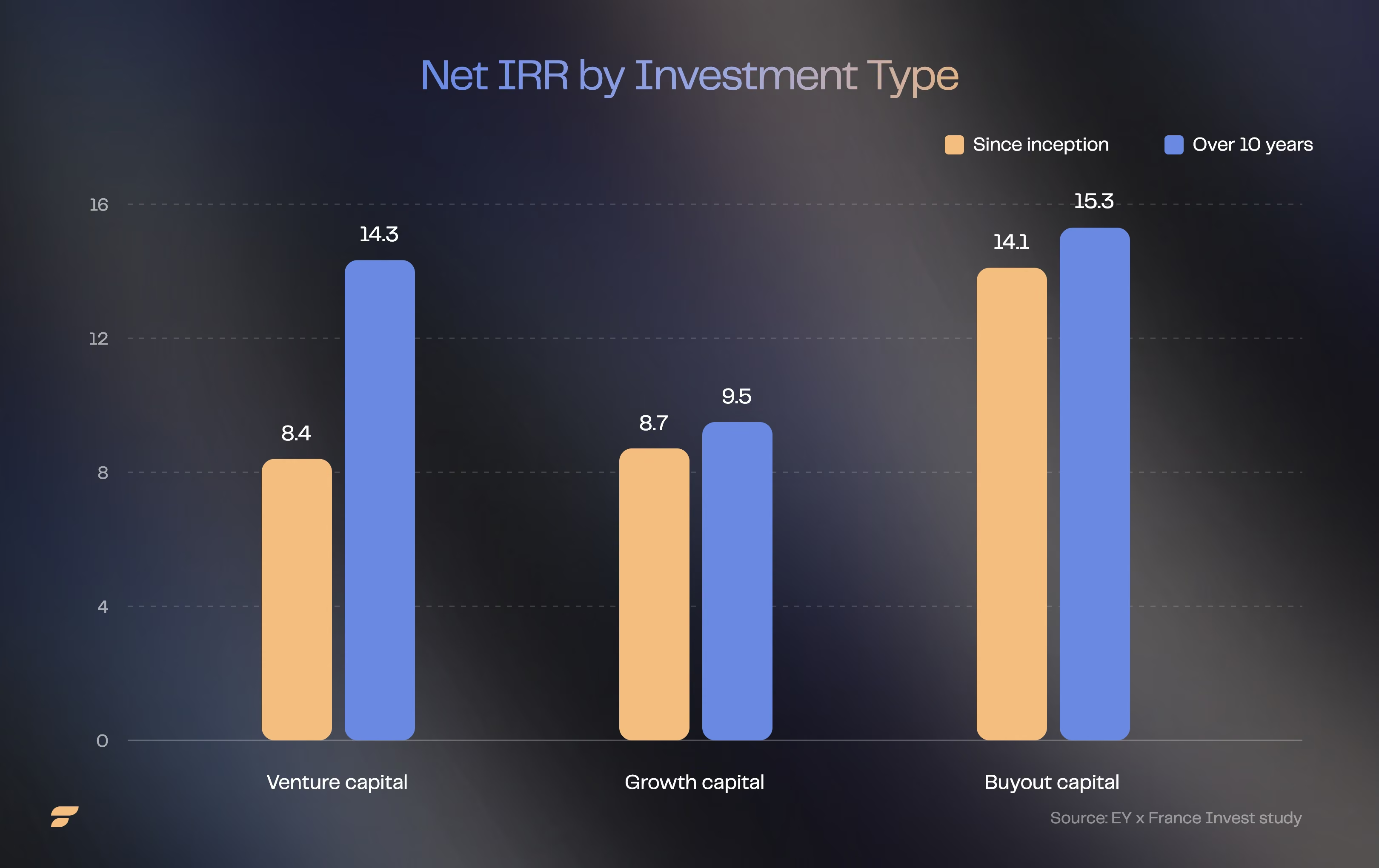
- Buyout capital (LBO) has historically posted the highest net IRR of the asset class in France, ahead of growth capital and venture capital.
- FCPR, FPCI, FCPI and FIP (the main French private equity fund wrappers) are different legal vehicles, each with its own access rules and tax treatment.
- Finary One gives access to a selection of these funds from €1,000,000 in investable assets, with a dedicated wealth manager.
- Private equity is an illiquid investment, with a risk of capital loss; past performance is not a reliable indicator of future performance.
Why Are Private Equity Fund Types So Different From One Another?
Private equity is not a homogeneous asset class: each type of fund targets a different stage in a company's life, with its own rules, horizon and risk/return profile. According to the France Invest/EY study on the net performance of French private equity firms (32nd edition, June 2026, data to end-2025), French private equity posted an average net IRR (internal rate of return) of 10.7% over the past ten years (2015-2025), with a wide dispersion between funds : the top-performing quartile averages 22.9% net, while the bottom quartile remains in negative territory. These figures are historical averages: past performance is not a reliable indicator of future performance.
Why Understanding Fund Types Matters
Private equity brings together several segments, each with its own characteristics and rules. Many investors treat this asset class as homogeneous, which can lead to costly mistakes.
What Is Private Equity? Definition and How It Works
By definition, private equity consists of investing in unlisted companies to grow them, then sell them at a profit. Managers play an active role: board seats, restructuring, commercial strategy.
1. Venture Capital: Investing in Startups and Innovation

According to sector statistics commonly observed in venture capital, most funded startups fail or do not create significant value, and only a minority generate the returns that carry the fund's overall performance. Amounts invested: €500,000 to €10M per startup. Horizon: 7-10 years. On the venture & growth segment, the average net IRR comes to 6.5% over the past ten years (2015-2025), but top-quartile funds, across all private equity segments, average 22.9% net.
2. Growth Capital: Supporting the Growth of SMEs and Mid-Caps
Intermediate risk profile. Investments: €10-100 million. Horizon: 3-7 years. According to the France Invest/EY study on the net performance of French private equity firms (32nd edition, June 2026), growth capital posts an average net IRR of 8.0% since inception and 9.2% over the past ten years (2015-2025), a level between venture capital (venture & growth) and buyout, consistent with a moderate risk profile.
3. Buyout Capital (LBO): A Takeover Strategy for Mature Companies
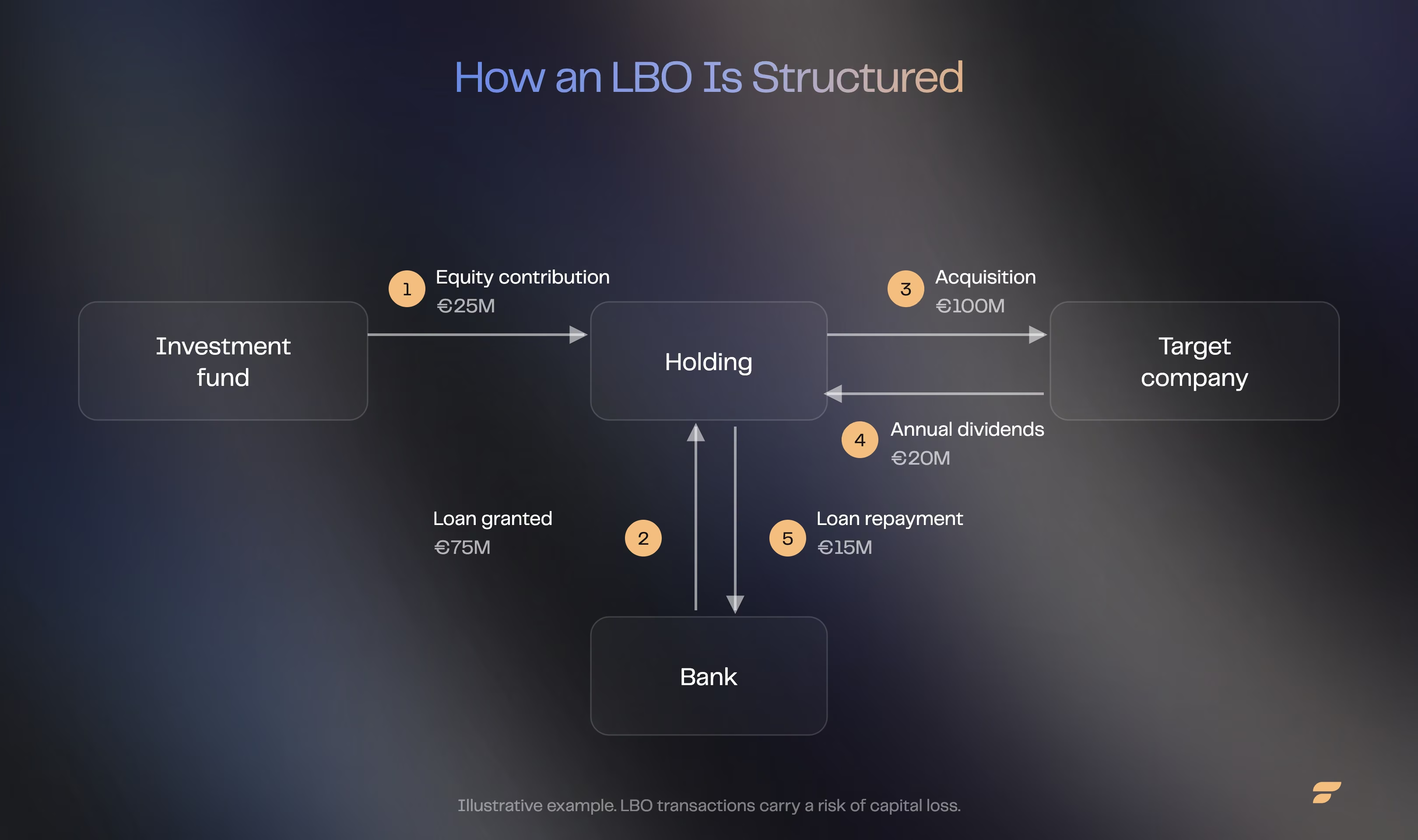
The Leveraged Buy-Out consists of buying out mature companies using significant leverage (70-80% debt). Horizon: 3-5 years. Over the past ten years (2015-2025), buyout capital in France has posted an average net IRR of 13.1%, the highest of all private equity segments (source: France Invest/EY, 32nd edition, June 2026).
4. Turnaround Capital
Targets companies in financial distress. A specialised strategy that requires restructuring expertise. The return profile is highly polarised : multiples of 5-10x for successes, total losses for failures.

What Other Types of Private Equity Funds Exist?
Beyond venture capital, growth capital and buyout, private equity includes other complementary vehicles: private debt funds, secondary funds and fund of funds, each with a specific return or diversification objective.
Private Debt Funds and Mezzanine Debt
Unlike equity funds, these funds lend directly to companies. The senior debt targets indicative returns in the order of 8-12%/year. The mezzanine debt, which is riskier, targets indicative returns of 15-20%/year. These ranges are indicative, not guaranteed, and carry a risk of borrower default and capital loss.
Secondary Funds
The sophisticated secondhand market of private equity. GP-led transactions (led by the fund's manager, or General Partner) extend the holding period for promising assets. LP interest transactions (buying out units held by an investor, or Limited Partner) provide access to an already-built, diversified portfolio. Benefit: a shorter time to return on investment.
Fund of Funds (FoF)
Address the diversification challenge: an investor with €500,000 can only access a handful of specialised funds. A fund of funds spreads that capital across many vehicles. Trade-off: layered fees (FoF fees in the order of 1-2% per year, on top of the underlying funds' fees, plus performance fees).
Comparing Fund Types: Ticket, Horizon, Risk, Return
| Type | Horizon | Min. ticket | Target IRR |
|---|---|---|---|
| Venture capital | 8-12 years | €250K | 20-30% |
| Growth capital | 5-8 years | Variable | 12-18% |
| LBO | 4-6 years | €100K+ | 15-20% |
| Private debt | Variable | Variable | 8-15% |
| Secondary funds | 3-5 years | Variable | 10-20%+ |
Minimum ticket and target IRR are indicative, vary by fund and manager, and are not guaranteed. Not to be confused with the net IRRs actually achieved by French private equity firms (source: France Invest/EY, 32nd edition, June 2026, cited above).
Private Equity Fund Types and Finary One
FCPR (a French venture-capital investment fund), FPCI (its equivalent for professional investors, with more flexible rules), FCPI (an innovation-focused venture fund carrying an income-tax reduction), FIP (a regional venture fund), evergreen funds and secondaries: each type of private equity fund follows its own tax logic, liquidity and risk profile. Finary One gives investors with €1,000,000 in investable assets access to these funds, with a wealth manager who selects the vehicles best suited to them.
- Selection of funds suited to your situation (FCPR for flexibility, FPCI for sophistication, evergreen for scheduled liquidity, secondaries for a softened J-curve, meaning a fund's initial performance dip).
- A dedicated wealth manager who structures your private equity allocation by fund type, consistent with your tax situation, horizon and overall wealth.
- A 360° view that integrates the different fund types into your overall allocation, manages liquidity, anticipates capital calls and measures consolidated net performance.
Learn more about Finary One → Reserved for investors with €1,000,000 in investable assets. Investing carries risks, including the risk of capital loss.
Building Your Private Equity Investment Strategy
Each type of private equity fund serves a specific purpose. Whether you are looking for the innovation of venture capital, the stability of buyout funds or the diversification of fund of funds, the choice of fund type generally depends on the investor's investment horizon, risk tolerance and wealth objectives. Guidance from a regulated financial adviser (CIF) is recommended before any decision.
Frequently Asked Questions
What Is the Difference Between Venture Capital and Buyout (LBO)?
Venture capital finances high-potential but uncertain-outcome startups, with a 7 to 10-year horizon and a high risk profile. LBO buys out mature, profitable companies using leverage, over a shorter 3 to 5-year horizon, with a more moderate risk profile.
What Is Mezzanine Debt in Private Equity?
Mezzanine debt is a hybrid financing, between debt and equity, lent directly to companies. Riskier than senior debt, it targets higher indicative returns, in the order of 15% to 20% per year, but carries a risk of borrower default and capital loss.
What Is the J-Curve in Private Equity?
The J-curve refers to the temporary drop in a private equity fund's net value during its early years, caused by management fees charged before the investments create value. Secondary funds help soften this effect by buying stakes already held in a portfolio.
From What Level of Wealth Can You Invest in Private Equity With Finary One?
Finary One gives access to a selection of private equity funds (FCPR, FPCI, evergreen funds, secondaries) to investors with at least €1,000,000 in investable assets, with a wealth manager who structures the allocation according to each investor's situation and horizon.
Does Private Equity Carry a Risk of Capital Loss?
Yes. Private equity is an illiquid investment, with no guarantee of resale or valuation, which carries a risk of partial or total capital loss. Past performance, including the historical net IRRs cited in this article, is not a reliable indicator of future performance.
Sources
France Invest / EY, Net Performance of French Private Equity Firms, 32nd edition, June 2026
AMF, whitelist of Crypto-Asset Service Providers (CASP), Finary SAS
Regulatory disclaimers: Marketing communication. Investing carries a risk of partial or total capital loss. Past performance is not a reliable indicator of future performance. This article is provided for information and educational purposes only; it does not constitute personalised investment advice, a buy or sell recommendation, or tax advice. This investment carries a liquidity risk (resale not guaranteed, long horizon) and a risk of capital loss. Income and valuations are not guaranteed. Before investing, read the Key Information Document (KID) and, where relevant, consult an authorised adviser. Finary SAS, an investment firm authorised by the ACPR under no. 19283, member of AMAFI. Insurance broker registered with ORIAS under no. 21001279, member of the CNCGP (association approved by the AMF). Crypto-Asset Service Provider (CASP) authorised by the AMF under the MiCA regime, references no. A2026-026 and no. N2026-008.