How to Invest in Private Equity in France: The Complete 2026 Guide


Updated on 10 August 2026
Investing in private equity in France means choosing a regulated vehicle (FCPR, FCPI, FIP, FPCI) or a Luxembourg life insurance policy, then handing fund selection to a professional. Entry tickets range from €1,000 through an FCPI to €1,000,000 in investable wealth for dedicated support with Finary One.

- Private equity targets a 7 to 10-year lock-up horizon, with a risk of capital loss and illiquidity.
- Over 2015-2025, French private equity posted an average net IRR of 10.7%, with wide dispersion between funds (France Invest x EY).
- FCPI and FIP funds carry an income tax reduction on entry, subject to a cap and a minimum holding period.
- Finary One gives access to a selection of private-equity funds (LBO, growth, secondaries, infrastructure), from €1,000,000 in investable wealth.
- Luxembourg life insurance makes it possible to hold private-equity funds within a single wrapper combining liquid and illiquid assets.
Understanding Private Equity Before You Invest: The Fundamentals
What Is Private Equity (PE), and How Does It Differ From Listed Markets?
The private equity market means investing in unlisted companies. Unlike the stock market, PE backs private businesses. The investor takes an active role in transforming the company, often over several years.
The Different PE Segments: From Venture Capital to LBOs
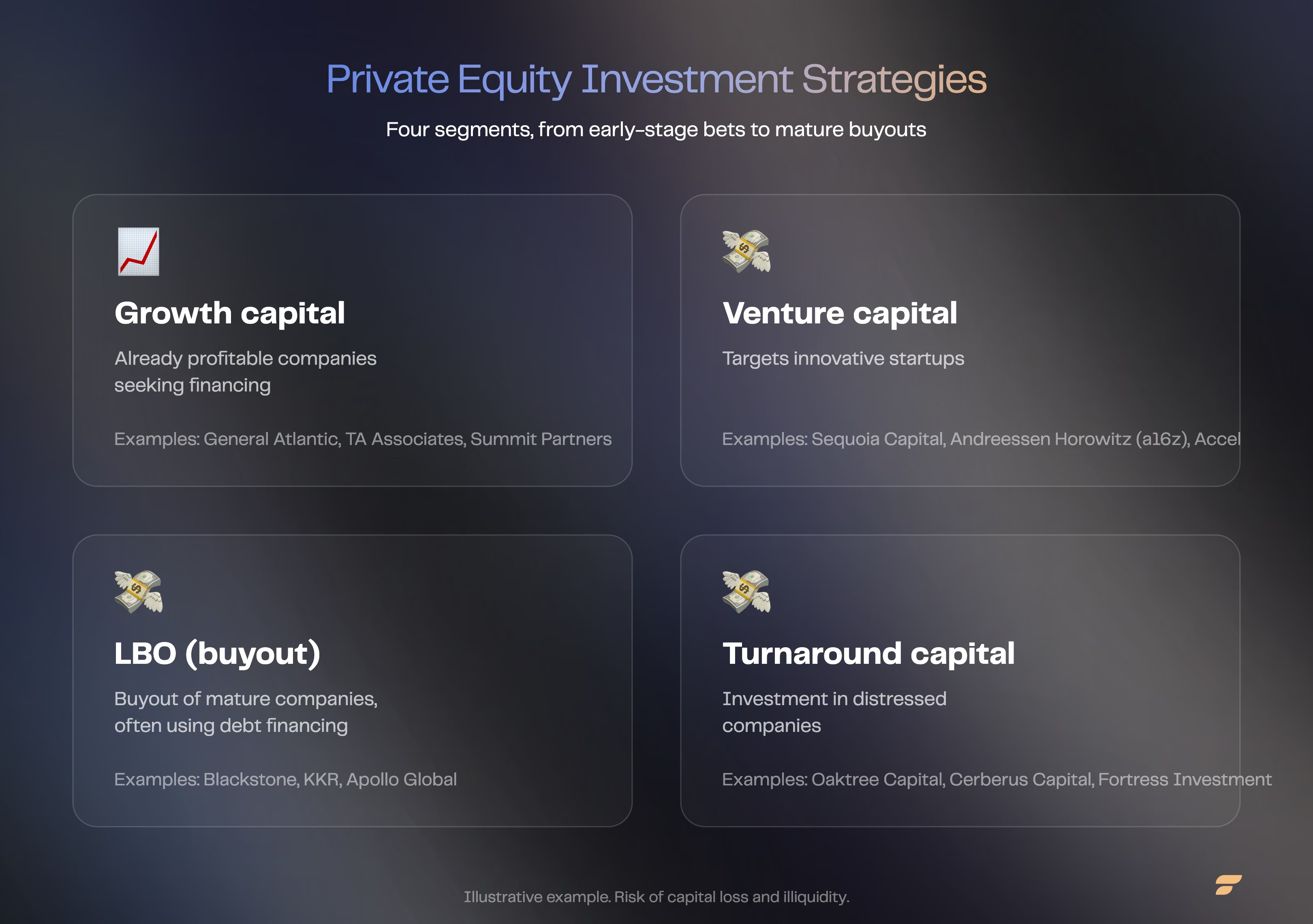
- The venture-capital segment funds early-stage startups, high-risk but with high upside potential.
- Growth capital targets established companies looking to accelerate their growth.
- The buyout segment (LBO) targets mature, profitable companies.
- Other strategies include turnaround capital and private debt.
The Life Cycle of a PE Fund
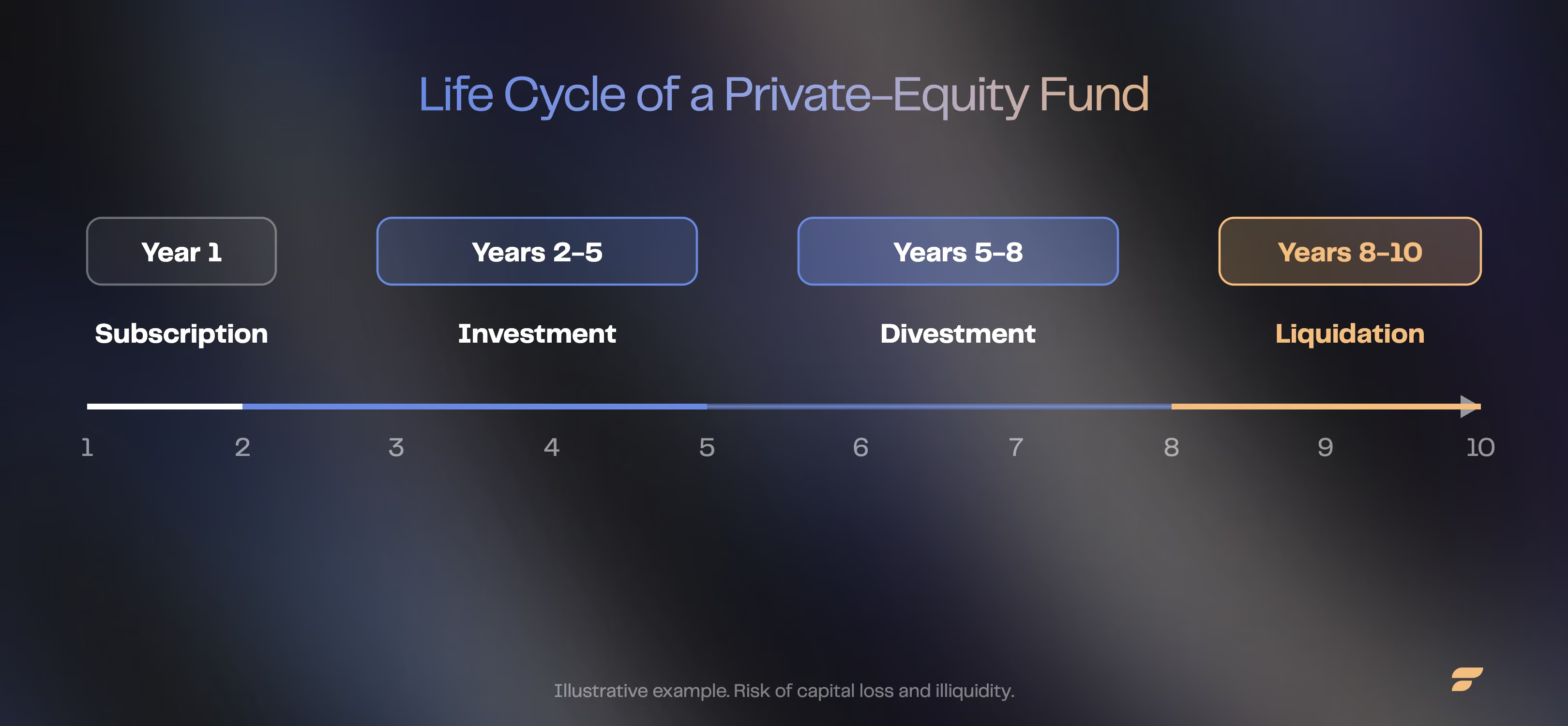
Everything starts with the fundraise. Capital calls come in gradually. Then exits generate distributions along the “J-curve”: initial losses followed by rising gains.
How to Invest in Private Equity in France
Investing in private equity in France works through a regulated vehicle accessible from €1,000 (FCPI, FCPR), an FPCI from €100,000 for sophisticated investors, Luxembourg life insurance, or dedicated Finary One support from €1,000,000 in investable wealth.
Choosing Your Vehicle at a Glance (Quick-Reference Table)
| Profile | Vehicle | Tax benefit | Entry ticket |
|---|---|---|---|
| Beginner / high income tax | FCPI / FIP | Up to 25% income tax relief | From €1,000 |
| SME/mid-cap diversification | General FCPR | Capital gains exempt >5 years | From €1,000 |
| Amount ≥ €100k, experienced | FPCI / SLP | Capital gains exempt >5 years | Min. €100,000 |
| Bespoke management | SCR / holding company | Corporate tax/capital-gains exemption | Flexible |
The Regulated Investment Vehicles
The FCPR (a French retail fund investing in unlisted companies) is the most common entry point (at least 50% in unlisted assets). FCPI (a French fund dedicated to innovative companies) targets innovative businesses (at least 60%). FIP (a French fund focused on regional investment) favours local investment. FPCI (a French private-equity fund reserved for sophisticated investors) is aimed at investors able to commit at least €100,000.
Investing in PE via Luxembourg Life Insurance
This Luxembourg life insurance policy can include PE funds in the allocation. Beyond the specific tax treatment after 8 years (subject to conditions), it combines liquid and illiquid assets within a single wrapper. Access to FAS D contracts (Fonds d’Assurance Spéciaux, special insurance funds reserved for sophisticated investors) allows up to 65% PE allocation, subject to an investor profile suited to this concentration in illiquid assets.
In Practice, How Do You Invest in PE With Finary One?

Subject to eligibility conditions, Finary One offers, from €1,000,000 in investable wealth, access to private-equity fund opportunities that are usually hard for individual investors to reach.
Guided by a dedicated private wealth manager, the investor benefits from a rigorous selection process (personalised management mandate, dedicated allocation, continuous digital reporting) and detailed fees disclosed before subscription.

Investing in Private Equity With Finary One
Investing in private equity is not just about picking a fund: it means structuring an allocation that is consistent with your wealth, your tax situation and your time horizon. Finary One supports investors with €1,000,000 in investable assets through a dedicated private wealth manager.
- Access to top-tier funds (LBO, growth, secondaries, evergreen, infrastructure), with a personalised review of net fees and track record applied to your own wealth situation.
- A dedicated private wealth manager who structures your private-equity allocation (position sizing, vintage-year diversification, geographies) and integrates it into an overall wealth strategy.
- A 360° view that manages liquidity, anticipates capital calls, measures net performance and integrates your PE commitments with the rest of your wealth.
Learn more about Finary One → Reserved for investors with €1,000,000 in investable assets. Investing carries risks, including the risk of capital loss.
Why Invest in Private Equity?
Investing in private equity diversifies your wealth with an asset class that has historically outperformed listed markets over the long term, in exchange for illiquidity risk and wide performance dispersion between funds.
The Benefits: Diversification, Returns and Impact
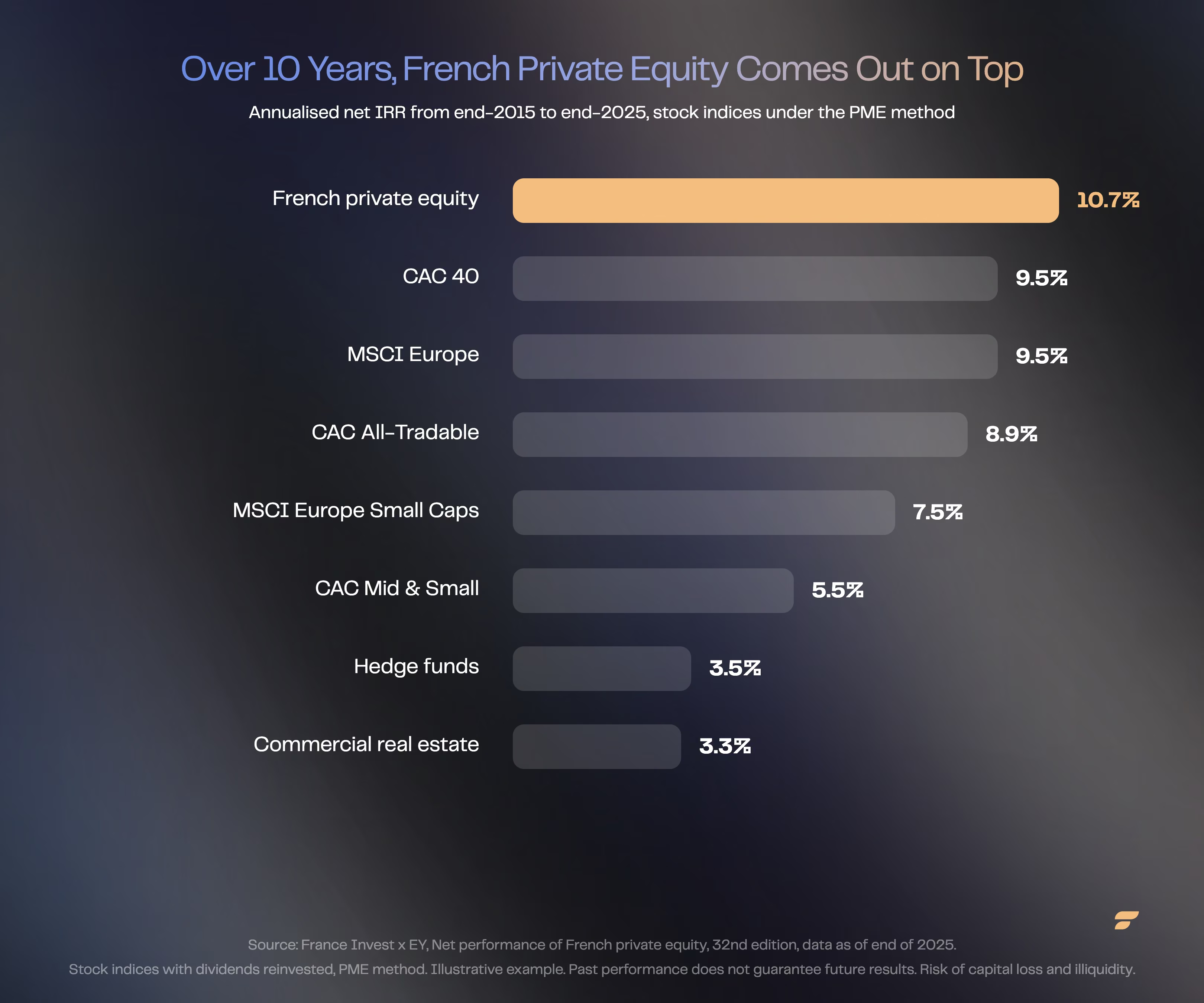
Over the past ten years (2015-2025), French private equity generated an annualised net IRR (internal rate of return) of 10.7%, against 9.5% for the CAC 40 over the same period under the PME method, a gap of roughly 120 basis points (France Invest x EY, 32nd edition, June 2026). In 2024, 2,881 companies and infrastructure projects received private-equity funding, for a total amount of €36.9 billion (France Invest, 2024 activity report).
The Risks of Private Equity
A private-equity investment demands a 7 to 10-year commitment. Illiquidity is a major risk to accept: it lets managers transform companies over the long term, but rules out any early exit.
How to Select Your PE Investments
Selecting a private-equity fund means analysing its track record over ten to fifteen years, the stability of its management team, its net fees and its diversification strategy by vintage year and geography.
The Key Criteria for Choosing a Fund
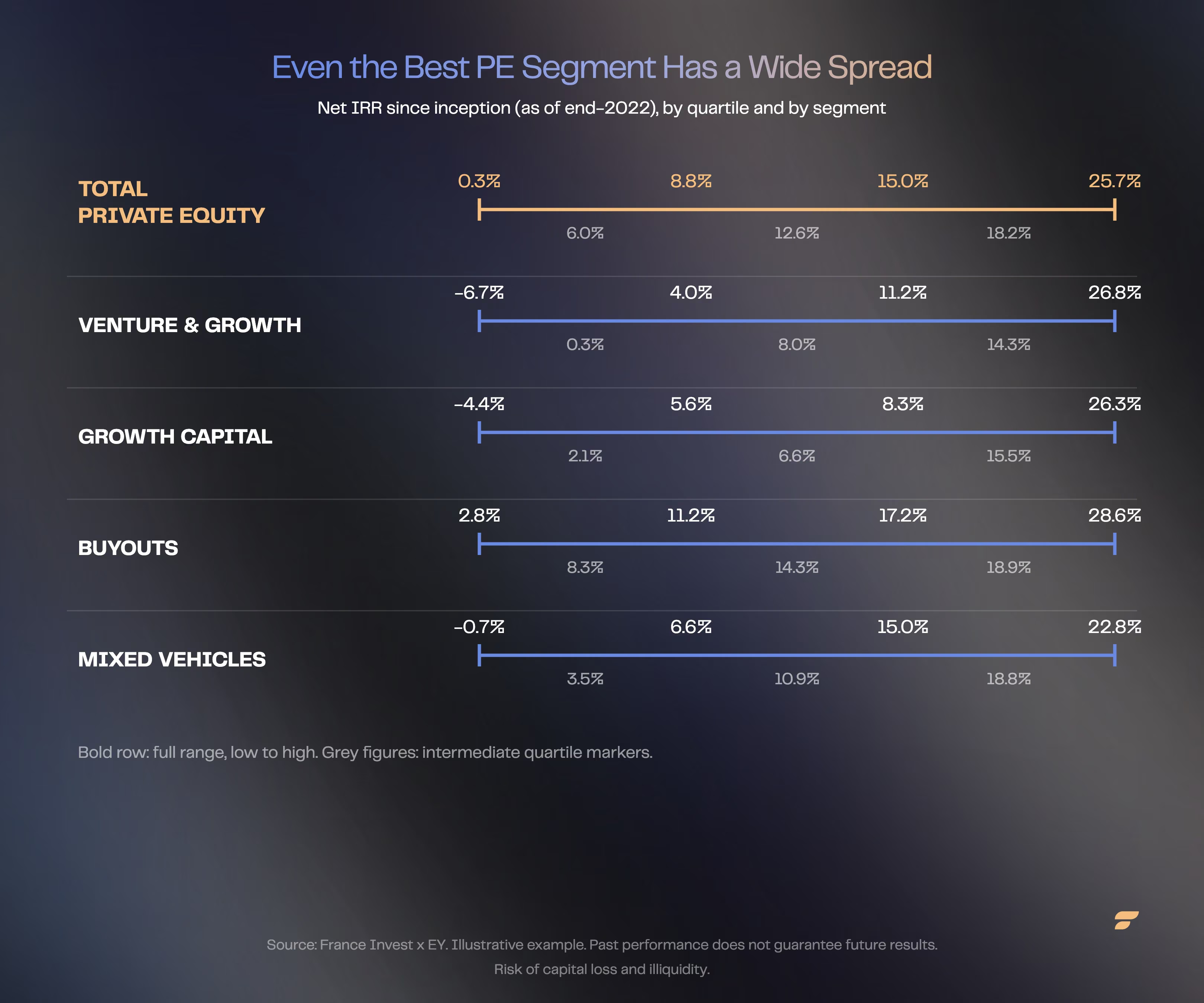
A ten-to-fifteen-year track record matters more than a three-year one. Over 10 years (2015-2025), the top quartile of funds posted an average net IRR of 22.0%, against -7.6% for the bottom quartile (France Invest x EY).
Performance Indicators: IRR, TVPI, DPI, RVPI, MOIC
- IRR: the central metric, which factors in the timing of cash flows
- TVPI: total value relative to capital invested
- DPI: the share of capital already returned
- RVPI: residual value
- MOIC: the gross multiple generated
Past performance does not guarantee future results.
Building Your Private-Equity Investment Strategy
Investing in private equity is no longer reserved for large fortunes, but it does require a methodical approach. Between diversified vehicles, observed historical performance and illiquidity risk, this asset class offers significant diversification potential for those who know how to navigate its complexity.
Frequently Asked Questions
What is the minimum amount to invest in private equity?
The entry ticket depends on the vehicle: from €1,000 via an FCPI or a general FCPR, from €100,000 for an FPCI reserved for sophisticated investors, and from €1,000,000 in investable wealth for dedicated support with Finary One.
What is the difference between venture capital and private equity?
Venture capital is a segment of private equity that finances early-stage startups with high potential but high risk. Private equity also covers growth capital, buyouts (LBO) and turnaround capital, focused on more mature companies.
How long is capital tied up in private equity?
A private-equity fund typically has a lifespan of 7 to 10 years, spanning the fundraise, progressive investments and the exits that generate distributions. An early exit is generally not possible before the fund is liquidated.
Do FCPI and FIP funds carry a tax benefit?
FCPI and FIP funds carry an income tax reduction at the time of subscription, as well as a capital-gains tax exemption after a holding period of more than five years, subject to conditions on keeping the units.
What are the main risks of private equity?
Private equity carries a risk of partial or total capital loss, and a liquidity risk: units generally cannot be resold before the end of the fund's life. Performance varies widely from one fund to another, as shown by the gap between the top and bottom quartile.
Sources
France Invest, Activity of the French private-equity market in 2024
AMF, whitelist of Crypto-Asset Service Providers, Finary SAS
Finary, Finary One offering overview
Regulatory disclaimers: Marketing communication. Investing carries a risk of partial or total capital loss. Past performance is not a reliable indicator of future performance. This article is provided for information and educational purposes only; it does not constitute personalised investment advice, a buy or sell recommendation, or tax advice. This investment carries a liquidity risk (resale not guaranteed, long horizon) and a risk of capital loss. Income and valuations are not guaranteed. Before investing, read the Key Information Document (KID) and, where relevant, consult an authorised adviser. Finary SAS, an investment firm authorised by the ACPR (no. 19283), member of AMAFI. Insurance broker registered with ORIAS (no. 21001279), member of the CNCGP (association approved by the AMF). Crypto-Asset Service Provider (CASP) authorised by the AMF under the MiCA regime, references no. A2026-026 and no. N2026-008.