Wealth Holding Company in France 2026: The Complete Guide for Wealth From €500,000


Updated on 10 August 2026
A wealth holding company in France is a company that holds and manages equity interests, securities or financial assets to optimise taxation, organise wealth transfer and diversify a portfolio. This guide covers its setup, its tax treatment (the parent-subsidiary regime, the Pacte Dutreil, apport-cession) and advanced strategies. It is aimed in particular at wealth of €500,000 or more in investable assets.

- Four legal structures are possible: SAS, SARL, a real-estate SCI taxed at corporate tax, or a civil company (société civile), depending on the wealth and tax objective.
- The parent-subsidiary regime exempts 95% of dividends passed up to the holding company, against a 31.4% flat tax (PFU) on direct distribution.
- Apport-cession (a French tax-deferral scheme under article 150-0 B ter of the CGI, France's General Tax Code, whereby an entrepreneur contributes shares to a holding company before it sells them) requires reinvesting at least 70% of the proceeds within 3 years in the event of a rapid follow-on sale.
- Setup: €1,850 to €14,650. Annual costs: €4,000 to €10,700, depending on the complexity of the structure.
- Finary One structures holding companies for selling entrepreneurs, regulated professionals and senior executives across the full wealth life cycle: pre-sale, investment, and estate transfer.
The radiologist aiming for €10 million in wealth over 30 years, the influencer who built €4.5 million through a holding company combined with Luxembourg life insurance, the executive who reinvests the proceeds of a sale into an FCPR (a French venture-capital investment fund, Fonds Commun de Placement à Risque): these strategies all rely on the wealth holding company, presented in the video below.
Case study: how this radiologist structures his SELARL and SPFPL to target €10 million in wealth over 30 years.
What Is a Wealth Holding Company?
A wealth holding company is a company whose main purpose is to hold and manage equity interests in other companies or financial assets (securities, real estate, private equity, life insurance). It plays a central role in the wealth strategy of an entrepreneur, a senior executive or a regulated professional in France.
Unlike an operating company that produces goods or services, a wealth holding company has a wealth-management function. It receives dividends from its subsidiaries, can borrow to acquire new equity interests, and forms a tax-optimised vehicle for transferring wealth.
Active Holding Company vs Passive Holding Company
Two main categories exist:
- Active holding company (holding animatrice) : under French tax law, a holding animatrice takes an active part in managing its subsidiaries, provides services (management, accounting, legal) and steers group policy. It qualifies for the Pacte Dutreil (a French scheme granting a 75% allowance on transfer duties for business transmission) for estate transfer.
- Passive holding company : it simply holds equity interests without actively intervening in management. It benefits from the parent-subsidiary regime but loses access to the Pacte Dutreil and to the IFI (France's real-estate wealth tax) exemption on business real estate.
The choice between the two depends on the wealth profile, the estate-transfer objectives and the investment horizon. For complex estates, the holding animatrice versus passive trade-off is often decisive.
The Available Legal Structures
Four main legal structures:
- SAS (Société par Actions Simplifiée, a simplified joint-stock company) : the most flexible structure, ideal for organising a group with several shareholders and preparing for estate transfer through preference shares.
- SARL (a French private limited company) : more tightly regulated, but with TNS status (self-employed worker) for a majority manager, which is attractive for social-security contributions.
- SCI (Société Civile Immobilière, a French real-estate holding company) : for holdings that are mainly real-estate focused, with a choice of tax regime (personal income tax or corporate tax).
- Société civile patrimoniale (a French wealth-holding civil company) : for mixed estates (securities plus real estate), with great flexibility in its articles of association.
Why Set Up a Wealth Holding Company?
The wealth holding company is a legal vehicle that multiplies tax and wealth efficiency through four levers: corporate-tax optimisation, early estate transfer, investment diversification, and access to Lombard lending.
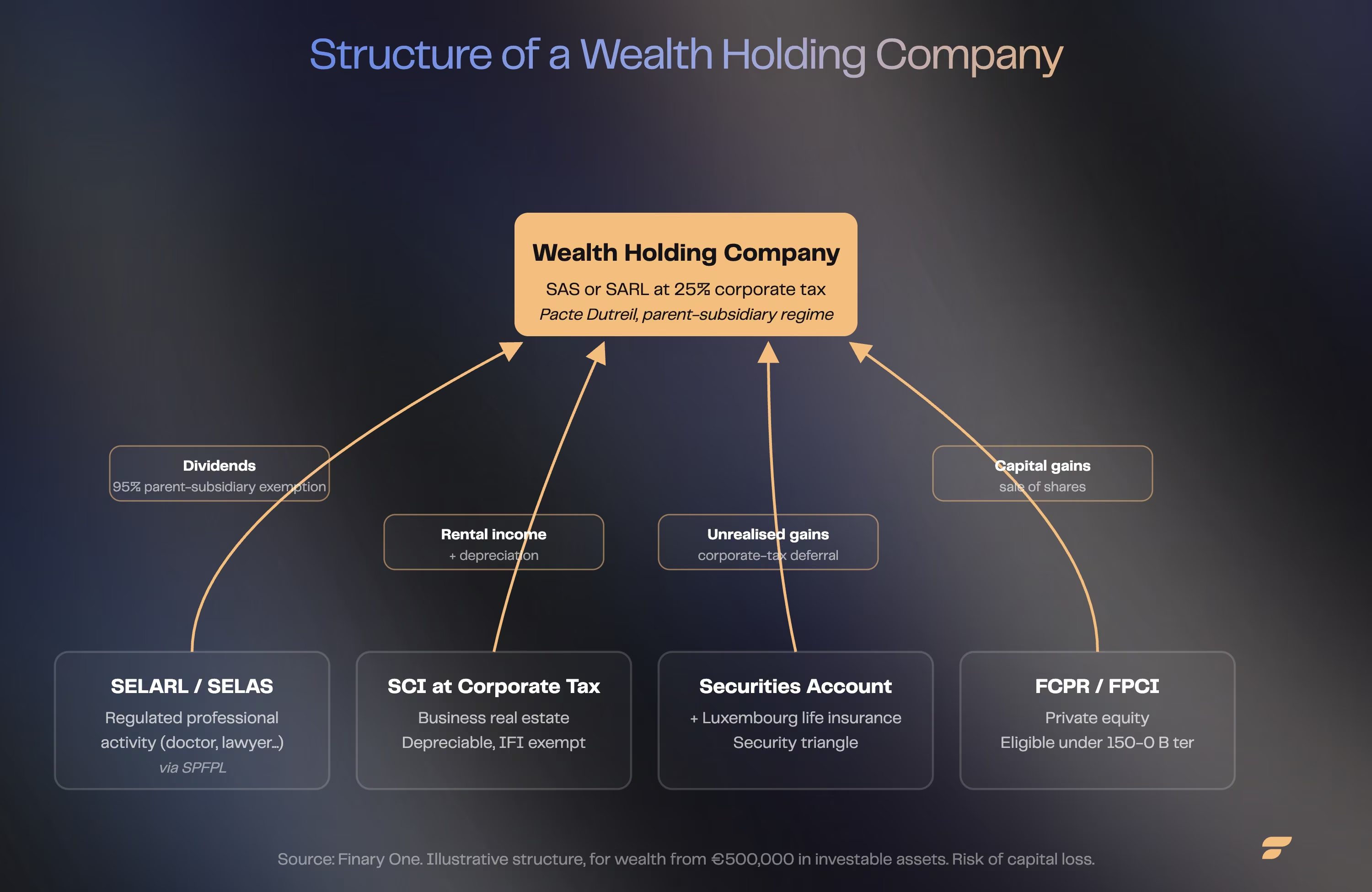
Tax Optimisation via the Parent-Subsidiary Regime
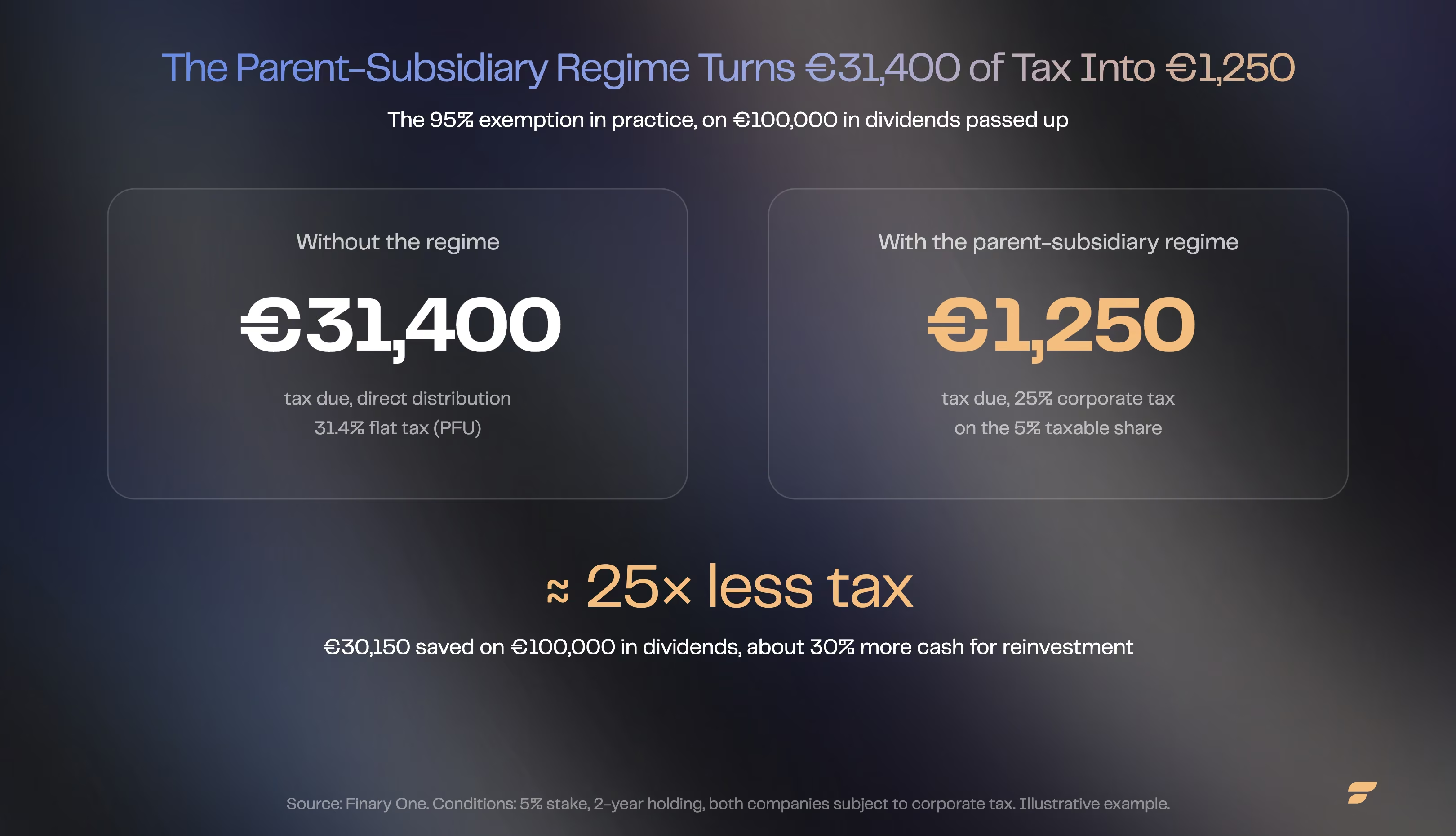
The parent-subsidiary regime lets the holding company receive dividends from its subsidiaries with a 95% exemption on corporate tax. In practice, out of €100,000 in dividends passed up to the holding company, only €5,000 is taxable (around €1,250 in corporate tax at the 25% rate in 2026).
Conditions for qualifying for the parent-subsidiary regime:
- The holding company holds at least 5% of the subsidiary's capital.
- The shares are held for at least 2 years.
- Both the holding company and the subsidiary are subject to corporate tax.
Some business owners use this optimisation to build up profits within the holding company rather than pay themselves personal dividends subject to the 31.4% flat tax (social contributions raised to 18.6% by the social-security financing law, in force since 1 January 2026). According to service-public.fr, social contributions on investment income indeed reach 18.6% in 2026 (CSG, CRDS and the solidarity levy).

Non-contractual document for promotional purposes. Finary One is Finary's private wealth-management offer, reserved for investors with at least €1,000,000 in investable assets. Investing carries risks, in particular the risk of partial or total capital loss. Finary SAS - 58 rue de Monceau 75380 Paris 8 - ORIAS no. 21001279, supervised by the AMF and the ACPR.
Early Estate Transfer
The wealth holding company facilitates the gradual transfer of wealth through several levers:
- Gifting shares with a €100,000 allowance per parent and per child every 15 years.
- Pacte Dutreil : a 75% allowance on transfer duties for business transmission (subject to collective and individual holding commitments).
- Démembrement de propriété (splitting ownership into bare ownership and usufruct) : gifting the bare ownership while retaining the usufruct, allowing both the transfer and the continued income.
An entrepreneur who structures a holding company 15 to 20 years before a sale or transfer can, as an indication and depending on the wealth configuration, meaningfully reduce transfer duties compared with a direct sale.
Investment Diversification
The holding company is an ideal vehicle for diversifying wealth across several asset classes:
- Private equity through FCPR funds, FPCI (a French professional private-equity fund, Fonds Professionnel de Capital Investissement), or direct investments in unlisted companies.
- Luxembourg life insurance with the French tax framework preserved and the security triangle.
- Business real estate through an SCI taxed at corporate tax, for offices, commercial premises or housing.
- Group cash holdings placed in term deposits, bonds or money-market funds.
- LBO deals to acquire new companies using leverage.
Access to Lombard Lending
Once the holding company is set up and its financial portfolio sufficiently developed (Luxembourg life insurance, securities account), it can access Lombard lending. This mechanism releases liquidity without disposing of the pledged assets, at a Euribor plus margin rate of 0.8% to 1.5%.
For the holding company of a selling entrepreneur with €2 million in financial wealth, this represents a borrowing capacity of €1.2 million to €1.5 million, without triggering the tax consequences of a sale.
How to Set Up a Wealth Holding Company
Setting up a wealth holding company follows four structured steps, from defining the wealth objective to drafting the articles of association, with an initial budget of between €1,850 and €14,650.
Step 1: Define the Wealth Objective
Before any legal steps, the main objective should be clarified:
- Ongoing tax optimisation (building up subsidiary dividends): a passive holding company set up as an SAS may be considered, depending on the situation.
- Family estate transfer (Pacte Dutreil, gifting shares): a holding animatrice set up as an SAS or SARL.
- Apport-cession (selling a business while deferring tax): a dedicated holding company subject to corporate tax, created before the sale.
- Real-estate investment : an SCI taxed at corporate tax or a société civile patrimoniale.
Step 2: Choose the Legal Structure
CriterionSASSARLReal-estate SCI (corporate tax)Civil companyStatutory flexibilityVery highRegulatedRegulatedVery highManager's social regimeEmployee-likeSelf-employed if majority ownerDepends on activityVariablePreference sharesYesNoNoNoPacte DutreilYesYesDepends on activityDepends on activitySetup cost€2,000 to €3,000€1,500 to €2,500€1,500 to €2,500€1,500 to €3,000
Step 3: Contribution in Kind vs Cash Contribution
Two ways to fund the holding company:
- Cash contribution : paying cash into the holding company's capital. Simple to set up, with no tax friction.
- Contribution in kind : contributing shares of an operating company. This normally triggers tax on the capital gain, unless the apport-cession regime under article 150-0 B ter applies, which defers that tax.
Apport-cession is one of the mechanisms used by entrepreneurs selling a business, under strict conditions. Under the 2026 finance law, if the sale takes place within 3 years of the contribution, the holding company must reinvest at least 70% of the proceeds in eligible economic activities within 3 years, then keep that reinvestment for at least 5 years.
Step 4: Drafting the Articles of Association
The articles of association define governance, the powers of directors, the terms for transferring shares and any preference shares. An accountant and a tax lawyer are essential at this stage to avoid irreversible mistakes.
Points to watch:
- Precise definition of the corporate purpose (holding animatrice versus passive).
- Approval terms in the event of a share transfer (inalienability clauses, pre-emption rights).
- Possible creation of preference shares to plan for a differentiated transfer between heirs.
- Management agreements between the holding company and its subsidiaries (management fees).
The Tax Regime of a Wealth Holding Company
The tax regime of a wealth holding company combines corporate tax at the 25% rate, the parent-subsidiary regime with a 95% dividend exemption, and access to the Pacte Dutreil for estate transfer.
Corporate Tax
A wealth holding company is generally subject to corporate tax at the standard 25% rate in 2026 (15% on the first €42,500 of profit for SMEs). This tax treatment is often more advantageous than personal taxation under the 31.4% flat tax or the progressive income-tax scale.
The Parent-Subsidiary Regime in Practice
The 95% exemption on dividends passed up applies only to the quote-part de frais et charges, the flat add-back representing deemed costs and expenses. In practice:
- €100,000 in dividends received.
- €5,000 (5%) added back to taxable income.
- Corporate tax of 25% on that €5,000 = €1,250 in tax.
- Effective tax rate: 1.25%.
Compared with a direct distribution to the individual shareholder subject to the 31.4% flat tax, the saving is around 30% on the cash available for reinvestment.
Apport-Cession Under Article 150-0 B Ter
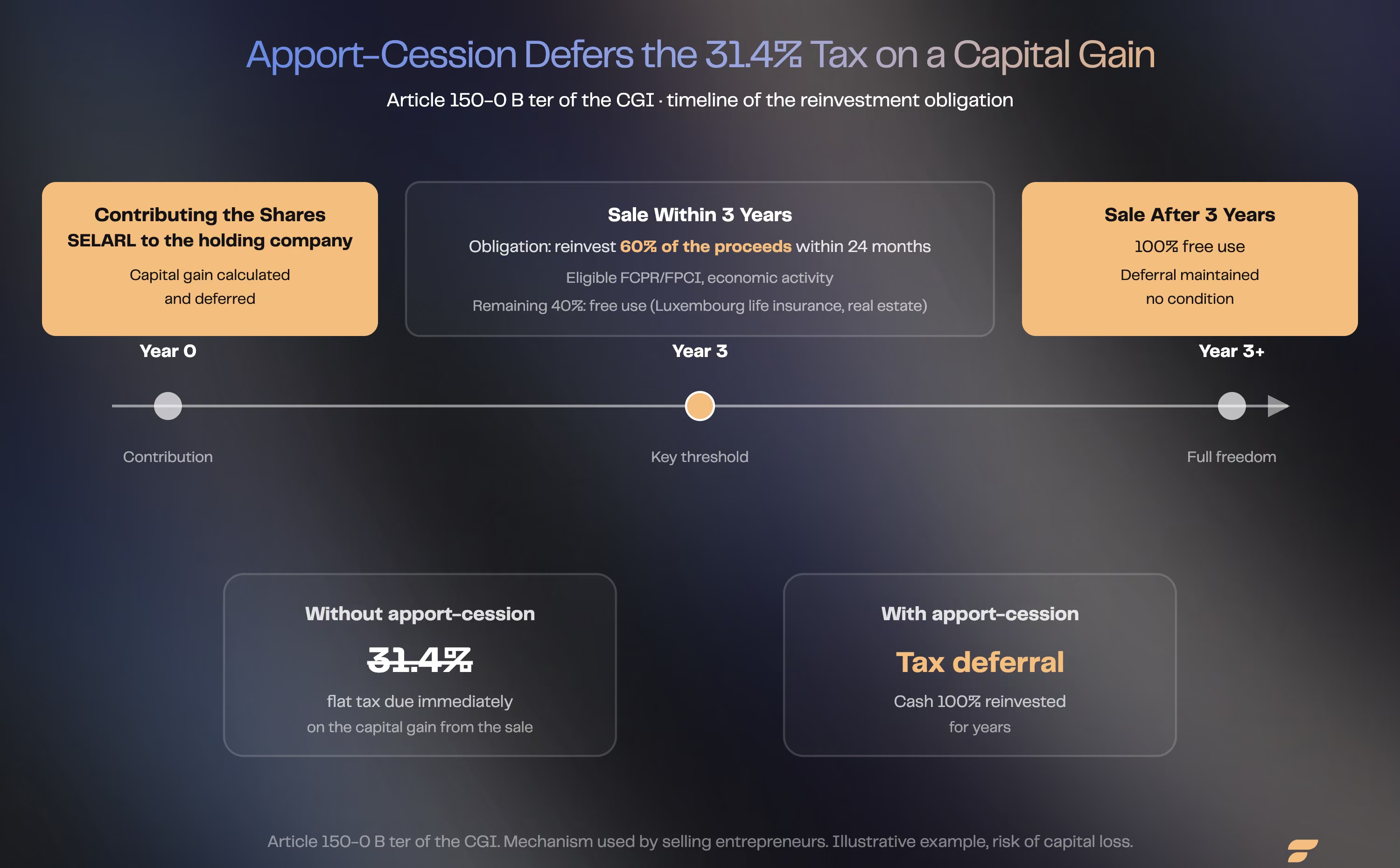
The tax scheme most commonly used by selling entrepreneurs. The apport-cession mechanism, detailed in our dedicated guide, defers tax on the capital gain from a sale by first contributing the shares to a controlled holding company, which then sells them to a third party.
Under the 2026 finance law, if the sale takes place within 3 years of the contribution, the holding company must reinvest at least 70% of the sale proceeds in eligible economic activities within 3 years, and keep that reinvestment for at least 5 years. The remaining 30% can be invested freely (real estate, Luxembourg life insurance, cash).
Beyond 3 years, the holding company can use the sale proceeds as it sees fit without jeopardising the tax deferral.
The Pacte Dutreil for Estate Transfer
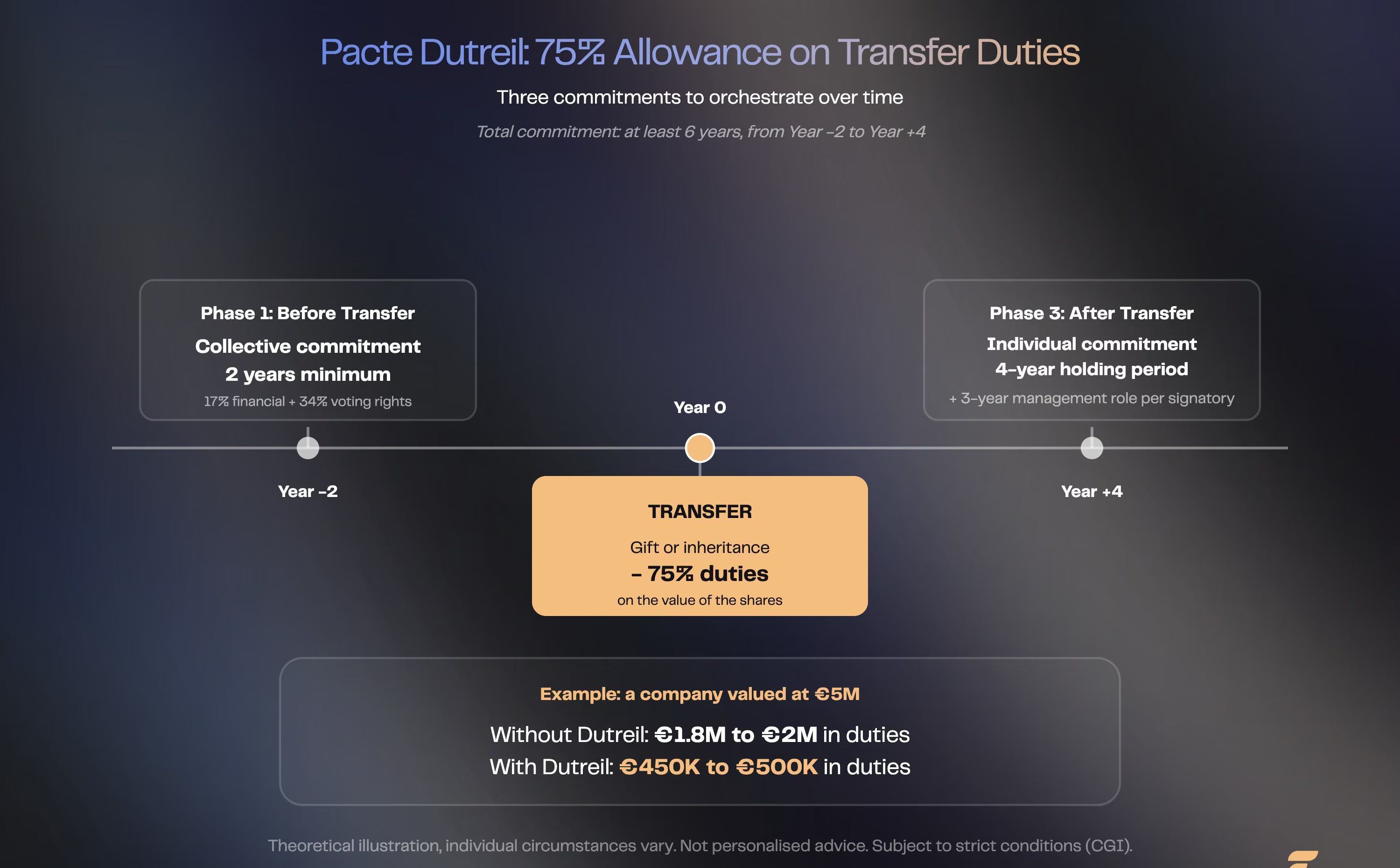
The Pacte Dutreil offers a 75% allowance on the value of shares transferred by gift or inheritance, subject to holding-commitment conditions:
- A 2-year collective holding commitment (among shareholders representing at least 17% of financial rights and 34% of voting rights for listed companies, 17% and 34% for unlisted companies).
- A 4-year individual holding commitment after the transfer.
- A management role held by one of the signatory shareholders for 3 years after the transfer.
On a company valued at €5 million, the Pacte Dutreil can, as a theoretical illustration and regardless of individual circumstances, bring transfer duties down from €1.8 million to €2 million to around €450,000 to €500,000. It is a key structuring provision of the French General Tax Code (CGI), subject to strict conditions.
Case study: how this influencer structured her €4.5 million in wealth through a wealth holding company combined with Luxembourg life insurance.
Practical Cases and Advanced Strategies
Advanced wealth-holding-company strategies apply chiefly to regulated professionals through the SPFPL, to estate transfer through preference shares, and to real-estate holding through an SCI taxed at corporate tax.
A Holding Company for Regulated Professionals: the SPFPL
Doctors, lawyers, notaries, accountants and other regulated professionals use the SPFPL (a French holding-company structure reserved for regulated professionals, Société de Participations Financières de Professions Libérales) as a dedicated wealth holding company.
The SPFPL makes it possible to:
- Build up practice profits (SELARL, SELAS) at the 25% corporate-tax rate rather than at the personal income-tax marginal rate, which can reach 45%.
- Benefit from the parent-subsidiary regime on dividends passed up.
- Acquire other practices through an LBO deal.
- Prepare for the transfer or sale of the practice.
The radiologist featured in the video above uses exactly this mechanism: his SELARL distributes dividends to his SPFPL, which reinvests them in private equity and real estate, aiming for a long-term compounding effect (results not guaranteed).
Non-contractual document for promotional purposes. Finary One is Finary's private wealth-management offer, reserved for investors with at least €1,000,000 in investable assets. Investing carries risks, in particular the risk of partial or total capital loss. Finary SAS - 58 rue de Monceau 75380 Paris 8 - ORIAS no. 21001279, supervised by the AMF and the ACPR.
Preference Shares: Transferring Value While Keeping Control
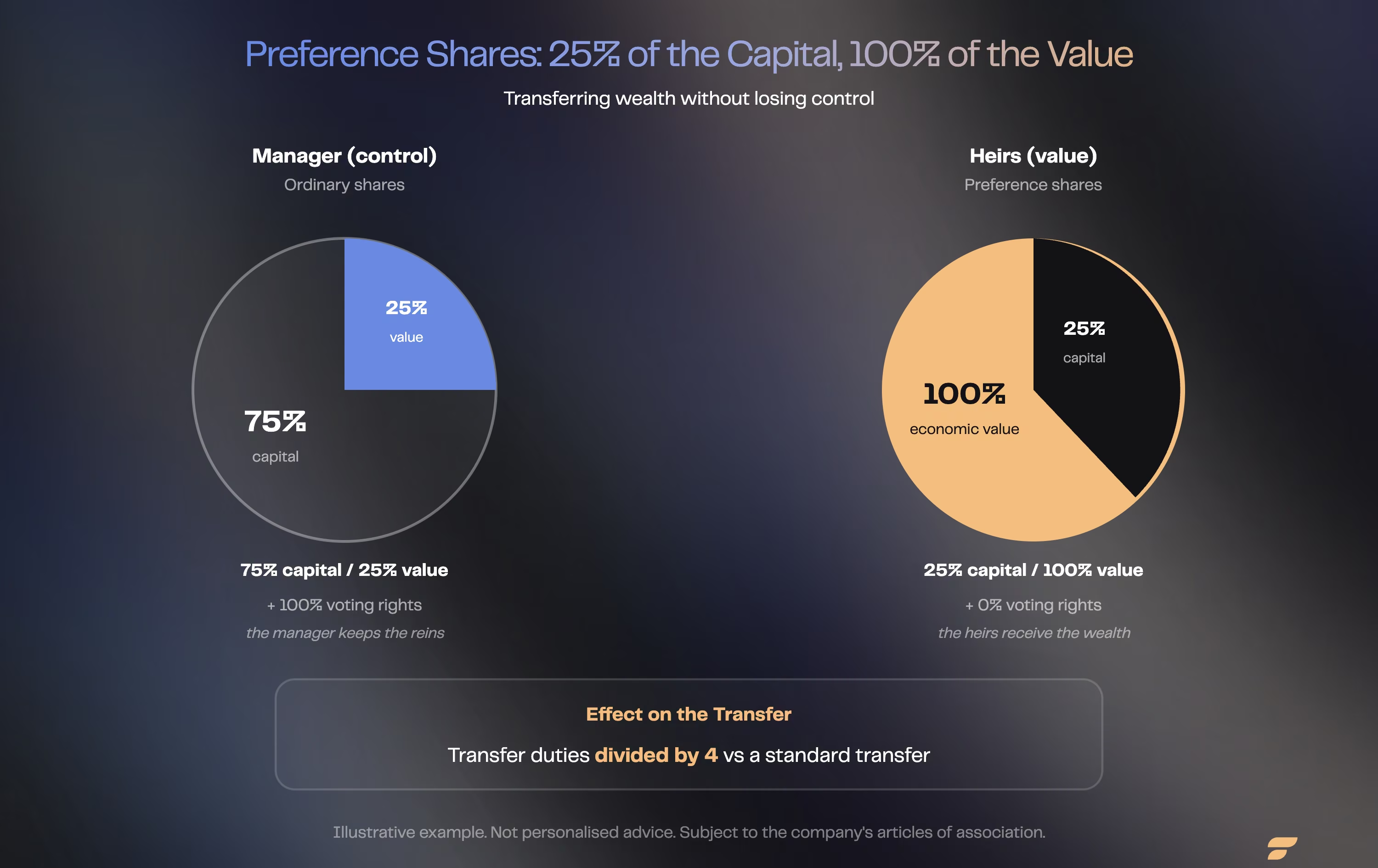
The preference shares make it possible to separate financial rights (dividends, capital gains) from voting rights (votes). This advanced technique offers estate-planning possibilities:
- Creating two share categories: ordinary shares (voting rights) and preference shares (financial rights).
- Gifting heirs preference shares representing 100% of the economic value but only 25% of the capital.
- The manager retaining ordinary shares: 75% of the capital but only 25% of the value.
Result: the transfer covers 100% of the value but only 25% of the rights, dividing transfer duties by 4 compared with a standard transfer. This strategy is particularly well suited to entrepreneurs who want to hand over wealth without losing operational control.
Holding Company and Real Estate: an SCI Held by the Holding Company
Holding business real estate through an SCI taxed at corporate tax and owned by a holding company offers several advantages:
- Depreciating the building (corporate-tax savings over 20 to 30 years).
- Deductibility of loan interest.
- IFI exemption on business real estate used in an operating subsidiary's activity.
- Profits passed up to the holding company through the parent-subsidiary regime.
Caution: taking real estate out of a company subject to corporate tax generates a significant taxable capital gain. This strategy suits long-term holding, not a quick resale.
Investing in Private Equity Through the Holding Company
The holding company can invest directly in private equity through several vehicles:
- FCPR / FPCI for multi-fund diversification with a moderate entry ticket (€5,000 to €100,000).
- Direct investment in unlisted companies for strategic deals (acquiring SMEs, taking equity stakes).
- Co-investment alongside specialised funds for larger tickets.
- Luxembourg life insurance incorporating private-equity funds within a tax-optimised wrapper.
For entrepreneurs using apport-cession, the mandatory reinvestment of at least 70% in eligible activities often goes through this route. FCPR funds eligible under article 150-0 B ter have become the vehicle of choice.
How Much Does It Cost to Set Up a Wealth Holding Company?
The total cost of a wealth holding company combines an initial setup cost of between €1,850 and €14,650 and annual running costs of between €4,000 and €10,700, depending on the complexity of the structure.
The cost breaks down into two parts: the initial setup and the annual running costs.
Setup Costs (One-Off)
ItemIndicative costDrafting the articles of association (lawyer)€1,500 to €4,000Court registry and incorporation fees€200 to €400Legal notice€150 to €250Tax advice (apport-cession)€3,000 to €10,000Total€1,850 to €14,650
The range depends on the complexity: a simple holding company with no contribution versus a structure involving apport-cession and management agreements.
Annual Running Costs
ItemIndicative annual costAccountant€2,000 to €5,000Legal advice (depending on activity)€1,000 to €3,000CFE (French local business property tax)€500 to €1,500Registered office (if outsourced)€500 to €1,200Annual total€4,000 to €10,700
From €500,000 in investable wealth, these annual costs represent less than 1% of the estate, largely offset by the tax savings generated by the parent-subsidiary regime and by optimising estate transfer.
Wealth Holding Companies and Finary One
Finary One supports investors with at least €1,000,000 in investable assets in structuring their wealth holding company, across the entire wealth life cycle: choosing the legal structure, the optimal tax regime, pre-sale, post-sale investment and estate transfer.
- Pre-sale phase : structuring the holding company, planning the apport-cession, optimising preference shares and preparing for the Pacte Dutreil.
- Post-sale investment phase : selecting FCPR funds eligible under article 150-0 B ter, private-equity allocation, incorporating Luxembourg life insurance, access to Lombard lending.
- Estate-transfer phase : gifting shares, démembrement, estate-planning optimisation and notarial support.
- 360° view of the estate, bringing the holding company, subsidiaries, Luxembourg life insurance, private equity, real estate and cash together in a single platform, with a dedicated wealth manager who makes decisions based on your wealth strategy.
Learn more about Finary One → Reserved for investors with €1,000,000 in investable assets. The strategies presented are for informational purposes only. Investing carries risks, in particular the risk of capital loss.
The Wealth Holding Company, a Cornerstone of Entrepreneurial Wealth
The wealth holding company is one of the tools used by selling entrepreneurs, regulated professionals and senior executives to structure their wealth. It ties together taxation, estate transfer and diversification within a long-term approach.
From the radiologist aiming for €10 million over 30 years to the influencer structuring €4.5 million in wealth through a holding company combined with Luxembourg life insurance, these practical cases show that a holding company is not an end in itself: it is a vehicle that fits within a broader wealth strategy, whose relevance depends on individual circumstances.
The complexity of the topic (parent-subsidiary regime, Pacte Dutreil, apport-cession, preference shares, combining it with Luxembourg life insurance and private equity) justifies expert support. For investors with at least €1,000,000 in investable assets, Finary One structures these operations with a dedicated wealth manager and a 360° view of their wealth.
Frequently Asked Questions
From What Level of Wealth Should You Set Up a Holding Company?
The cost-benefit balance is generally reached from €300,000 to €500,000 in investable wealth, or €100,000 in annual dividends passed up through the parent-subsidiary regime. Below that, running costs (€4,000 to €10,000 a year) absorb too large a share of the tax savings.
Active or Passive Holding Company: Which to Choose?
An active holding company (holding animatrice) gives access to the Pacte Dutreil (a 75% allowance on transfer) and to the IFI exemption on business real estate, but requires genuine management activity (management fees, services provided to subsidiaries). A passive holding company is simpler to run but closes off those tax levers. For an entrepreneur planning an estate transfer, the holding animatrice is often preferred, subject to individual analysis.
What Is the Difference Between a Holding Company and a Société Civile Patrimoniale?
A holding company is a generic term for a company that holds equity interests. It can take the form of an SAS, SARL, SCI or société civile. The société civile patrimoniale is a specific legal structure, more flexible in its articles of association but often less tax-efficient than an SAS taxed at corporate tax for financial-asset estates.
Can an SAS Be Turned Into a Wealth Holding Company?
Yes, by amending the corporate purpose and contributing shares or assets. This operation can benefit from apport-cession under article 150-0 B ter to defer taxation, subject to reinvestment and holding-period conditions.
Is a Wealth Holding Company Suitable for Executives With Stock Options and BSPCE (a French qualified stock-option scheme for startup employees, Bons de Souscription de Parts de Créateur d'Entreprise)?
Yes, in particular to structure the exercise of options and the sale of the acquired shares. Apport-cession into a holding company can defer the flat tax on unrealised gains. For startups in a pre-IPO phase, this approach has become common among founding CTOs, CPOs and VPs.
How Do a Wealth Holding Company and Luxembourg Life Insurance Work Together?
A holding company can take out Luxembourg life insurance as an investment wrapper. It then benefits from the security triangle, from access to dedicated fund structures (FID/FAS, standing for Fonds Interne Dédié and Fonds d'Assurance Spécialisé, dedicated internal funds within the policy) and from a specific tax framework. This combination is widely used for estates above €1 million.
Sources
Service-public.fr, social contributions on wealth and investment income, rates applicable in 2026
Service-public.fr, gift duties, €100,000 allowance between parent and child renewable every 15 years
Finary, apport-cession under article 150-0 B ter, reinvesting after a sale, 2026 thresholds
AMF, white list of crypto-asset service providers (PSCA), Finary SAS
Regulatory disclaimers: Marketing communication. Investing carries a risk of partial or total capital loss. Past performance is not a reliable indicator of future performance. This article is provided for information and educational purposes only; it does not constitute personalised investment advice, a buy or sell recommendation, or tax advice. This investment carries a liquidity risk (no guaranteed resale, long time horizon) and a risk of capital loss. Income and valuations are not guaranteed. Before investing, read the Key Information Document (KID) and, where relevant, consult an authorised adviser. Finary SAS, an investment firm authorised by the ACPR (no. 19283), member of AMAFI. Insurance broker registered with ORIAS (no. 21001279), member of the CNCGP (association approved by the AMF). Crypto-Asset Service Provider (CASP) authorised by the AMF under the MiCA regime, references no. A2026-026 and no. N2026-008.