

What Is an NFT? Definition of the Non-Fungible Token
Updated on 15 July 2026
An NFT (Non-Fungible Token) is a unique digital token recorded on a blockchain that certifies ownership of a digital or physical asset. It first appeared in 2017 with the game CryptoKitties, then went through a speculative boom in 2021 before falling by more than 90%. In 2026, it remains a small but still active niche.

- An NFT (Non-Fungible Token) is a unique blockchain token that certifies ownership of a digital or physical asset, unlike standard cryptocurrencies such as Bitcoin.
- The NFT market peaked in 2021 (Beeple's $69.3 million sale at Christie's) before falling by more than 90%, according to DappRadar.
- In 2026, the NFT market's capitalisation stands at around $1.4 billion, with a partial rebound driven notably by sports NFTs on the Sorare platform.
- Several early platforms such as Nifty Gateway and Foundation shut down for good in 2026; OpenSea and Sorare remain among the main platforms still active.
- Investing in NFTs remains highly speculative and carries a risk of total capital loss.
What is an NFT, and where does this market come from?
An NFT (Non-Fungible Token) is a unique digital token recorded on a blockchain that certifies ownership of a digital or physical asset.
The NFT crypto trend is not new: these 'non-fungible' tokens emerged in 2017 at the peak of the previous crypto bubble, with the game CryptoKitties. At the time, the price of Bitcoin hovered around $20K. The game's mechanics are very close to old Panini sticker albums: a collection of more or less rare Kitties. The first Kitty, Genesis, sold for 246 ETH, worth $117K at the time ($340K today). What makes them special? Each Crypto Kitty is encapsulated in a unique NFT, which is the source of its rarity.
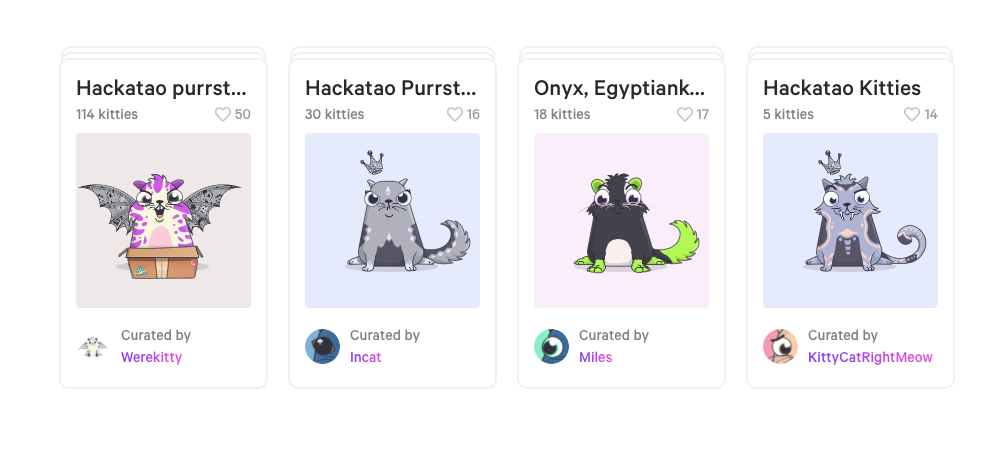
As is often the case in crypto, the FOMO ('fear of missing out') became completely out of control, to the point of clogging the Ethereum blockchain and making it unusable. By late 2018, all of this seemed like nothing more than a bad memory. Yet CryptoKitty is still around, and NFTs have only grown in popularity.
The art market and NFTs: the Beeple example
The rise of crypto NFTs is not a passing fad, it is a deep-seated trend that will profoundly change the art and collectibles market. Physically owning an object already matters less and less. How many physical-art collectors buy purely to store the piece in a free port (such as Geneva's)? A huge share of them!
What matters is ownership, whether it is digital or not makes no difference. Art is very often a financial asset within the wealth management strategies of the wealthiest. The same is true for crypto NFTs. Anyone can take a screenshot of your CryptoKitty, but only one person owns it: you. In 2021, at the height of the speculative bubble, the NFT art market reached around $2.9 billion in trading volume according to DappRadar. That volume then collapsed by more than 90%, falling to $23.8 million in the first quarter of 2025.
Traditional auction houses took part in this boom. In March 2021, Christie's auctioned off a piece made up of 5,000 digital images by the artist Beeple (Mike Winkelmann outside the blockchain), for a final price of $69.3 million.
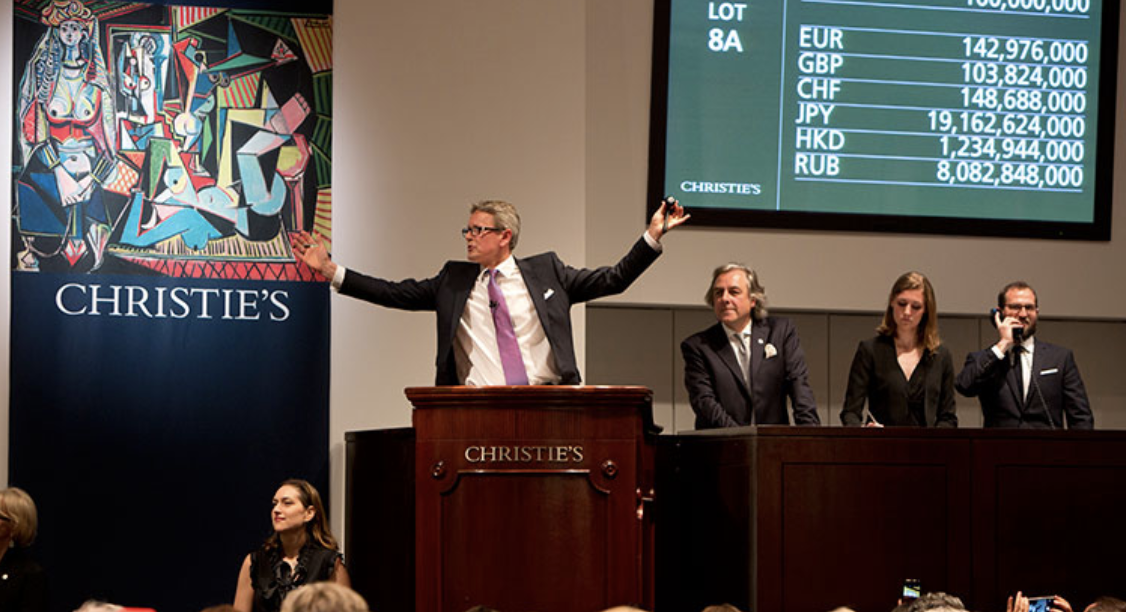
The final sale closed at $69.3 million, a record for a digital artwork at the time. Beeple also sold other works on Nifty Gateway, a platform that shut down for good in 2026 due to insufficient activity. Some NFT sales from that period included a physical token signed by the artist, bridging the physical and digital worlds.
A striking example of the NFT boom: buying a tweet
In 2021, the platform Valuables let users bid on tweets turned into NFTs. Elon Musk's tweet 'One word: DOGE', for example, sold for $7,777 (5.4 ETH). Valuables is inactive today: it mostly illustrates the speculative craze of that period rather than a common practice in 2026.
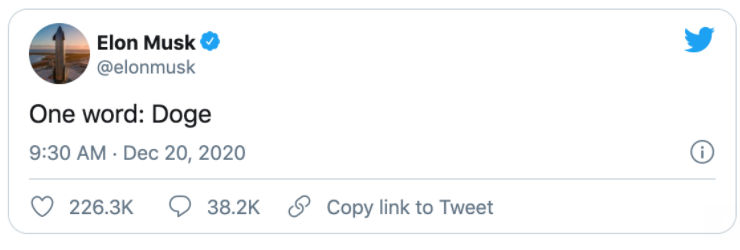
For the sale of our famous tweet to go through, Elon first has to log into Valuables with his Twitter account, link a wallet (the crypto equivalent of a bank account) and accept the offer. Once accepted, the tweet is 'minted' (created) as an ERC-721. A crypto artwork is born. The owner can now display it in their personal virtual gallery, as one investor did with another tweet on OpenSea.
Warning: buying this tweet grants no rights over Elon Musk's Twitter profile or any advertising revenue it might generate. You simply own a token that encapsulates ownership of the tweet's image.
Why did the NFT market rise so much, then collapse?
Several factors explain the 2021 craze: the spectacular rise of cryptocurrencies enriched many investors, who reinvested part of their gains into digital art; artists were able to sell directly without an intermediary, which also solved the forgery problem thanks to blockchain traceability; and the health crisis pushed auction houses and galleries to experiment with digital formats.
That same craze fed a classic speculative bubble: prices disconnected from any real use, a rush of inexperienced investors, then a brutal deflation starting in 2022 when the crypto market as a whole entered a downturn. The tax treatment of NFTs also remains largely unclarified by the French tax authorities, in the absence of substantial case law on this type of asset.
finally regulated
Investing carries risks, including the risk of capital loss. Crypto-assets are highly volatile: you may lose all or part of your investment. Past performance is not a reliable indicator of future performance. Finary is authorised as a Crypto-Asset Service Provider (CASP, “PSCA” in French) under the MiCA regime by the AMF.
Getting involved in the NFT market in 2026
Not all NFTs are worth millions of dollars, far from it. It is still possible to take part in this market from just a few tens of euros, on a small number of platforms still active after the market's deflation.
- OpenSea: the leading general-purpose marketplace still active, now a multi-blockchain aggregator (more than 20 networks supported).
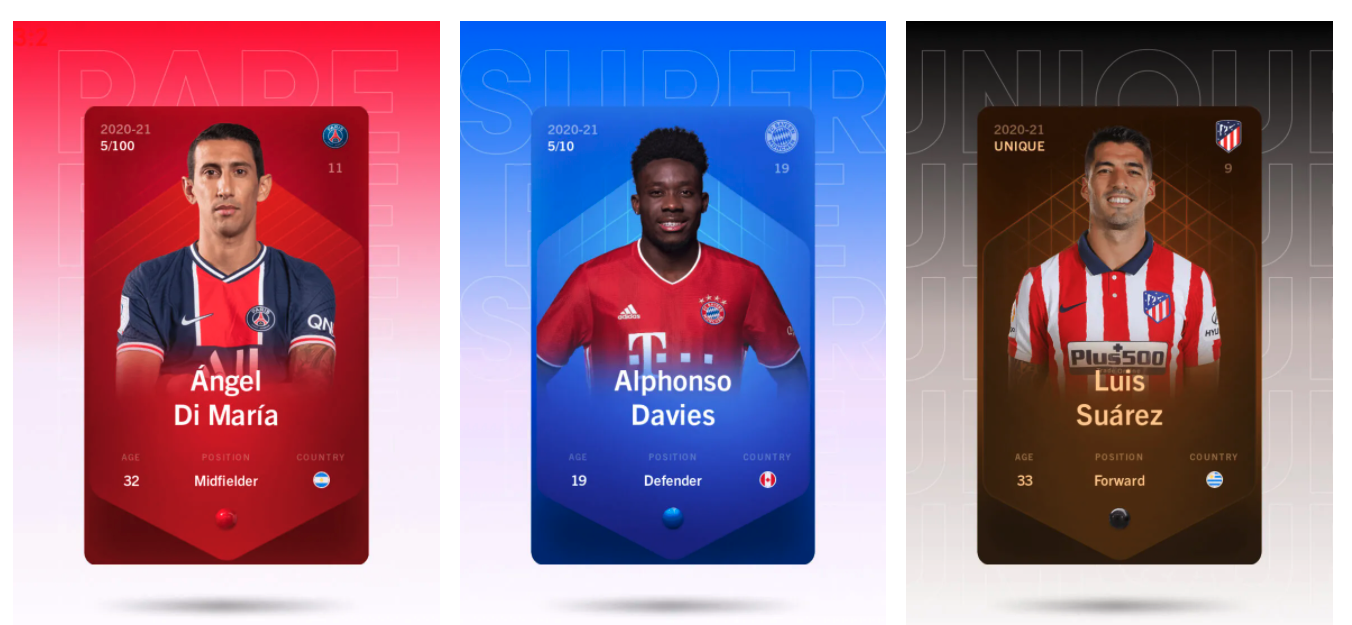
- Sorare: a French sports-NFT platform (fantasy football), still active despite recent financial difficulties; it drives much of the renewed interest in sports NFTs in 2025.
Other major platforms from the 2020-2021 period (Nifty Gateway, Foundation) shut down for good in 2026, lacking enough activity to remain profitable. Before using an NFT platform, it is therefore best to check that it is still active.
Note: you need to use a wallet such as Metamask to interact with these platforms.
Should you invest in NFTs in 2026?
The NFT market has gone through a classic speculative cycle: extreme enthusiasm in 2021, followed by a fall of more than 90%. What remains in 2026 is a much smaller but real market, driven notably by sports NFTs and a handful of surviving general-purpose marketplaces. The highly speculative nature of this asset makes any investment risky: there is no guarantee of future value.
It is best to think of buying an NFT as a personal favourite rather than a bet on a future gain. One angle still worth watching is video games, where projects such as The Sandbox let you buy unique virtual assets, even though this sector has also seen a significant drop in activity since 2021.
Frequently asked questions
What exactly is an NFT?
An NFT (Non-Fungible Token) is a unique digital token recorded on a blockchain, most often Ethereum. Unlike a cryptocurrency such as Bitcoin, where each unit is interchangeable, each NFT is unique and certifies ownership of a specific digital or physical asset.
Does the NFT market still exist in 2026?
Yes, but on a much smaller scale than the 2021 peak. The NFT market's capitalisation stands at around $1.4 billion in 2026, compared with a far higher peak in 2021-2022. The sports-NFT segment, driven by platforms such as Sorare, has seen renewed interest since late 2025.
Which NFT platforms are still active today?
OpenSea and Sorare are among the main platforms still active in 2026. Other early players such as Nifty Gateway and Foundation shut down for good, lacking enough activity to remain profitable after the market collapsed.
Is investing in NFTs risky?
Yes, highly so. NFTs are highly speculative assets, with no guarantee of future value or liquidity. The market has already fallen by more than 90% since its 2021 peak: it is best to buy an NFT out of personal interest rather than hoping for a guaranteed gain.
What is the difference between an NFT and a standard cryptocurrency like Bitcoin?
Bitcoin is fungible: each unit has the same value and is interchangeable with another. An NFT is non-fungible: each token is unique and cannot be replaced identically by another, which makes it possible to represent ownership of a specific asset.
Sources
DappRadar, the collapse of NFT art volume since the 2021 peak
Christie's, auction of Beeple's artwork (March 2021)
Coindesk, Nifty Gateway shuts down in 2026
Bitcoin News, Foundation shuts down for good (April 2026)
CryptoTimes, Sorare restructuring in late 2025
Regulatory disclaimers: Marketing communication. Investing carries a risk of partial or total capital loss. Past performance is not a reliable indicator of future performance. This article is provided for information and educational purposes only; it does not constitute personalised investment advice, a buy or sell recommendation, or tax advice. Crypto-assets are highly volatile and carry a risk of total capital loss. They benefit from no capital guarantee and are not covered by deposit-guarantee or investor-compensation schemes. Before investing, read the Key Information Document (KID) and, where relevant, consult an authorised adviser. Finary SAS, an investment firm authorised by the ACPR (no. 19283), member of AMAFI. Insurance broker registered with ORIAS (no. 21001279), member of the CNCGP (association approved by the AMF). Crypto-Asset Service Provider (CASP) authorised by the AMF under the MiCA regime, references no. A2026-026 and no. N2026-008.