

You've Just Received a Windfall. What Should You Do in France?

Updated on 28 July 2026
An inheritance, an exceptional bonus, the sale of a business or a property, gambling winnings: suddenly receiving a large sum of money in France is a rare event, and far more perilous than it looks. Without preparation, a fortune can disappear faster than you would imagine.
This article lays out the method: the 7 reflexes to adopt in the first few months, illustrated by a cautionary tale, followed by a sample wealth allocation presented by Corentin, head of private wealth management at Finary.
If your situation is specific, two dedicated guides complement this one: what to do with an inheritance and what to do after selling your business.

- Discretion is the golden rule: announcing a large windfall publicly attracts unwanted attention and costs you control of the situation.
- Do not change anything right away: park the sum in secure holding vehicles (term deposits, money market funds) while you build a strategy.
- Surround yourself with an independent, fee-based advisor, and a psychologist if needed: a sudden inflow is also an emotional shock.
- Plan ahead before giving: gift tax can reach up to 60% for non-family recipients.
- Set yourself a limit of 5% of the sum for enjoyment, and aim to live off the income from your capital without touching the capital itself.
Why Is a Large Windfall a Risky Moment?
Because the money arrives all at once, before the right money-management habits have had time to form. Julien's story, told in the source video, sums it up.
Julien, 34, a mechanic, wins 15 million euros in the lottery. He announces it to everyone, even on social media, and resigns the very next day. He came looking for a house worth 1 million and leaves with a villa worth 2.5 million. He gives 3 million to his parents: nearly a million goes to gift tax, and his brother, left out, tears the family apart. He funds his friends' projects, which fail. The rest sits in a current account while the spending keeps piling up.
A few years later, 2 million is left, a big silent house, and a lot of loneliness. What should have been a blessing accelerated his downfall. Each of Julien's mistakes corresponds to a reflex that would have changed the outcome.
Which Reflexes Should You Adopt?
Seven, to follow in order: stay discreet, get the right people around you, plan ahead for sharing, take your time, cap your spending on pleasure, keep an activity, and live off income rather than capital.
1. Stay Discreet
It is the golden rule, and the first piece of advice the Française des Jeux, France's national lottery operator, gives its winners. Talking about your winnings attracts fake friends and scammers, creates enormous social pressure (everyone will want a share), and costs you control of the situation.
Instead: limit who you tell to a very small circle of trusted people, and avoid overly visible signs of wealth. For lottery winnings, the Française des Jeux offers dedicated services to collect the sum in complete confidentiality.
2. Surround Yourself With the Right People
On the mental side first: a sudden inflow is an emotional shock. Once the euphoria fades, stress, confusion or a great emptiness can set in. A psychologist used to abrupt life changes helps you keep your balance.
On the financial side next: turn to an independent wealth management advisor (CGPI) paid on a fee basis. Unlike advisors paid on commission by the products they sell, they have nothing to sell you: their interests are aligned with yours.
Letting the sum sit in a current account, as Julien did, is not a prudent option: inflation erodes money that is not put to work.
3. Plan Ahead Before Giving
Giving without thinking it through is costly: in France, gift tax can climb as high as 60% for non-family recipients, and Julien's gift to his parents left almost a million in taxes.
Before giving, and even before receiving the sum, consult a professional. A special case is lottery winnings: declaring loved ones as co-players from the outset lets you share the winnings without a taxable gift. In practice, if you buy a €2 ticket and a family member gave you €1 to play, they can receive half the winnings tax-free.
4. Take Your Time, Without Upending Your Lifestyle
Rushing is the surest way to squander a fortune. During the first few months: keep your job and your habits, stay with your current bank, and park the sum in secure holding vehicles, such as a term deposit, certificates of deposit (you act as a lender to the bank), or money market funds. Every bank offers them.
These temporary placements buy you time: time to structure your priorities and make well-considered decisions.
5. Treat Yourself, 5% Maximum
Celebrating is normal, even necessary. The danger is the spiral: each purchase calls for the next one to recapture the same fleeting satisfaction.
The rule is simple: spend no more than 5% of the sum on yourself. For €10 million, that comes to €500,000. Already considerable, and above all capped.
6. Keep an Activity Going
Stopping everything overnight creates a huge void: without projects or bearings, absolute freedom turns into boredom, sometimes depression. Cutting back your working hours rather than resigning, investing in a project you care about, supporting a charity: what matters is staying grounded.
7. Live off Income, Without Touching the Capital
Capital, however enormous, is not infinite: spent without limit, it disappears. Think of it as a fruit tree: cut it down and everything is gone; tend it, and it bears fruit year after year.
This is the principle behind large fortunes: funding your lifestyle with the income generated by your investments, while preserving the value of the capital. And at this level of wealth, it calls for a carefully considered allocation and professional support.
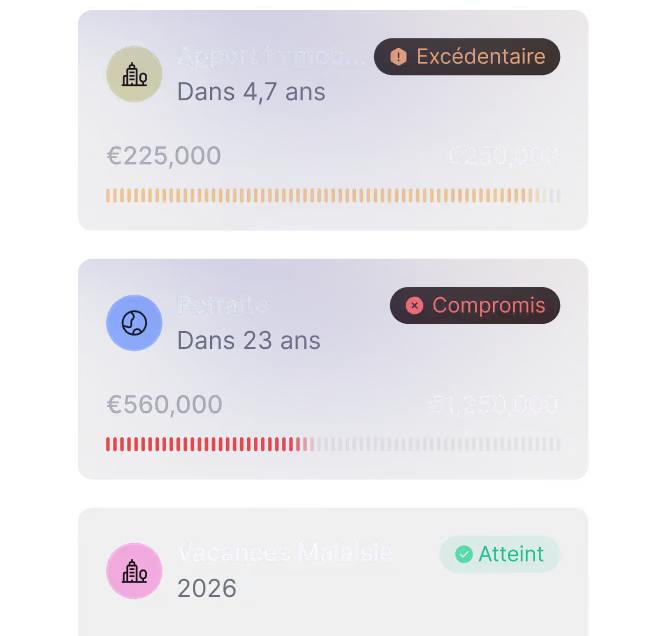
Goals
What Does an Allocation for a Very Large Sum Look Like?
Corentin, head of private wealth management at Finary, presents in the video the allocation that could be proposed to a client who has received €15 million. This is an illustrative example and does not constitute personalised advice.
Two objectives shape the whole strategy. Protecting wealth against inflation comes first: it acts as a compass, to be followed every year. Then, generating enough income to live comfortably, maintain assets and cover taxes. Because the larger an estate grows, the more the charges follow: IFI (France's real-estate wealth tax), CEHR (France's exceptional contribution on high incomes), the upkeep of assets.
On top of that comes the psychological aspect: whatever your risk tolerance, the allocation must first bring peace of mind. The whole approach rests on diversification.
“Concentration makes you rich, diversification keeps you rich.”
Warren Buffett, quoted in the source video
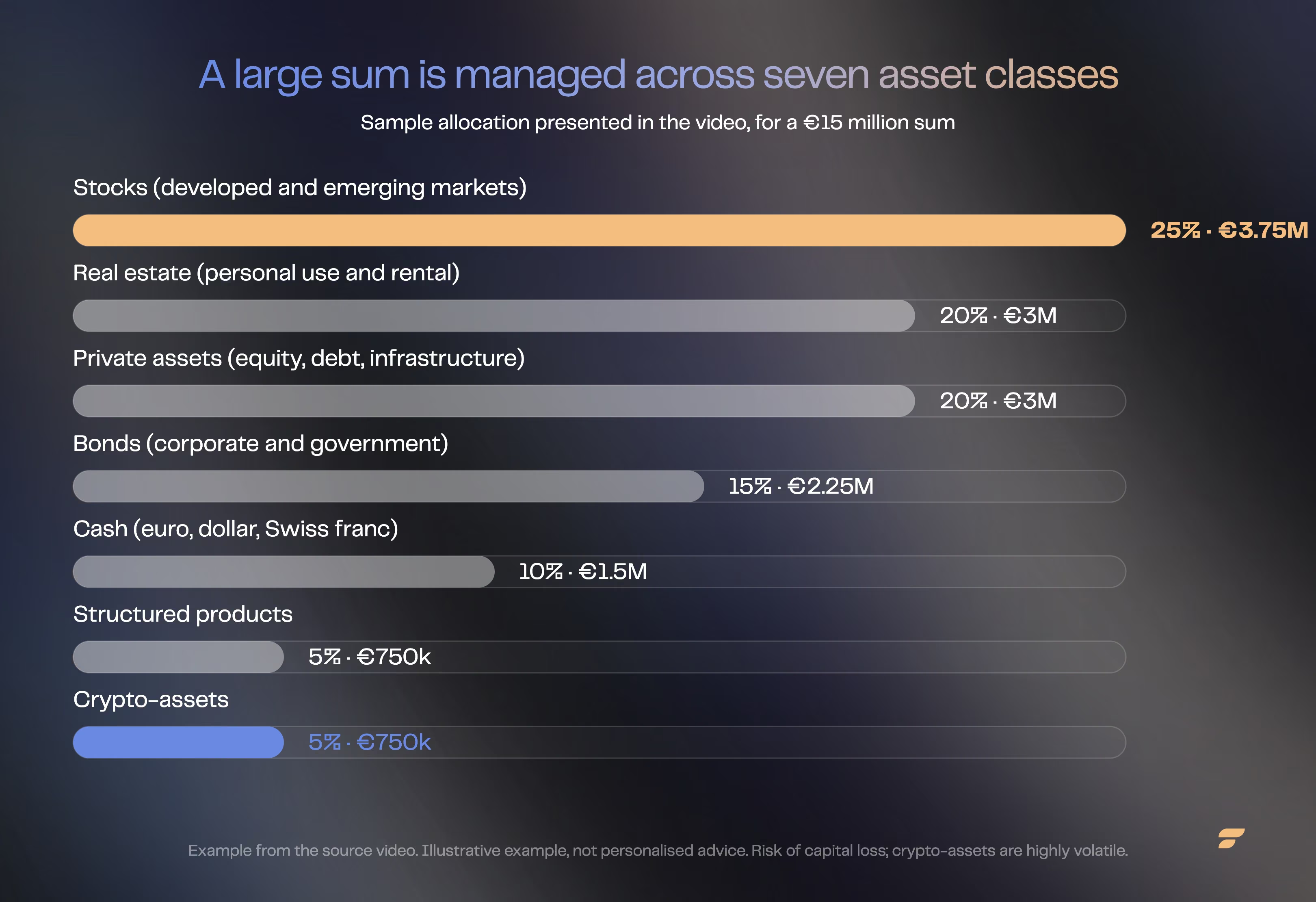
In detail, as presented in the video:
- Stocks (25%): 70% in developed markets (United States, Europe), 30% in emerging markets, targeting a return of around 8% a year. Held through a PEA (a French tax-advantaged equity savings account, quickly capped at €150,000 in contributions), then a Luxembourg life insurance policy, with an almost unlimited investment universe.
- Real estate (20%): half for personal use (a second home to enjoy the windfall), half for rental, targeting around 5% a year in income. SCPI (a French non-listed real-estate investment fund, comparable to a REIT) make it possible to gain this exposure without the constraints of direct management.
- Private assets (20%): half in private equity (a strategy diversified across secondaries, growth buyout and venture capital), a quarter in private debt, a quarter in infrastructure (energy, transport, utilities).
- Bonds (15%): half in highly rated corporate bonds (investment grade, targeting around 6%), half in government bonds (around 4%), for stability. A geographic diversification, between issuers from developed and emerging countries, rounds out the exposure.
- Cash (10%): split between euros, dollars and Swiss francs, partly held as term deposits, to absorb the unexpected and seize opportunities.
- Structured products (5%): an equal-weighted basket of large French stocks, targeting a return of around 8.5% in a stable market scenario. Thanks to equal weighting, a fall in one underlying can be offset by a rise in the others.
- Crypto-assets (5%): a limited exposure to benchmark assets (Bitcoin, Ethereum), which are highly volatile, held via secure custody solutions or regulated platforms.
All these return targets are the ones cited in the video: they are not guaranteed, and past performance is not a reliable indicator of future performance. The overall balance aims to protect wealth, generate sufficient income and let the capital grow sustainably.

Frequently Asked Questions
What Should You Do First When You Receive a Large Sum?
Nothing definitive: stay discreet, keep your habits, and park the sum in secure holding vehicles (term deposits, certificates of deposit, money market funds) while you build a strategy with an independent advisor.
Why Stay Discreet About a Win or an Inheritance?
Because a public announcement attracts fake friends and scammers, creates enormous social pressure and costs you control of the situation. It is the first piece of advice the Française des Jeux gives its winners: limit who you tell to a very small circle.
How Much Can You Spend on Yourself?
The rule is simple: 5% maximum of the sum received. For €10 million, that comes to €500,000 to enjoy. Setting this limit from the start avoids the spiral where each purchase calls for the next.
How Can You Give to Loved Ones Without Losing It All in Taxes?
By planning ahead with a professional before giving: gift tax can reach up to 60% for non-family recipients. For shared lottery winnings, declaring loved ones as co-players from the outset allows a split without a taxable gift.
What Does It Mean to Live Off Your Income?
Funding your lifestyle with the income generated by capital (rent, coupons, dividends), without touching the capital itself. Like a fruit tree: you harvest the fruit every year without cutting down the tree. This is the management principle of large fortunes.
Sources
Service-Public - Quels sont les droits à payer sur une donation selon le lien avec le donateur ?
impots.gouv.fr - Impôt sur la fortune immobilière (IFI)
BOFiP - Contribution exceptionnelle sur les hauts revenus
Regulatory disclaimers: Marketing communication. Investing carries a risk of partial or total capital loss. Past performance is not a reliable indicator of future performance. This article is provided for information and educational purposes only; it does not constitute personalised investment advice, a buy or sell recommendation, or tax advice. This investment carries a liquidity risk (resale not guaranteed, long horizon) and a risk of capital loss. Income and valuations are not guaranteed. Crypto-assets are highly volatile and carry a risk of total capital loss. They benefit from no capital guarantee and no deposit guarantee or investor compensation scheme. Before investing, read the Key Information Document (KID) and, where relevant, consult an authorised adviser. Finary SAS, an investment firm authorised by the ACPR under no. 19283, member of AMAFI. Insurance broker registered with ORIAS under no. 21001279, member of the CNCGP (association approved by the AMF). Crypto-Asset Service Provider (CASP) authorised by the AMF under the MiCA regime, references no. A2026-026 and no. N2026-008.