


Where to Invest Your Money in France: The Complete Guide (updated 2026)

Surplus income, an inheritance, the sale of a property... There are many reasons to look for a good place to put your money in France. As we will see, letting cash sit in a current account or a savings passbook actually loses you money. Putting an investment strategy in place is therefore essential if you want your money to grow while respecting the delicate risk/return balance. So which investment product should you choose to optimise tax? Which asset classes should you invest in? How do you limit risk while maximising return? The aim of this guide is not to turn you into a day trader, but to give you the right foundations so you can steer your own portfolio, limit your exposure to risk and put your savings to work under satisfactory tax conditions.
Why does it matter where you put your money?
In modern societies there are two sources of enrichment, in the material sense:
- earned income, where you are paid in exchange for a service or a product
- capital income, where the assets you own (property and financial) generate a return
Earned income has a natural ceiling, because there is a limit to the value of the goods and services you can produce in a given time. Capital income, by contrast, is unlimited in principle as long as someone is paying you rent, dividends or interest, or buying your asset from you at a higher price (a capital gain).
And, as you probably know, capital income can itself be reinvested to generate further income. This phenomenon, known as compounding, or compound interest, produces exponential growth. In other words, growing your money creates additional income that can itself be capitalised and that increases as time passes.
For example, invest €100,000 and, thanks to compounding, after 20 years you would hold:
- €140,094 at a rate of 1.7% on a Livret A, France's regulated savings passbook (rate effective 1 August 2026)
- a projected amount on a 1.5% assumption (illustrative, not guaranteed) on a euro fund
- a projected amount on a 4% assumption (illustrative, not guaranteed, before fees and tax) on an SCPI (a French non-listed real-estate investment fund, comparable to a REIT)
- €466,095 if you invest in a portfolio of stocks returning 8% a year
Depending on the investments you choose, your capital grows faster or slower.
That said, not all investments are equal, and some can lose you money. In finance, there is no return without risk. Our example left out one essential element: risk. Putting your money into stocks is more profitable, but it is also far riskier than a Livret A. Note too that there is no single “best investment”, only investments that suit a given profile and a given objective more or less well.
French savers make a number of classic mistakes. There are at least three:
- putting all their savings into bank passbooks that do not pay enough to cover inflation. As time passes, that money loses purchasing power, because the interest does not offset the fall in the value of the currency (more on this below)
- putting all their savings into highly volatile assets such as Bitcoin
- putting all their savings into illiquid products such as fixed-term deposits, where the money cannot easily be released
You will have noticed that what these pitfalls have in common is putting all your eggs in one basket.

What makes an investment profitable?
The profitability of an investment is always judged against the risk of capital loss. To see why this matters, imagine walking into a casino to play roulette. In the traditional set-up, betting on a colour doubles your stake. In other words, your expected return on each bet is 100%. But since you also have roughly a 51% chance of losing your stake, your long-run return is negative.

Risk is easy to estimate in a casino, but far harder to calculate for a financial investment: you may know past performance, but you have no idea about future performance. A famous saying in finance holds that past performance is not a reliable indicator of future performance. So how do you know whether an investment is profitable?
In truth, it is impossible to know in advance, with certainty, whether your investment will be profitable, unless your savings product offers guaranteed capital and a guaranteed return (a Livret A, for example), which comes at the cost of a very low, sometimes negative, real return (mainly because of inflation).
Growing your capital therefore involves, one way or another, a bet on the future. Unlike roulette, though, you can adopt a wealth management strategy that maximises your return while keeping the risk of loss under control.
The first step is to define your objectives, meaning the reason you want to invest, and the amount you are able to invest (money you do not need to live on). From those objectives you can build your investor profile and set, in particular:
- an investment horizon, in other words how long you will stay invested
- a diversification strategy, to spread risk across asset classes whose performance is as uncorrelated as possible
 Good to know: our own platform, Finary, lets you build your investor profile so we can suggest investment solutions suited to your wealth. It was designed for investors looking for the right investment for their situation.
 Our 4 tips for investing your money well
Investing your money well means finding investments whose risk/return profile matches your wealth objectives. The point is not to find a miracle product, but to multiply your sources of investment so as to build a balanced portfolio that is resilient to risk. At a minimum that means defining objectives, a diversification strategy, an investment horizon and your investor profile.
Tip 1: set the objectives for your savings
Setting money aside to invest means, in principle, giving up part of the income you could have spent now in order to spend it later. You need a good reason to do that, otherwise you may as well spend it all and take your chances.
There are many investment objectives:
- building an emergency fund to cope with the unexpected. An emergency fund must be liquid enough to be released easily and at any time
- generating passive income every month
- building capital for retirement
- passing on wealth through inheritance or gifts
- saving to pay for your children's education
- building a deposit for a property purchase (a home you use yourself, such as a main or second residence)
- funding a trip or a move abroad
- reducing your tax bill through investments that carry tax reductions, credits or deductions (for example Girardin Industriel, a French overseas investment tax-relief scheme)
You may have several objectives at once. In any case, it is generally advisable to hold an emergency fund proportional to your standard of living, so that you can then consider more ambitious investments for your other goals.
Tip 2: build an emergency fund
Building an emergency fund is a must. You cannot reasonably take risks with your investments unless you also hold a cash cushion large enough to absorb everyday surprises. Nothing is worse than having to liquidate an investment at the wrong moment to make ends meet. It is the surest way to abandon your investment strategy and lose money.
That is why you should always keep an emergency fund. Its size depends mainly on your standard of living and the stability of your income. If you run your own business, for instance, you have limited social protection should the company fail. Setting aside at least 5 months of salary may then be sensible. Conversely, a tenured civil servant is unlikely to lose their income, so 2 months of salary is enough.
As for where to hold it, as we will see, standard bank passbooks (Livret A, LDD, LEP) or a life insurance euro fund are particularly well suited. The aim of an emergency fund is not to be the best possible investment, but to give you peace of mind.
Good to know: Finary works out the cash cushion you need automatically and tells you whether the one you hold is big enough. No more wealth tracking spreadsheets, everything is automatic. Tip 3: set your investment horizon
Your investment horizon is a key part of any investment strategy, because it determines:
- which tax wrapper is right for you (PEA or life insurance, securities account), since some tax advantages only vest after several years. The PEA is France's tax-advantaged equity savings account
- which assets to invest in, based in particular on their volatility (short-term swings in the value of the asset) and their liquidity (how easily you can sell)
The longer your horizon (beyond 5 years), the more you can move towards volatile assets such as company shares or equity-backed assets (ETFs, fund units). A long horizon also opens up real estate, both indirectly through what the French call “pierre papier” (SCPIs, real estate crowdfunding, real estate ETFs, OPCIs) and through traditional buy-to-let (buying a rental property in your own name).
Conversely, if your horizon is short (under 5 years), you should stick to safer assets such as euro funds, government or corporate bonds, or even real estate crowdfunding, to minimise volatility and liquidity risk.
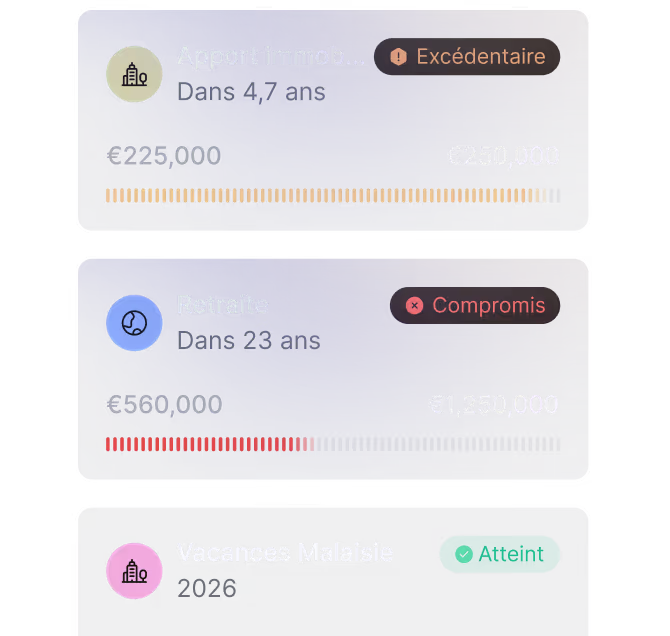
Good to know: these are general guidelines, of course. Each investment category contains assets that are more or less liquid and more or less volatile. Sort through them carefully and select your investments with attention. Goals
Tip 4: diversify enough
Diversification is the second key to limiting your exposure to risk. The logic is simple: the wider the range of assets you hold, the more the losses on some can be offset by the gains on others.
Say you invest all your savings in the shares of a single steelmaker. You are then 100% exposed to how that company is run and to its external risks (political instability, supply problems, obsolescence). Its bankruptcy would wipe out your entire initial investment.
Instead, you can invest in companies from different sectors, based in different parts of the world, to dilute risks that are by nature unavoidable, even unforeseeable. With enough diversification, it is unlikely that every company runs into trouble at the same time, so your probability of losing everything becomes very small (unless the world descends into total chaos, in which case your euros are unlikely to be much use anyway). It also helps you avoid the most common biases in investor psychology, such as overreacting to a sharp fall.
This is what is meant by sector and geographic diversification: looking for investments that are not correlated with one another. Correlation is a statistical phenomenon whereby, when one value moves, the other correlated values move the same way. A diversified portfolio must therefore hold assets that are largely uncorrelated. The return on your Livret A, for instance, has nothing to do with the share price of a carmaker. Conversely, the prices of two rental properties in the same Paris neighbourhood are strongly correlated.
Good to know: French investors are known for holding far too much of their equity in French companies. That home bias comes at the cost of poor geographic diversification and puts real risk on retail investors. Tip 5: know your investor profile
To give you an idea, here is an example of how capital might be split by asset class according to your risk profile. These figures are indicative, of course, and can be adapted to your preferences, for instance by swapping stocks for rental property or the other way round. Likewise, the number of months of salary in your emergency fund can go up or down depending on how stable your income is and how you live.
| Cautious profile | Balanced profile | Dynamic profile | Aggressive profile | |
|---|---|---|---|---|
| Emergency fund | 5 months of salary | 4 months of salary | 3 months of salary | 3 months of salary |
| Euro fund (capital guaranteed by the insurer) | 50% | 40% | 20% | 10% |
| Stocks | 10% | 20% | 30% | 40% |
| Rental property | 40% | 40% | 48% | 45% |
| Alternatives (crypto) | 0% | 0% | 2% | 5% |
| Expected return (2023) | 4% | 5.5% | 7% | 9% |
Which investment strategy for the amount you have saved?
We have written full, detailed guides to help you grow your money according to the amount:
Which asset classes should you put your money into?
You can put your money into a range of assets carrying more or less risk: bank passbooks, euro funds, government bonds, real estate crowdfunding, SCPIs, turnkey or own-name rental property, private equity, shares in innovative companies, listed stocks, cryptocurrencies...
There are in fact countless options, from investing in watches to buying crypto assets. We obviously cannot cover them all here.
Should you put your money in a savings passbook?
Before looking at the various opportunities, it is worth taking stock of French bank savings products. To the great regret of your wealth management adviser, regulated savings passbooks, high-yield passbooks and other “boosted” savings offers are not attractive investment products, except for your emergency fund.
Since 2017, most capital-guaranteed savings products have paid less than inflation. Inflation is a macroeconomic index that measures the rise in the price of a basket of goods and services. The higher inflation runs, the faster prices rise. If your Livret A pays 0.5% a year while inflation runs at 1% a year, you lose purchasing power as time passes. Prices are rising faster than your savings are growing. The real return on your savings is negative.
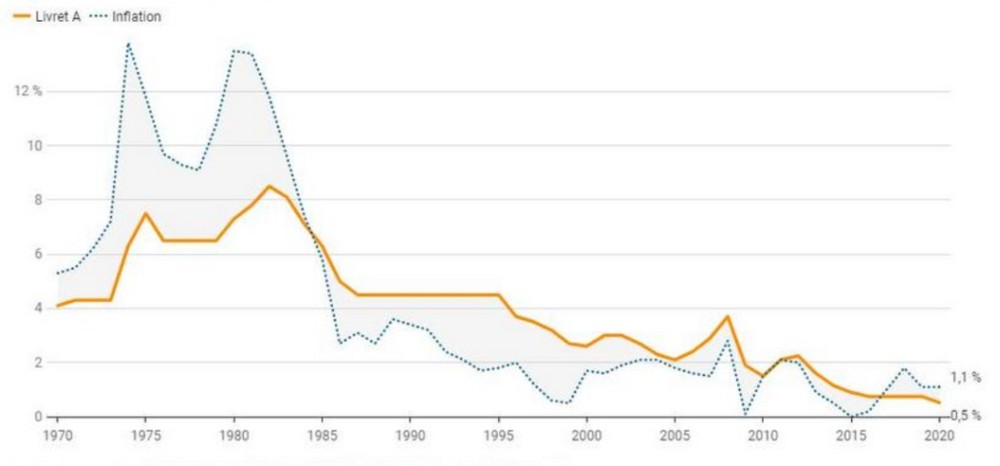
None of which stops you using a Livret A for your emergency fund, given its liquidity (you can transfer the money to your current account almost instantly) and the absence of capital loss risk. For a long-term investment, though, it is far from ideal.
Good to know: compare the return on your investments with the rise in the price of whatever you are saving for. If your goal is a deposit on a Paris flat, for example, your investment needs to return more than the rise in the price per square metre in Paris, otherwise you lose purchasing power in property terms. The euro fund, an option whose capital is guaranteed by the insurer
The euro fund is an investment option inside life insurance and capitalisation contracts, made up mainly of French government bonds (OAT) and a small share of listed company stocks.
Available through life insurance and capitalisation contracts, euro funds guarantee the capital invested while paying more than a traditional bank savings product. Their return has two components:
- the technical interest rate, which the insurer commits to
- profit sharing, which must represent at least 85% of the results generated by the fund
That said, the continuing fall in yields on Western government bonds (some are now negative) has heavily compressed the annual returns of euro funds. Their returns have been declining steadily for several years.
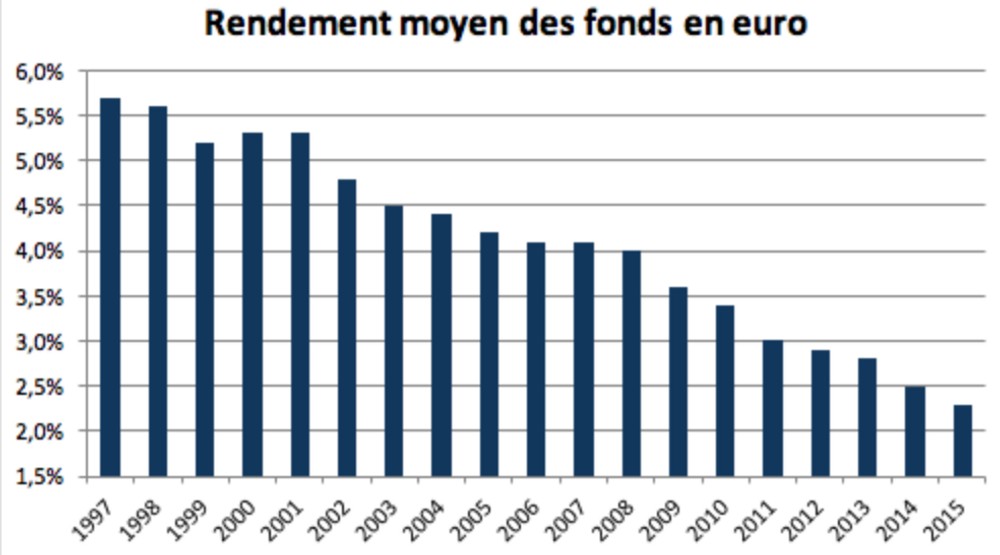 Good to know: euro funds are now a viable option only for your emergency fund or for short-term investments. The rest of your money should be put to work in higher-returning assets, stocks in particular.
 Investing in the shares of innovative listed companies
Investor appetite for innovative listed companies keeps growing, as shown by the exponential rise of the Nasdaq (the index that groups most listed US technology companies), which includes the big US tech stocks.
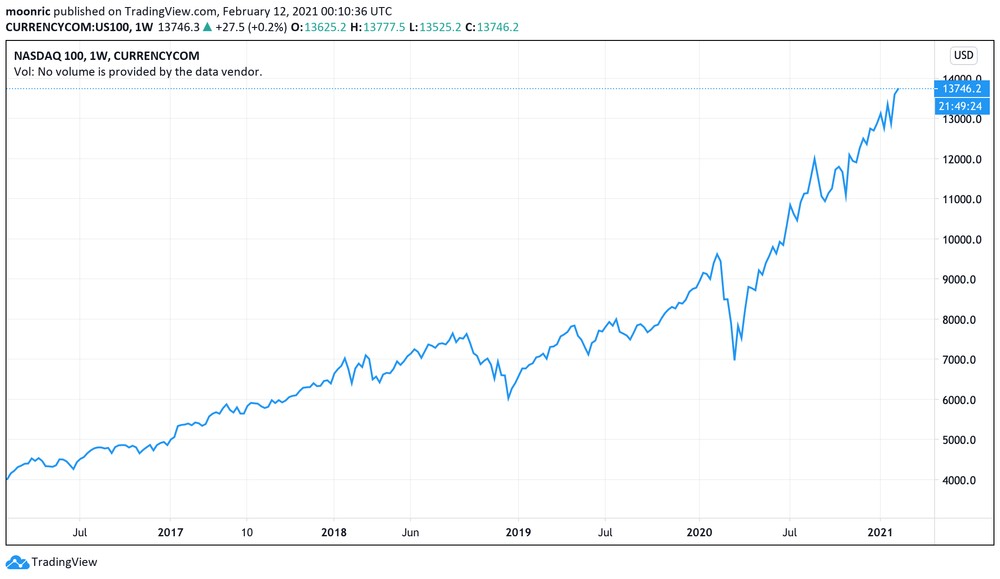
Tech companies probably have good years ahead of them, given the staggering volume of data they collect, the new black gold of the 21st century, and their steadily rising profits.
Beware, though, of overvalued companies, inflated by the sometimes irrational faith of certain investors. Technology companies can attract strong support even before they turn their first profit. Many experts agree, for instance, that Tesla is overvalued, its market capitalisation being far removed from its economic value compared with traditional carmakers that are just as capable of producing affordable electric cars. In those circumstances the bet can be risky and the disappointment expensive.
As a general rule, unless you are a seasoned investor able to “beat the market” (which looks difficult in the light of Eugene Fama's work), you are better off buying baskets of securities through investment funds or ETFs, following a lazy-investor strategy (holding your positions over a long period to smooth out volatility).
Track your investments in real time
ETFs (or trackers), the passive fund for lazy investors
ETFs are a highly popular alternative to traditional investment funds (OPCVM in France), because they simply replicate one or more benchmark indices. Unlike a conventional fund, an ETF makes no active trades. The asset managers selling them merely replicate a basket of securities, which can cut both ways when markets fall across the board. A World ETF (replicating the MSCI World) is an excellent solution for lazy investors who want to hold a wide range of assets over the long term.
On performance, numerous Morningstar and SPIVA studies show that ETFs generally deliver a higher net-of-fees return than traditional investment funds.
They are a simple, low-cost way to invest in the stock market while achieving a satisfactory level of diversification (provided, of course, you pick the right ones). There are several types of ETF, some specialising in particular asset classes.
Cryptocurrencies, a dynamic option for your savings?
Cryptocurrencies are probably the assets offering the highest short-term returns, but also the largest risk of loss. Bitcoin, Ethereum and other crypto assets have historically been highly volatile, with sharp bull and bear phases. They are regulated under MiCA. Finary is authorised by the AMF as a Crypto-Asset Service Provider (CASP, "PSCA" in French) under the MiCA regime, references no. A2026-026 and no. N2026-008. Risk of total capital loss. Beyond the debate about the real role of this asset class, its value rests solely on the confidence investors are willing to place in it. Unlike stocks, whose value can be tied back to the dividends they pay, cryptocurrencies have no intrinsic value and could one day be worth nothing at all if investors lose interest.

As things stand, crypto assets are treated as highly speculative, built on the belief that they could eventually become a viable alternative to national currencies, which some see as corrupted by centralisation and by excessive political interference.
Whether or not you share that conviction, the volatility at work in the crypto market has to be taken seriously. Crypto should not reasonably represent too large a share of your financial wealth (unless you are a dedicated hodler)
Indirect real estate: SCPIs, SIICs and OPCIs
Open to almost everyone, indirect real estate, what the French call “pierre papier”, remains an excellent way to put money into property without owning it directly. It is a generic term covering property investments made through management companies known as real estate investment funds. The main vehicles are:
- SCPIs (société civile de placement immobilier), whose units are traded over the counter, outside a regulated market, and which can serve various objectives thanks to the vehicle's tax transparency (income, property capital gains, tax relief)
- SIICs (société d'investissement immobilier cotée), whose shares trade on a regulated market, offering better liquidity than SCPI units while remaining tax transparent
- OPCIs (organisme de placement collectif immobilier), which are not tax transparent but make it easier to redeem units and can be held inside a securities account or a life insurance policy
Indirect real estate has at least three advantages:
- a low entry ticket (unlike buying a rental property in your own name), which avoids over-weighting property in your portfolio
- diversification, since the value of the units and the income they pay come from several properties
- rental and property management, costly and demanding, is delegated to the fund
Indirect real estate is often essential to diversify a portfolio, combining the stability and the return inherent in property assets. Some SCPIs and SIICs can also offer tax advantages where their underlying investments qualify for French property tax schemes (Malraux, Pinel, Denormandie, déficit foncier).
Real estate crowdfunding, the high-yield short-term bond loan
Real estate crowdfunding is a newer way to invest indirectly in property. Usually offered through specialist platforms, it is increasingly used by property developers to fund their projects while bypassing traditional bank financing.
From the investor's side, real estate crowdfunding takes the form of a bond loan paying high, regular interest (around 9%). At the end of a fixed term, the money lent is repaid in full. During the term of the loan, which runs from 12 to 24 months and sometimes longer, you cannot get your money back, which makes real estate crowdfunding a short-term investment solution that is nevertheless unsuitable for an emergency fund.
On the risk side, only the borrower's insolvency can jeopardise your investment. It does happen, so it is better to spread your bond loans across several property developers (at least 10) to limit your risk of loss.
Private equity, funding tomorrow's projects
Private equity, or venture capital, means taking a stake in unlisted companies in the hope of eventually realising a capital gain. It can cover any type of unlisted company, from SMEs to start-ups. Depending on the purpose of the stake, it is known as:
- innovation capital
- growth capital
- turnaround capital
- buyout capital
Depending on the type of company, private equity carries more or less risk.
The return potential of a private equity investment can be enormous. But, especially with start-ups, the probability of backing a winner is mathematically low, given the number of failures relative to the number of successes. It is therefore a risky investment. To limit that risk you have to assess the potential of the venture carefully, as well as the quality of the team and its leadership. Private equity is probably the most demanding form of investment in terms of expertise, and it is often the preserve of former company owners or of specialist investment funds (asset managers, venture funds and innovation funds), which you can approach to invest in a reassuring framework.

In any event, private equity means low liquidity, since you will need to find a buyer to sell your shares. If the company has grown well and delivers stable returns, that will not be a problem. Otherwise, you may well find no buyer for many years, or ever.
Private equity is therefore aimed at investors who want to back an entrepreneurial project over the long term, and at anyone looking for an investment compatible with the French apport-cession rollover relief (if you are a former company owner). Diversification is essential with this type of investment.
Which wrapper should you choose to invest your money?
Now that we have looked at some of the opportunities, it is worth turning to the wrappers that hold your investments. To lighten your tax bill (and therefore raise your net return) and to meet certain wealth objectives, it makes sense to use the different wrappers, each of which gives access to suitable products.
There are four main ones:
- the securities account
- life insurance
- the capitalisation contract
- the PEA and the PEA PME
With these 4 wrappers you have a very wide range of options for building a diversified portfolio while limiting tax friction.
More capital invested
Non-contractual document for promotional purposes. Investment in unit-linked vehicles carries a risk of capital loss, since their value is subject to fluctuation, both upwards and downwards, depending in particular on developments in the financial markets. The insurer commits to the number of unit-linked vehicles, not to their value, which it does not guarantee. The e-vie policy is an individual life insurance policy, denominated in euros and/or unit-linked vehicles, underwritten by Generali Vie, a company governed by the French Insurance Code. Finary SAS - 58 rue de Monceau 75380 Paris 8 - Investment Firm authorised by the ACPR under no. 19283, ORIAS no. 21001279, member of AMAFI
The securities account (CTO) for the widest range of assets
The securities account, or compte-titres ordinaire, is a wrapper that can hold a very wide range of financial assets and gives access to the stock market. Stocks, bonds, investment funds: it allows maximum diversification, with no geographic restriction and no contribution ceiling.
Any individual can open a securities account, provided they are of legal age (or an emancipated minor).
It offers no tax advantage, however. Interest, dividends and capital gains are taxed under the ordinary regime (in principle the 30% flat tax, or your marginal income tax rate plus 17.2% social levies).
The breadth of assets you can buy through a securities account makes it essential for building a coherent financial portfolio. Given the absence of tax advantages, though, it is best seen as a complement to other tax wrappers (life insurance, PEA), letting you add assets that could not be held in a PEA (European stocks only) or in a life insurance policy (a more or less restricted asset menu depending on the insurer).
On fees, the securities account is one of the cheapest wrappers, unless you trade frequently, since transactions can trigger commission.
Life insurance, to pass on wealth and build capital
Despite its misleading name, the purpose of French life insurance is not to compensate you on death, but to build a portfolio of financial assets that can be passed to beneficiaries on death. It therefore has two distinct features:
- a tax wrapper that lets you invest in financial assets and, on full or partial withdrawal, have the gains taxed at a preferential rate from the 8th year (24.7% instead of 30% on the share of contributions below €150,000);
- the ability to pass the capital held in the policy to named beneficiaries, outside the ordinary tax and civil rules of succession.
On the investment side, life insurance offers a degree of flexibility:
- the euro fund, where the capital is guaranteed by the insurer (subject to its solvency, the FGAP guarantee and the French Sapin 2 law), but with a steadily declining return. A euro fund remains an attractive alternative to a bank passbook for an emergency fund, thanks to a higher rate (between 1% and 2% net a year). Do check, however, that the policy allows early withdrawals so you can take out all or part of your capital quickly.
- unit-linked funds, where the capital is generally invested in a selection of funds (OPCVM, ETFs, even indirect real estate if your insurer offers it). With unit-linked funds the capital is not guaranteed, but returns are also much higher. If you intend to invest in a wide, diversified selection of stocks through a fund, unit-linked life insurance is an excellent solution.
Guaranteed though it is, we do not recommend putting all your savings into a life insurance euro fund if your investment horizon is longer than 5 years
If your goal is to invest with a view to passing the money on when you die, under favourable tax conditions, the succession side of life insurance can also be particularly attractive. The capital in your policy sits outside the estate and goes to named beneficiaries with a tax allowance of €152,501 per beneficiary (then a flat 20% rate up to €852,500). An ideal tool to optimise your estate and to leave part of your wealth to friends or distant relatives.
The capitalisation contract, a wealth-planning alternative to life insurance
Little known to the general public, the capitalisation contract works like life insurance: it lets you invest in financial assets (euro funds or unit-linked funds) and pass on your wealth.
The major difference between the two lies in transmission. The premiums in a life insurance policy can only be passed on when the policyholder dies, which winds up the contract (the investments are liquidated) and triggers a derogatory tax regime, since the capital sits outside the estate.
In a capitalisation contract, the policyholder's death does not liquidate the investments, but the capital does enter the estate. The heirs become the new owners of the contract and of the assets it holds. Unlike life insurance, however, a capitalisation contract can be gifted to anticipate succession. A lifetime gift can cover full ownership of the contract, or the usufruct or the bare ownership, to optimise gift tax.
Good to know: if you want to anticipate your succession, a capitalisation contract is preferable to life insurance. Otherwise, life insurance is more attractive thanks to its better tax regime. So unless your objective is to pass on your wealth in advance, life insurance is the better route. The PEA and the PEA PME, to invest in European stocks
The PEA (plan d'épargne en actions) is a tax wrapper dedicated to European stocks and to units in funds (OPCVM or ETFs) made up of at least 75% PEA-eligible stocks. Opened with a bank or a specialist broker, it can hold listed and unlisted shares up to a contribution ceiling of €150,000. There is also a small and mid-cap version, the PEA PME, ideal for holding shares acquired through a private equity deal. Together, the two cannot take more than €225,000 in contributions.
The notable advantage of the PEA and PEA PME is the income tax exemption on investment gains from the 5th year, which makes these wrappers essential for equity investments with a horizon of 5 years or more. Note that an early withdrawal of contributions from a PEA before the 5th year closes the plan.
The one drawback of the PEA is that it can hold nothing but European stocks. Put all your money in a PEA and your portfolio will not be diversified enough, with significant geographic risk and a lack of variety across asset classes. In other words, you would be 100% exposed to European equities, which is not satisfactory. There are ways around this limit, using synthetic PEA-eligible ETFs. Many asset managers such as Lyxor and Amundi use that technique to offer ETFs on the S&P 500 or the MSCI World.
Good to know: the PEA therefore complements other tax wrappers to ensure enough diversification. You could, for example, also take out a life insurance euro fund for safety, to dilute the risk carried by your PEA. To limit geographic risk, you could take out a second, unit-linked policy and invest in funds dedicated to Asian and US equities. It is up to you to manage how your capital is split across these wrappers, according to your investor profile. Frequently asked questions
When should you invest your money?
As early as possible. The longer you wait, the more compounding you miss out on. As soon as you have surplus savings, it is worth taking the step and putting in place an investment strategy that matches your personal situation.
Which wrappers usually suit beginner investors?
For beginners, we recommend tax wrappers such as life insurance or the PEA. They give access to a range of investments that combine performance and safety according to your risk profile.
Which investments have historically delivered the best returns?
Investing in the stock market can be very rewarding over a long period. With a spread of different stocks, you could earn more than 8% a year. It is also risky, so it is better to aim long term.
Which French regulated savings accounts pay the highest rates?
If you qualify for it, the LEP is the savings account that pays the most in 2024. The LEP, or Livret d'Épargne Populaire, has paid a tax-free rate of 6.10% since 1 February 2023. That is far better than the Livret A and the LDDS, which sit at around 3%.
Regulatory disclaimers: Marketing communication. Investing carries a risk of partial or total capital loss. Past performance is not a reliable indicator of future performance. This article is provided for information and educational purposes only; it does not constitute personalised investment advice, a buy or sell recommendation, or tax advice. Before investing, read the Key Information Document (KID) and, where relevant, consult an authorised adviser. Finary SAS, an investment firm authorised by the ACPR (no. 19283), member of AMAFI. Insurance broker registered with ORIAS (no. 21001279), member of the CNCGP (association approved by the AMF). Crypto-Asset Service Provider (CASP) authorised by the AMF under the MiCA regime, references no. A2026-026 and no. N2026-008.