Top 8 best crypto apps for investing in 2026

Updated 15 July 2026
Finary, Kraken and Coinbase rank among the best crypto apps in 2026 thanks to their balance of security, low fees and ease of use. This comparison assesses 8 apps, from Finary to Crypto.com, on their fees, their security, their choice of cryptos and their tax compatibility, to find the one that fits your profile.

- The first criterion remains security: two-factor authentication, cold storage and proof of reserves since the collapse of FTX in 2022.
- Since 1 July 2026, any app offering crypto-asset services in the European Union must hold a MiCA authorisation as a Crypto-Asset Service Provider (CASP); that is why this comparison only includes authorised platforms.
- Trading fees range from 0.25% at Kraken to around 1% at eToro depending on the platform, excluding the spread and any deposit or withdrawal fees.
- In France, crypto gains are taxable above €305 of annual disposals, and are declared on impots.gouv.fr.
- Finary stands out for its consolidated view of your wealth (crypto, equities, property) rather than for the number of cryptocurrencies it lets you trade.
- Hacks of crypto platforms reached $3.4 billion in 2025 according to Chainalysis, a reminder of why choosing a regulated app matters.
What should you know about crypto apps in 2026?
A good crypto app is chosen on three priority criteria: security (two-factor authentication, cold storage, regulation), the level of fees and the number of cryptocurrencies available.
Which criteria should guide your choice of a crypto app?
Security is the most important criterion when choosing a crypto app. Platforms must use two-factor authentication (2FA) and cold storage of assets. Their track record on hacks and their fund protection measures are important indicators.
More than $3.4 billion was stolen from crypto platforms in 2025, with the Bybit hack ($1.5bn in February) accounting for 44% of that total on its own. Those figures underline how crucial it is to choose a secure platform for your crypto investments.
Fees vary considerably between apps. Some platforms charge up to 4% per transaction, while others keep rates below 0.1%. Beyond trading fees, you also need to weigh deposit, withdrawal and conversion costs.
The range of cryptocurrencies available directly shapes your investment options. Large platforms such as Kraken offer more than 530 cryptocurrencies, while smaller apps limit themselves to the 20 to 30 main digital currencies.
Trading app or wallet: what is the difference?
A trading app acts as a marketplace connecting buyers and sellers. It lets you buy and sell cryptocurrencies using traditional currencies or other cryptos. The platform holds your assets and handles transactions on your behalf.
A crypto wallet, by contrast, gives you full control of your private keys. That autonomy comes with greater responsibility: if you lose your recovery keys, your funds are unrecoverable. Wallets connect directly to blockchains, with no intermediary.
The types of crypto app available on the market
Centralised trading apps dominate the market. They offer a familiar interface and extensive features such as staking, crypto lending and crypto payment cards.
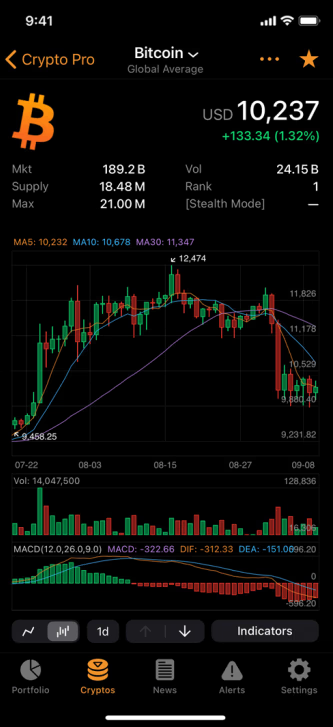
DeFi (decentralised finance) apps are gaining ground. They call for more technical knowledge but offer full autonomy.
How can you tell whether a crypto app is trustworthy?
Regulation plays a central role in reliability. Since 1 July 2026, any platform offering crypto-asset services in the European Union must be authorised as a Crypto-Asset Service Provider (CASP) under the EU MiCA regulation; the earlier French registration for digital-asset service providers is no longer enough, and an unauthorised platform can no longer legally serve European clients. Check that the platform appears in the official register of its regulator (the AMF in France, but also CySEC, BaFin, the CSSF or the FMA depending on the country of authorisation, which is then valid across the EU). We have verified that each of the 8 apps in this comparison holds that authorisation.
Transparency on reserves is a crucial indicator. The best apps publish proof of reserves regularly and submit to external audits. That practice has become standard since the collapse of several centralised platforms in 2022.
The quality of customer support says a lot about how serious an app is. Test how responsive support is before depositing significant funds. Support available 24/7 in French is a significant advantage for French-speaking users.
The 8 best crypto apps for 2026
1. Finary: the complete solution for managing your cryptocurrencies
Key features
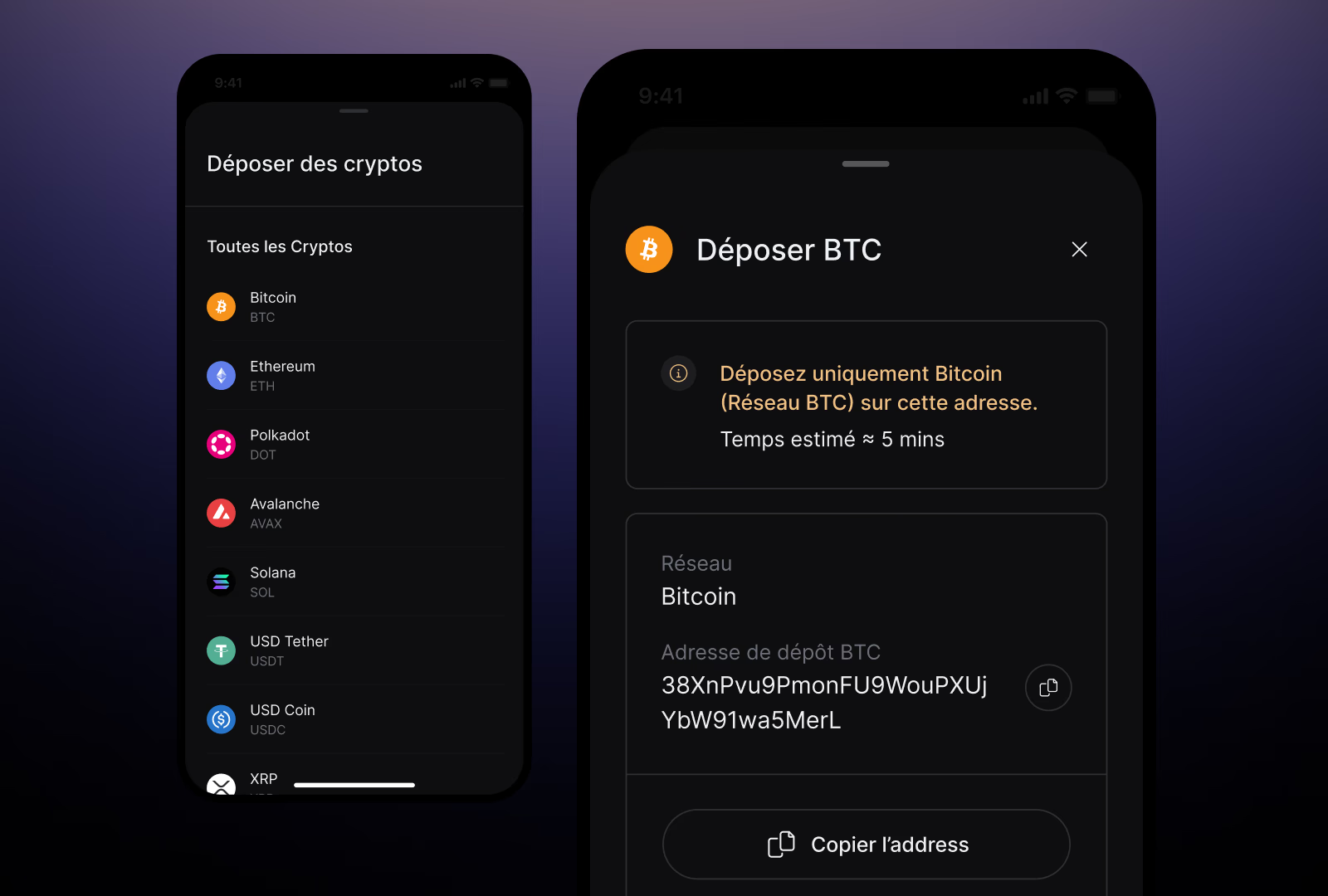
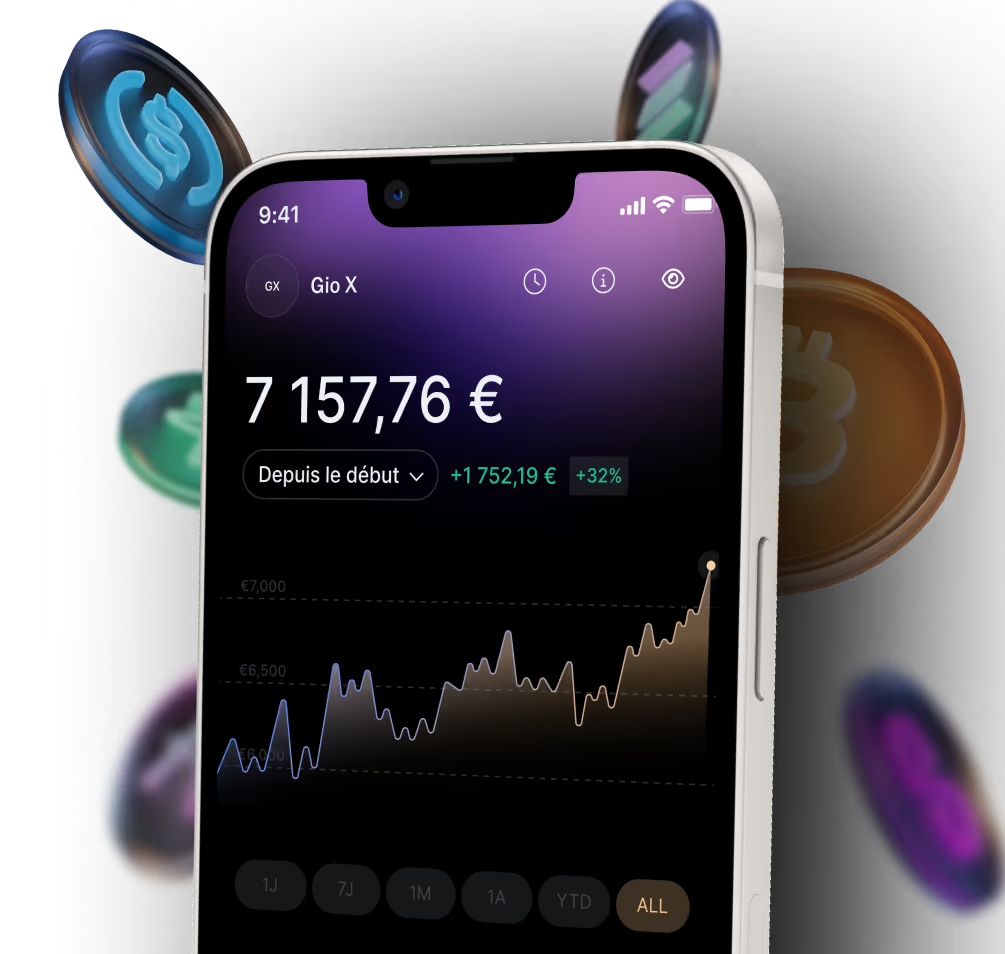
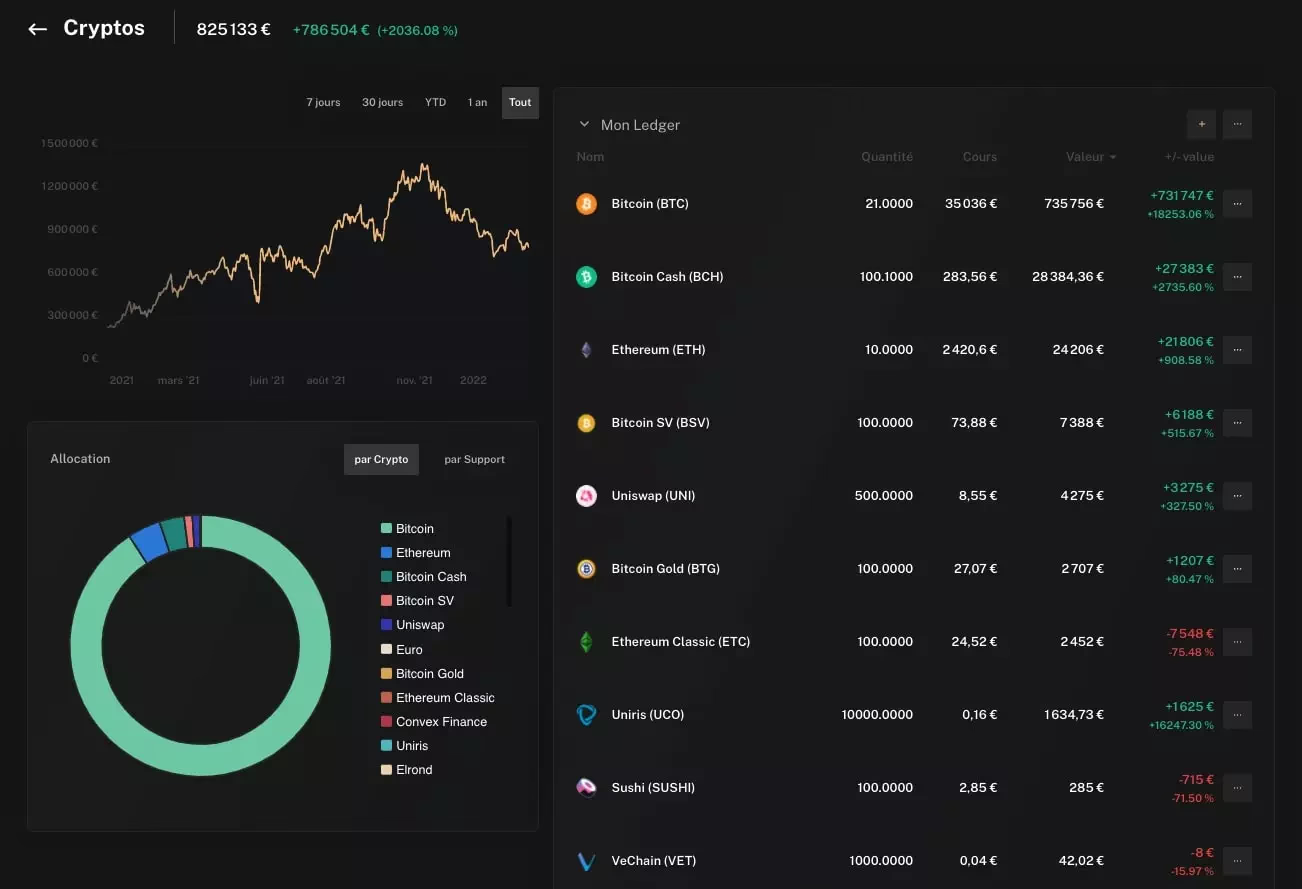
Finary stands out for its all-round approach to wealth tracking. The platform tracks more than 5,500 different cryptocurrencies through direct connections to the main platforms such as Kraken and Coinbase, and offers direct investment in more than 25 cryptocurrencies via the app. The app also includes an innovative fee scanner that identifies hidden costs in your crypto investments.
Advantages
- A consolidated view of all your assets (crypto, equities, property) in a single interface.
- Automatic synchronisation with more than 20,000 financial institutions.
- Schedule your purchases and smooth your entry prices with the DCA method
- Choose from thematic collections
- Bank-grade security with encryption and 2FA authentication.
- Deposit euros in 10 seconds via SEPA Instant and place your orders.
Fees
The free plan connects up to 2 synchronisations. The Lite plan (€54.99/year) unlocks unlimited connections, while the Plus plan (€149.99/year) adds the advanced analysis tools. Crypto trading fees range from 0.99% (Plus subscription) to 1.49% (free or Lite plan) depending on the subscription.
with confidence
Investing carries risks, including the risk of capital loss. Crypto-assets are highly volatile: you may lose all or part of your investment. Past performance is not a reliable indicator of future performance. Finary is authorised by the AMF as a Crypto-Asset Service Provider (CASP) under the MiCA regime.
2. Kraken: the long-established exchange
Key features
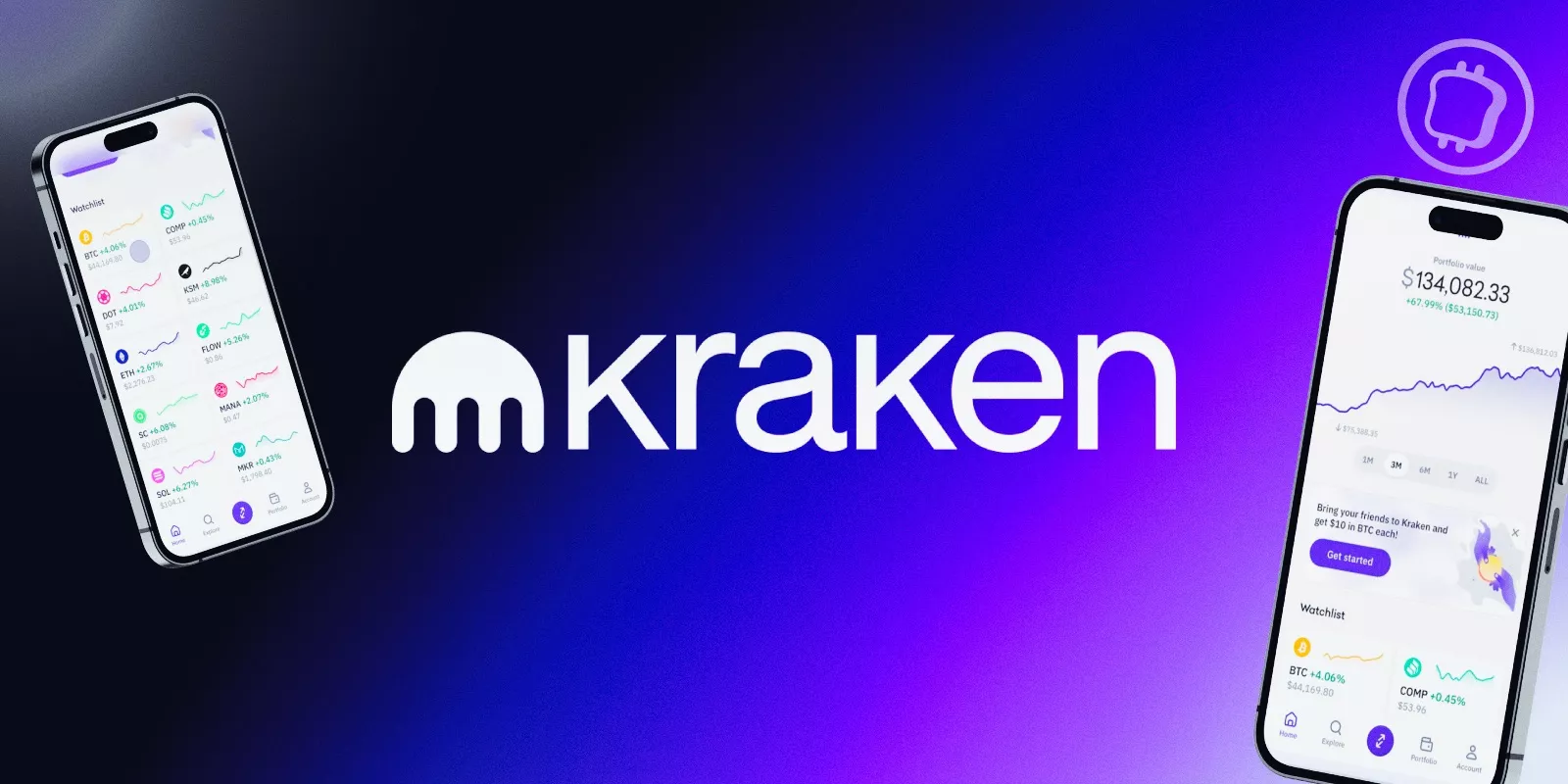
Kraken offers more than 530 cryptocurrencies. The platform provides two interfaces: a simplified version for beginners and Kraken Pro for experienced traders. Users can access staking, futures and margin trading.
To identify the most promising cryptocurrencies and make better investment choices, see our guide to promising cryptocurrencies.
Advantages
- Solid security reputation and proof of reserves published regularly.
- Wide range of financial products (futures, options, staking, crypto-backed loans via Flexline).
- Mobile app well rated by users.
Drawbacks
- Pro interface is complex for beginners.
- Identity verification (KYC) times can be long.
- Mixed Trustpilot rating (around 3.3/5), with criticism aimed mainly at accounts blocked in verification and slow support.
Fees
Trading fees start at 0.25% (maker) / 0.40% (taker) and fall with your volume or the assets you hold on the platform, down to 0% / 0.05% for the largest volumes. Staking offers variable returns depending on the cryptocurrencies chosen.
3. Coinbase: the ideal app for beginners
Key features
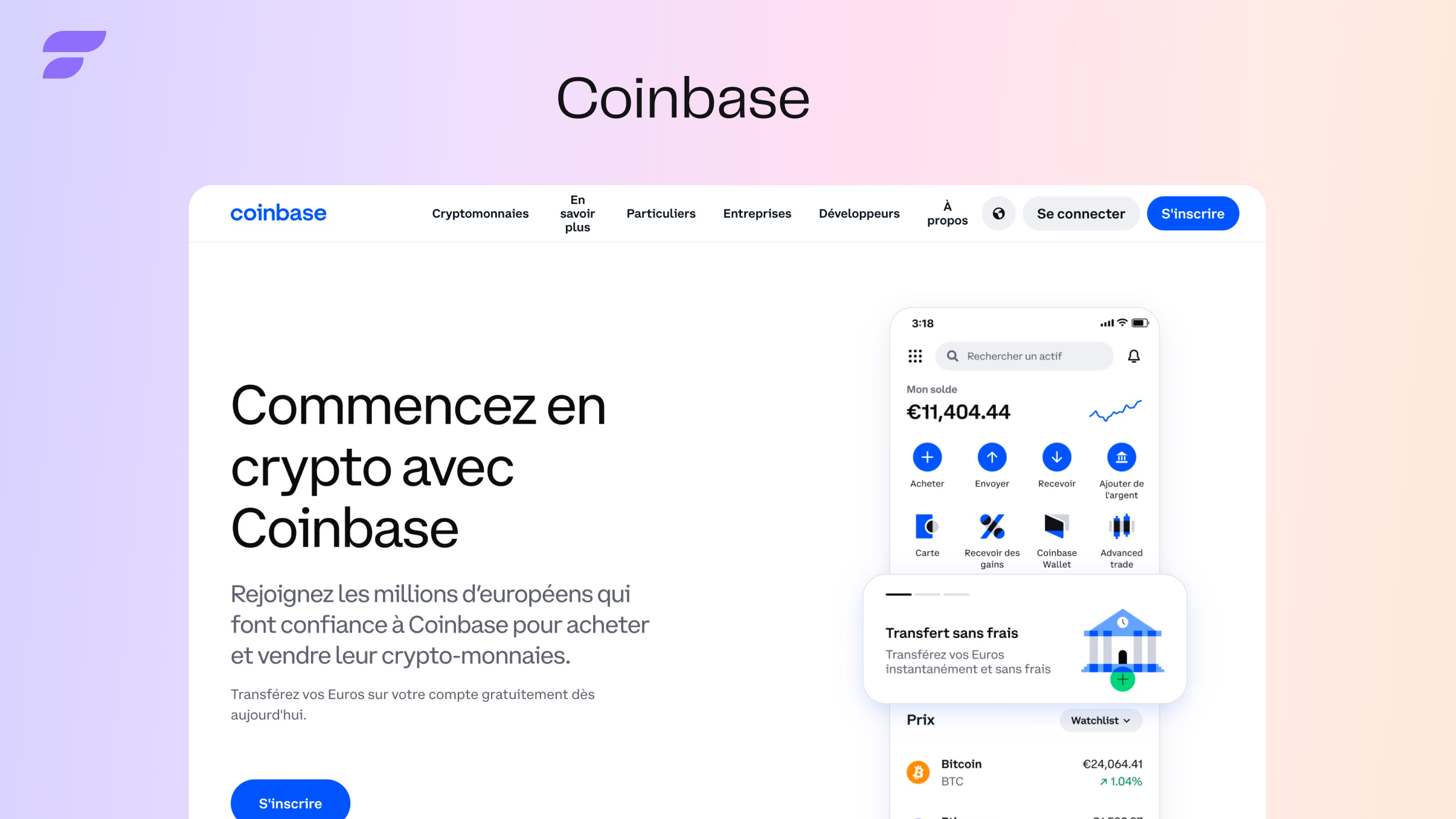
Coinbase excels at ease of use with an uncluttered interface. The platform offers more than 300 cryptocurrencies and puts the emphasis on security, with 98% of assets in cold storage.
Advantages
- Educational resources (Coinbase Learn) and staking to earn rewards.
- Very intuitive interface.
- Strict regulatory compliance.
Drawbacks
- High transaction fees on the consumer app.
- Customer support often criticised.
- Fewer cryptocurrencies available than the largest generalist exchanges.
Fees
Fees depend on the payment method, the order size and market conditions, and include a spread shown before each transaction. Coinbase Advanced offers tiered maker/taker fees for active traders.
4. eToro: social trading for cryptocurrencies
Key features
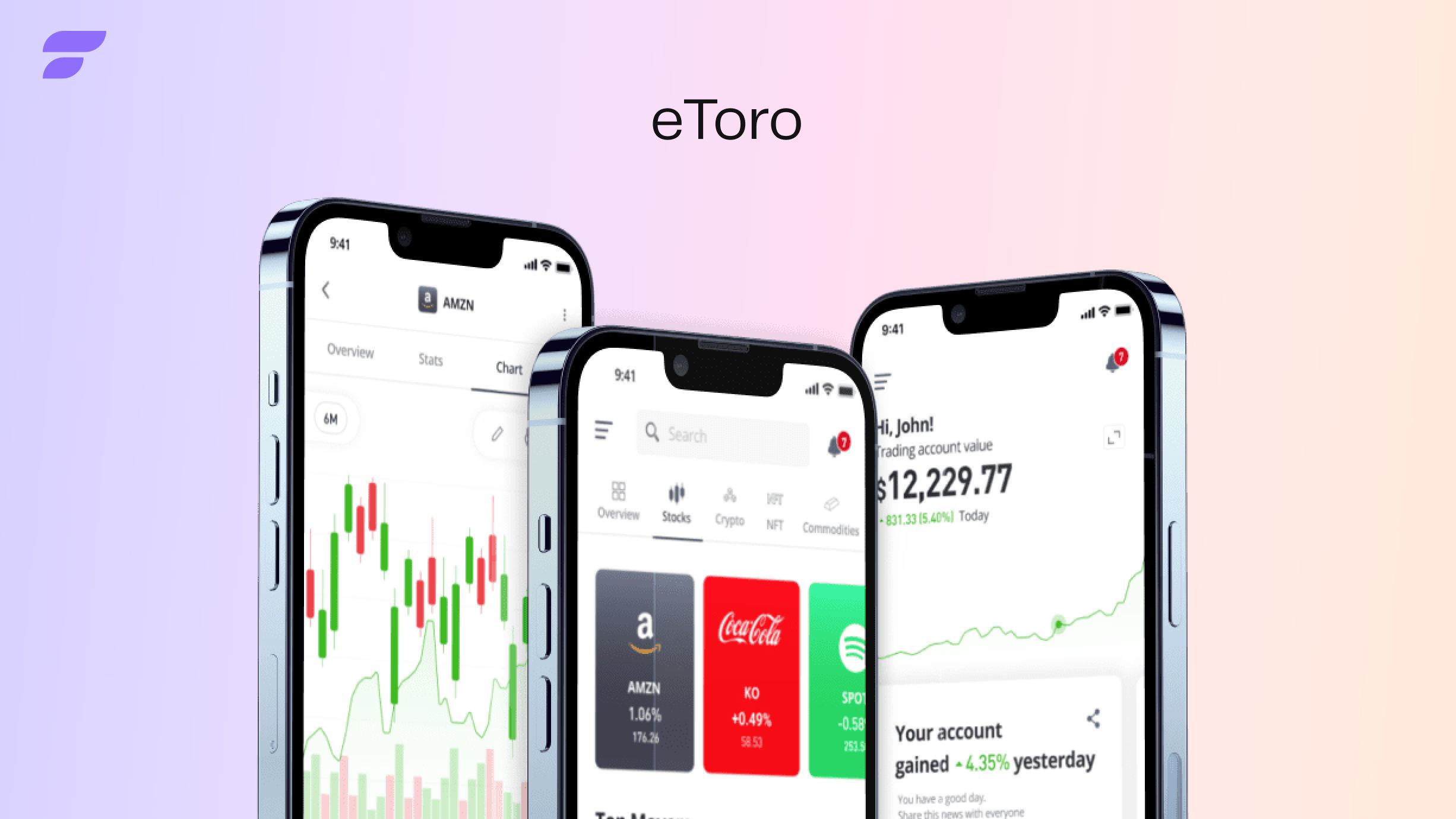
eToro stands out for its social approach to trading with CopyTrader™, which automatically copies other traders' strategies. The platform also offers Smart Portfolios for automated diversification and a demo account for practice.
Advantages
- Social platform that makes learning to trade easier.
- eToro Club programme with progressive benefits.
- Intuitive interface suited to beginners.
- Easy diversification across different assets.
Drawbacks
- Trading fees are sometimes high and lack transparency.
- Withdrawal problems reported by users.
Fees
eToro applies a flat 1% fee per crypto transaction, on both buying and selling, whatever your eToro Club level.
Fees are not always very transparent on eToro. Watch out for spreads, which can be high on some less common cryptocurrencies.
Deposits are free; a $50 minimum applies from the second deposit onwards (the first varies by country). Withdrawals from a euro account are free with no minimum; a $5 fee (minimum $30) applies only to withdrawals from a dollar account. Foreign-currency conversion carries a 0.75% fee.
For beginners, it is wise to start with the major cryptocurrencies, which have lower spreads, and to check every fee carefully before each transaction.
5. Trade Republic: a complete app for investing in every kind of product
Key features
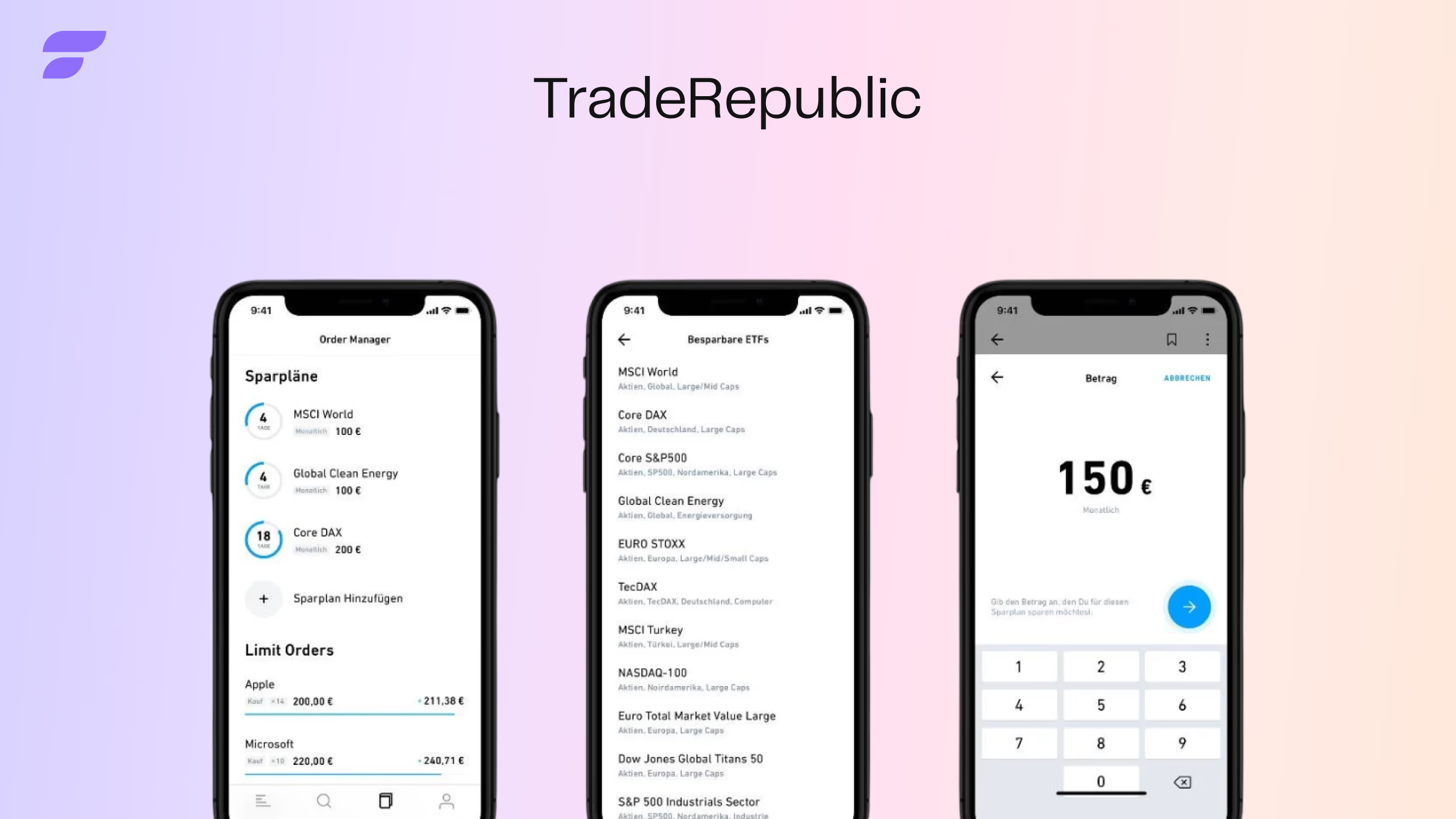
Trade Republic offers a simplified experience for investing in equities, ETFs and cryptocurrencies. The platform stands out with its investment plans free of monthly fees and its interest payments on uninvested cash.
Advantages
- Minimalist interface, perfect for beginners.
- Competitive fees on ETF savings plans.
- Attractive monthly interest payments.
- Multilingual support.
Drawbacks
- Limited features for experienced traders.
- Fewer cryptocurrencies available than specialist exchanges.
Fees
Trading fees are a flat €1 per transaction. Savings plans are free; cryptocurrencies carry the flat €1 fee per order (Trade Republic does not disclose a spread rate on cryptos).
6. SwissBorg: the crypto app made in Europe
Key features
SwissBorg offers an innovative crypto investment experience through its Earn product, connected to DeFi yield strategies. The platform includes the CyBorg Predictor, an AI-based analysis tool, for sharper market predictions.
Advantages
- Clean, intuitive interface that makes crypto investing easier.
- Assets held in cold storage.
- Transparent fee structure with no hidden charges.
- DeFi yields optimised automatically.
Drawbacks
- Limited features on the free tier.
- Some popular cryptocurrencies unavailable.
Fees
Exchange fees are 0.99% and can be cut through the Loyalty Ranks, up to 99% cashback on fees by locking up BORG tokens. The Earn product offers variable returns depending on the asset and the strategy.
7. Bitpanda: the multi-asset platform with cryptos
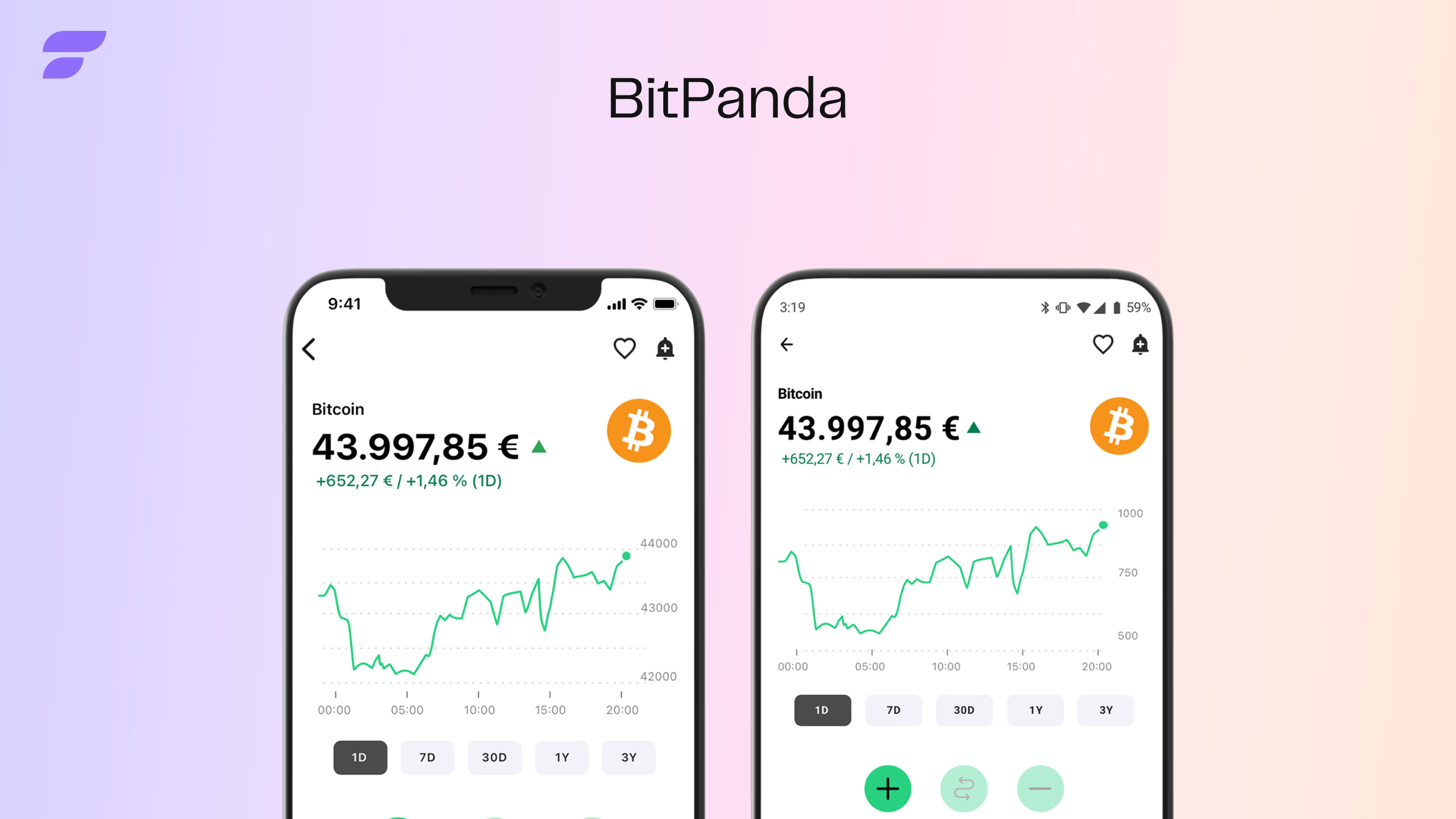
Key features
Bitpanda stands out with its Crypto Index, which allows automatic diversified investment. The platform also offers the Vision token (VSN), which replaced the former BEST token in 2025 and provides fee discounts.
Advantages
- Simplified diversification through the Crypto Indices.
- Optimal security with cold storage of assets.
- Fee discounts through the Vision token (VSN).
- Interface suited to beginners.
Drawbacks
- Requires a substantial investment to unlock the premium benefits.
Fees
Fees are built into the price (spread) and range from 0% to 2.49% per transaction depending on the asset, for example 0.99% on Bitcoin. VSN holders get a 20% discount on trading fees when they pay them in VSN.
8. Crypto.com: the app with a crypto payment card
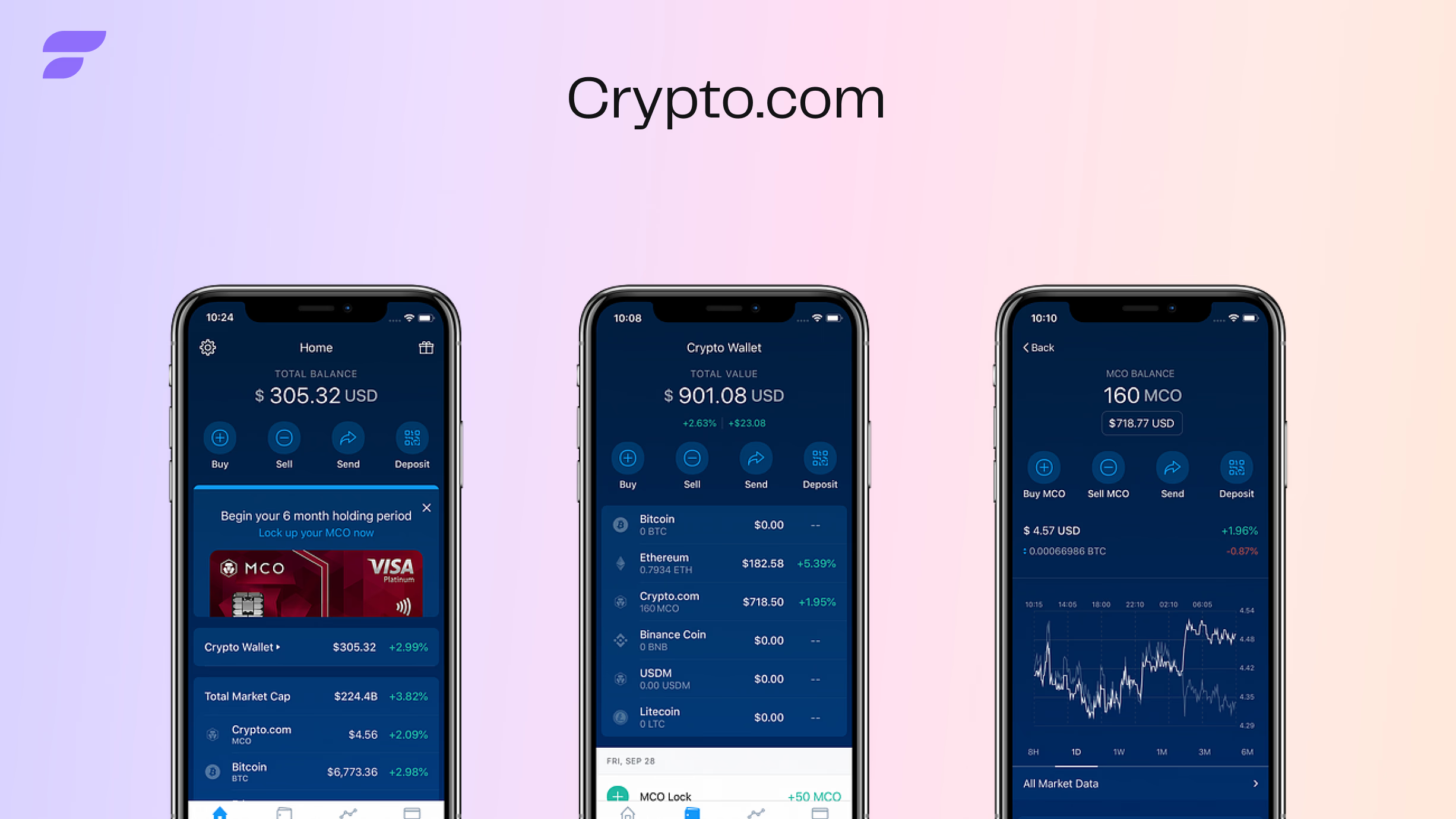
Key features
The Crypto.com app stands out for its Visa card offering cashback in CRO (a crypto created by Crypto.com) and premium benefits. The platform also includes an NFT marketplace.
Advantages
- Attractive cashback on card payments (up to 5%).
- Fast transactions via the Cronos blockchain.
- Large NFT catalogue with interactive tools.
- Multi-chain compatibility (Ethereum, Cosmos).
Drawbacks
- Complexity for new users.
- CRO staking required for the best benefits.
Fees
Trading fees depend on your monthly volume and on CRO staking: from 0.25% / 0.50% (maker/taker) on the app, down to 0% / 0.05% on the exchange for high volumes. Staking CRO unlocks additional discounts and premium benefits.
regulated at last
Investing carries risks, including the risk of capital loss. Crypto-assets are highly volatile: you may lose all or part of your investment. Past performance is not a reliable indicator of future performance. Finary is authorised by the AMF as a Crypto-Asset Service Provider (CASP) under the MiCA regime.
A practical guide to using crypto apps
How to secure your crypto app
Securing your cryptocurrencies starts with essential basic measures. Always enable two-factor authentication (2FA). Use a dedicated app such as Google Authenticator rather than SMS. SMS codes can be intercepted by attackers through "SIM swapping".
Create a unique, complex password for each app. A password manager such as Bitwarden or 1Password makes that easier. Avoid using personal information that is easy to guess.
For optimal security, use an email address dedicated solely to your crypto accounts. Also enable "push" notifications so you are alerted to any suspicious login or transaction.
The different types of fee to know about
Crypto apps generally apply three main types of fee:
- Trading fees: range from 0.1% to 1.49% per transaction depending on the platform.
- Deposit fees: vary by method (free by SEPA, up to 3.99% by payment card).
- Withdrawal fees: depend on the "blockchain" network used (higher on Ethereum than on Binance Smart Chain).
Hidden fees can significantly dent your returns. For example, the "spread" (the gap between the buying and selling price) can reach 2% on some apps. Choose platforms that clearly display their fee structure.
The deposit and withdrawal methods available
SEPA transfer remains the cheapest way to deposit euros. Processing takes from a few minutes to 24 hours depending on the platform. A payment card is instant, but with higher fees.
For withdrawals, you mainly have two options:
- SEPA bank transfer: free to €0.99 depending on the app.
- Transfer to an external "wallet": fees vary by "blockchain".
Some apps such as Crypto.com offer payment cards that let you spend your cryptos directly, sometimes with "cashback" on top.
Identity verification and the regulatory side
The KYC ("Know Your Customer") procedure is mandatory to use a regulated crypto app fully. Prepare the following:
- A valid identity document.
- A recent proof of address.
- A "selfie" photo with your document.
The process generally takes between 24 and 48 hours. Trading limits rise progressively with your verification level. That regulation protects against money laundering and terrorist financing.
How to recover your funds if you lose access
Recovering access varies from app to app. Keep the following information safe:
- Your recovery phrase ("seed phrase") for non-custodial "wallets".
- The backup 2FA codes provided when you switched it on.
- The answers to your security questions.
If you lose access entirely, contact customer support immediately with your identity documents. Processing can take several weeks depending on how complex your situation is.
See our full guide on how to buy cryptocurrencies to start out properly in crypto investing.
Which advanced features do crypto apps offer?
The most complete crypto apps now offer staking, technical analysis tools, integration with hardware wallets and lending and borrowing services.
Staking and reward programmes
Today, staking has transformed the crypto world, giving investors a way to earn passive income. Coinbase offers staking on many cryptocurrencies such as ETH, SOL and ADA, with returns that vary by asset.
Crypto.com stands out with its Visa card, which offers up to 5% cashback in CRO on everyday purchases. Your CRO staking level sets the size of the rewards.
SwissBorg innovates with its Smart Yield programme, which automatically analyses the best DeFi yield opportunities to maximise users' gains. The programme aims to make DeFi easier to access.
Analysis and trading tools
Modern platforms include sophisticated technical analysis tools. SwissBorg offers advanced analysis tools through its CyBorg Predictor, based on artificial intelligence, alongside the extensive chart customisation available on professional platforms such as Coinbase Advanced.
eToro lets you automatically copy the trades of the best-performing traders.
Advanced features vary by platform:
- Kraken: margin trading up to 10x (Kraken Pro), futures up to 50x on BTC/ETH (Kraken Derivatives)
- Crypto.com: conditional orders and stop-loss
- Coinbase Advanced: API for automated trading
- SwissBorg: AI-based predictive analysis
simple at last
Investing carries risks, including the risk of capital loss. Crypto-assets are highly volatile: you may lose all or part of your investment. Past performance is not a reliable indicator of future performance. Finary is authorised by the AMF as a Crypto-Asset Service Provider (CASP) under the MiCA regime.
Integration with hardware wallets
Asset security remains an absolute priority. Most apps now support hardware wallets such as Ledger or Trezor. Coinbase allows a direct connection with Ledger Live, which makes secure transfers easier. That integration strengthens transaction security.
Lending and borrowing services
The crypto lending market is growing fast. Crypto.com lets you borrow against part of the value of the assets you deposit (a loan-to-value ratio of around 50%). That gives users greater financial flexibility.
Since 2026 Kraken has offered crypto-backed loans via Flexline, at a fixed rate (around 10% to 25% APR depending on the term), without having to sell your assets. Users can put those funds towards:
- Trading with leverage
- Accessing liquidity without selling their assets
- Optimising their tax strategy
Those loans let users manage their assets more efficiently.
Handling forks and airdrops
The main platforms handle blockchain forks and airdrops automatically, generally reviewing each case before distributing them to eligible users.
Coinbase applies a rigorous assessment policy before supporting a new fork or airdrop. That approach protects users against fraudulent tokens while ensuring access to legitimate distributions.
Crypto.com users get a dedicated dashboard to track and claim their airdrops. The platform automatically sends notifications to eligible users and simplifies the claim process. That feature makes taking part in airdrops easier.
How should you choose your crypto app?
The choice depends above all on your profile: beginners will favour simplicity and security, while experienced traders will look for low fees and advanced tools.
Apps for beginners or advanced users
Whether a beginner or an advanced app suits you depends mainly on your trading experience. Platforms such as Finary and eToro are perfect for newcomers thanks to their easy-to-grasp interfaces and their educational resources.
For experienced traders, platforms such as Coinbase Advanced or Kraken offer important advanced features:
- Complex orders (stop-loss, trailing stop)
- Technical charts in detail
- Margin trading and futures
- API for automated trading
Beginners should choose simplicity and security. Experienced traders, for their part, will look for more customisation and sharper technical tools.
Comparing fees and trading limits
Fees vary a lot between platforms. Here is a comparison of the main costs:
| Platform | Trading fees | Deposit fees | Withdrawal fees |
|---|---|---|---|
| Finary | 0.99% (Plus) to 1.49% (Free/Lite) | Free (SEPA) | Free |
| Kraken | 0.25% / 0.40% (maker/taker), tapering to 0% / 0.05% for high volumes | Not disclosed | Not disclosed |
| Coinbase | Variable (spread included) | Depends on the payment method | Network fees |
| eToro | 1% (flat fee) | Free | Free (EUR account) |
| Trade Republic | 1 euro flat per transaction | Not disclosed | Not disclosed |
| SwissBorg | 0.99% (up to 99% cashback in BORG at Elite rank) | Not disclosed | Not disclosed |
| Bitpanda | 0% to 2.49% depending on the asset (0.99% on Bitcoin) | Not disclosed | Not disclosed |
| Crypto.com | 0.25% / 0.50% (maker/taker) as standard | Not disclosed | Not disclosed |
Trading limits can also shape your experience. Some platforms require high minimum deposits or set daily withdrawal limits. Check those limits carefully before choosing your app.
Cryptocurrency availability by app
The number of cryptocurrencies available varies a lot:
- Kraken: more than 530 cryptocurrencies
- Coinbase: more than 300 cryptos
- eToro: more than 150 cryptos
- Finary: more than 5,500 cryptos tracked, of which more than 25 can be invested in directly via the app
More than the number, look at the liquidity and popularity of the trading pairs. A platform with fewer cryptos but better liquidity can be more useful than one with more choice but little volume.
Customer support and educational resources
Good customer support matters a great deal, above all with a technical problem or a blocked account. Here are the key points to check:
- Support availability (24/7 or office hours)
- Contact channels (chat, email, phone)
- Response time on average
- Support in French
Finary has a YouTube channel followed by more than 700,000 subscribers and a learning centre built directly into the app.
Compatibility with tax reporting
Declaring your crypto gains can be complicated without the right tools. The tax features that matter are:
- Transaction export in a format the tax authorities accept
- Automatic calculation of capital gains
- Tracking of acquisition costs on average
- A split between trading and staking
Finary stands out by integrating directly with French tax reporting tools. Other platforms such as Coinbase provide detailed annual reports, but they often call for more manual work.
There is no "perfect" crypto app, only the one that fits your profile. Aim for the right balance between fees, security and simplicity, and choose a tool that can grow with you, from your first purchases to a more advanced strategy.
Choosing the best crypto app in 2026 depends on your needs: specific features, low fees or ease of use. Weigh up those priorities and you will find the right tool to start out or refine your crypto investment strategy.
Frequently asked questions
Which is the best crypto app for a beginner in 2026?
To start out, favour a simple interface and a good level of security. Coinbase and eToro have a reputation for being accessible, while Finary lets you track your whole wealth, crypto included, in one place. Start with small amounts while you find your bearings.
What are the average fees on a crypto app?
Trading fees generally sit between 0.1% and 1.5% per transaction, sometimes with deposit fees (often free by SEPA) and withdrawal fees on top. Watch the spread, the gap between the buying and selling price, which can raise the real cost of the operation.
Trading app or wallet: which should you choose to store your cryptos?
A trading app holds your cryptos for you, which is convenient but means trusting the platform. A wallet gives you control of your private keys, and therefore full autonomy, but also full responsibility for backing them up.
Do you have to declare cryptocurrencies to the tax authorities in France?
Yes. Gains realised on a disposal are taxable and are declared on impots.gouv.fr. Below €305 of disposals over the year, you are exempt. Accounts held abroad must also be declared using the dedicated form.
Can you track all your cryptos and your whole wealth in one place?
Yes. An aggregation app such as Finary connects to the main platforms and wallets to give a consolidated view of your cryptos, but also of your equities, your property and your bank accounts, with performance and fee tracking.
Sources
impots.gouv.fr, How to declare capital gains and losses on disposals of digital assets
AMF, White lists of crypto-asset service providers
Chainalysis, 2025 Crypto Theft Reaches 3.4 Billion Dollars
Finary, crypto fee schedule by subscription
CoinLaw, Kraken Statistics 2026
Trade Republic, crypto trading fees
SwissBorg, Loyalty Ranks and BORG cashback
Bitpanda, launch of the Vision token (VSN)
Crypto.com, fee and limit schedule
Finary, 2026 shareholder letter
Regulatory disclaimers: Marketing communication. Investing carries a risk of partial or total capital loss. Past performance is not a reliable indicator of future performance. This article is provided for information and educational purposes only; it does not constitute personalised investment advice, a buy or sell recommendation, or tax advice. Crypto-assets are highly volatile and carry a risk of total capital loss. They are not covered by any capital guarantee, nor by any deposit-guarantee or investor-compensation scheme. Before investing, read the Key Information Document (KID) and, where relevant, consult an authorised adviser. Finary SAS, an investment firm authorised by the ACPR (no. 19283), member of AMAFI. Insurance broker registered with ORIAS (no. 21001279), member of the CNCGP (association approved by the AMF). Crypto-Asset Service Provider (CASP) authorised by the AMF under the MiCA regime, references no. A2026-026 and no. N2026-008.