Fee-free life insurance in France: myth or reality in 2026?


"Fee-free life insurance" is a promise you hear everywhere in France. It is half true and half misleading. Some fees really have disappeared from the best policies. Others never will, because they are the very condition for your money to be invested.
So, myth or reality? This guide settles it. It maps every fee a life insurance policy can carry, separates the ones a good policy removes from the ones that are unavoidable, quantifies their impact over 20 years, and gives you a method for spotting a genuinely low-cost policy.
In one sentence: a "fee-free" life insurance policy usually means zero entry, contribution and switching fees, but management fees always remain, both on the policy itself and on the underlying investment options.

"Fee-free life insurance": what does that actually mean?
When a policy markets itself as "fee-free", it is almost always talking about entry fees. That is a real marketing point, but a partial one. Managing a policy and investing your money always has a cost.
So the right question is not "is this policy fee-free?" but "which fees does it charge, and at what level?" A policy can advertise zero entry fees and still be expensive because of high management fees. The reverse also happens.
To settle the question, you first need the complete list of fees a policy can carry.
Life insurance fees: the complete map
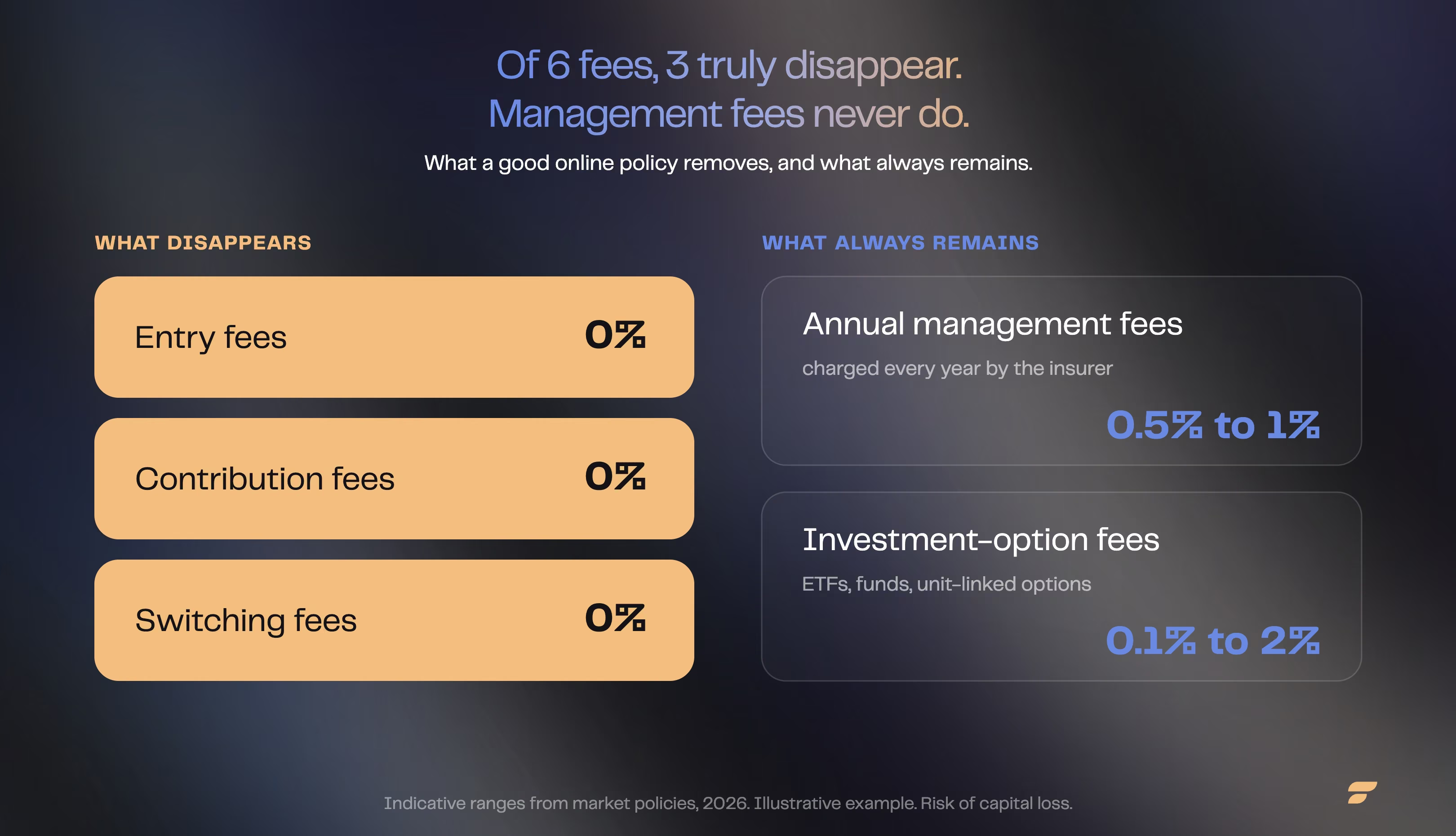
A life insurance policy can carry up to six families of fees. Knowing them is already knowing where to look.
| Fee type | Traditional policy | Best online policy |
| Entry / contribution fees | Up to 3% to 5% | 0% |
| Switching fees | 0.5% to 1% per transaction | 0% |
| Annual management fees (policy) | 0.8% to 1% | 0.5% to 0.6% |
| Fees on investment options (unit-linked funds, ETFs, funds) | 0.2% to 2% | 0.1% to 2% depending on the option |
| Managed-portfolio service fees (mandate) | 0.2% to 1% | 0% to 1% depending on the option |
| Scheduled contribution fees | Sometimes | 0% |
Good news for comparing policies: since 1 June 2022, regulation has required every insurer to publish a standardised fee table, line by line. It is your best starting point for judging a policy. To measure what high fees really cost, also read our guide on life insurance fees and our selection of the worst life insurance policies.
The fees that online policies genuinely remove
This is where the "fee-free" promise becomes reality. The best online policies have removed three fee families at once.
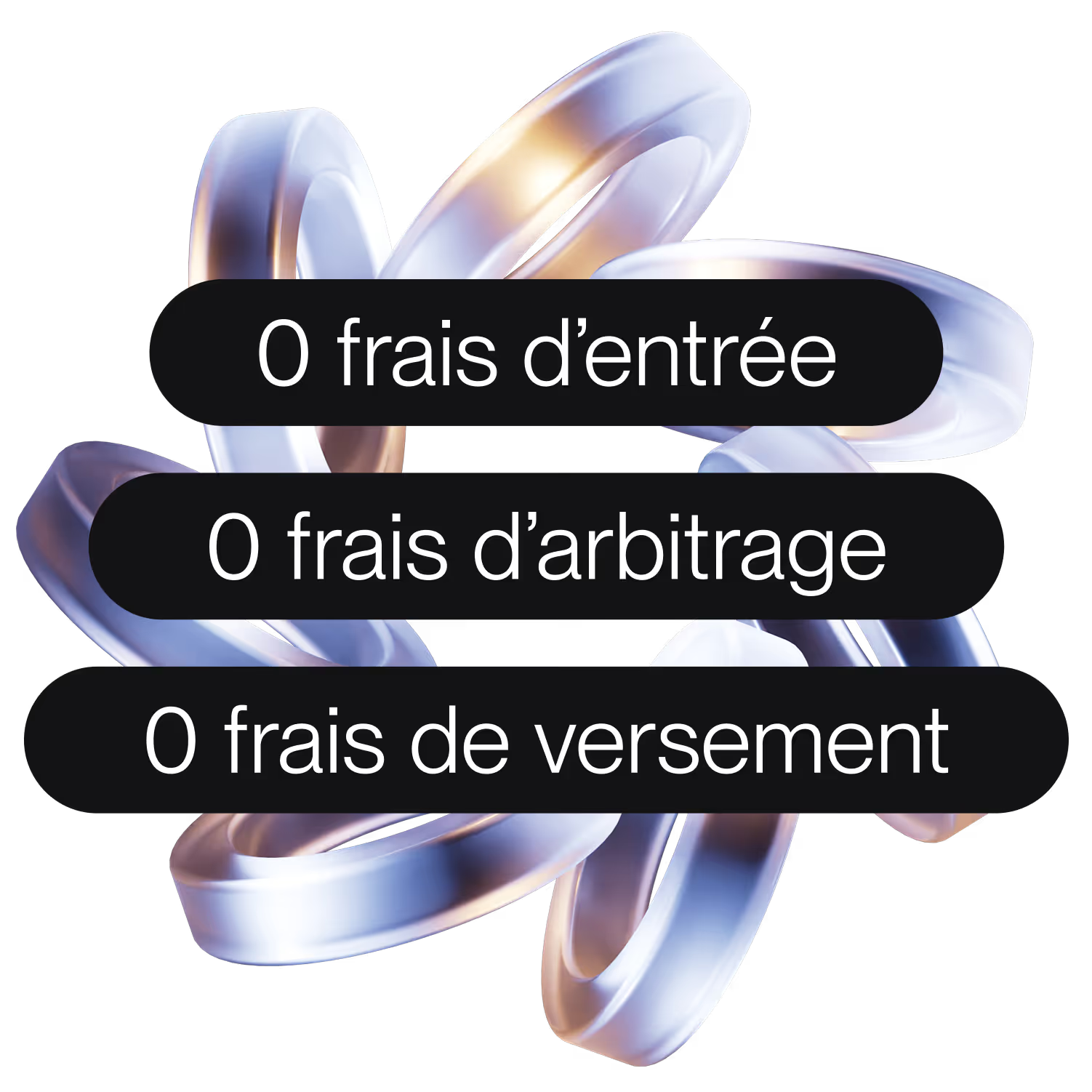
The entry and contribution fees come first. On a traditional policy, paying in €10,000 could immediately cost €300 to €500. On a good online policy, these fees are zero: 100% of your contribution is invested.
The switching fees come next. Reorganising your allocation now costs nothing, which changes everything for an active saver. The scheduled contribution fees, finally, have disappeared too.
Finary Life, for example, charges 0% entry, contribution and switching fees, with 0.50% in annual management fees on unit-linked funds. Fees on the underlying investment options apply in addition.
More capital invested
Non-contractual document for promotional purposes. Investment in unit-linked vehicles carries a risk of capital loss, since their value is subject to fluctuation, both upwards and downwards, depending in particular on developments in the financial markets. The insurer guarantees the number of unit-linked units, not their value, which it does not guarantee. The e-vie life insurance policy is an individual life insurance policy, denominated in euros and/or unit-linked vehicles, underwritten by Generali Vie, a company governed by the French Insurance Code. Finary SAS - 58 rue de Monceau 75380 Paris 8 - Investment Firm authorised by the ACPR under no. 19283, ORIAS no. 21001279, member of AMAFI
The myth of "100% fee-free": the fees you cannot avoid
Here is the part that marketing tends to leave out. Two fee families never disappear, because they pay for a real service.
The annual management fees on the policy come first. The insurer manages your policy, keeps the accounts, and handles ongoing administration. This service has an annual cost, deducted from your assets, generally between 0.5% and 1%. No serious policy brings this down to zero.
The fees on the underlying investment options come next, and they are the most discreet trap. Every unit-linked fund, every ETF, every fund carries its own internal fees, deducted before performance is even displayed. In France, an ETF charges average annual fees of around 0.3% to 0.4% according to 2025 AMF data, while actively managed equity funds average around 1.3% to 1.4% and can exceed 2% for the most expensive ones.
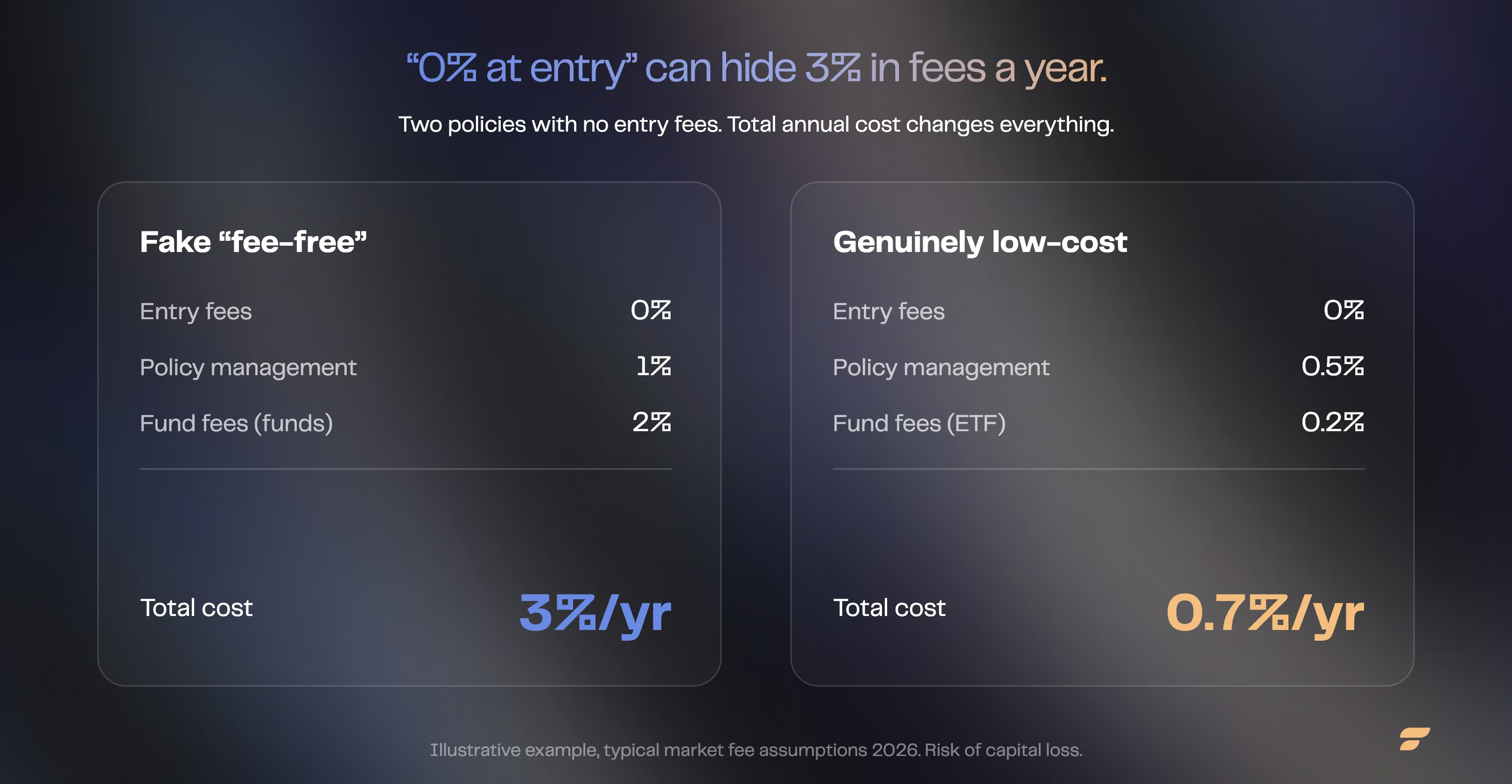
A "fee-free" policy that only offers funds charging 2% is therefore not cheap. The real total cost combines the policy's management fees and the fees on the underlying investment options. It is that sum that matters.
How much fees eat into your capital over 20 years
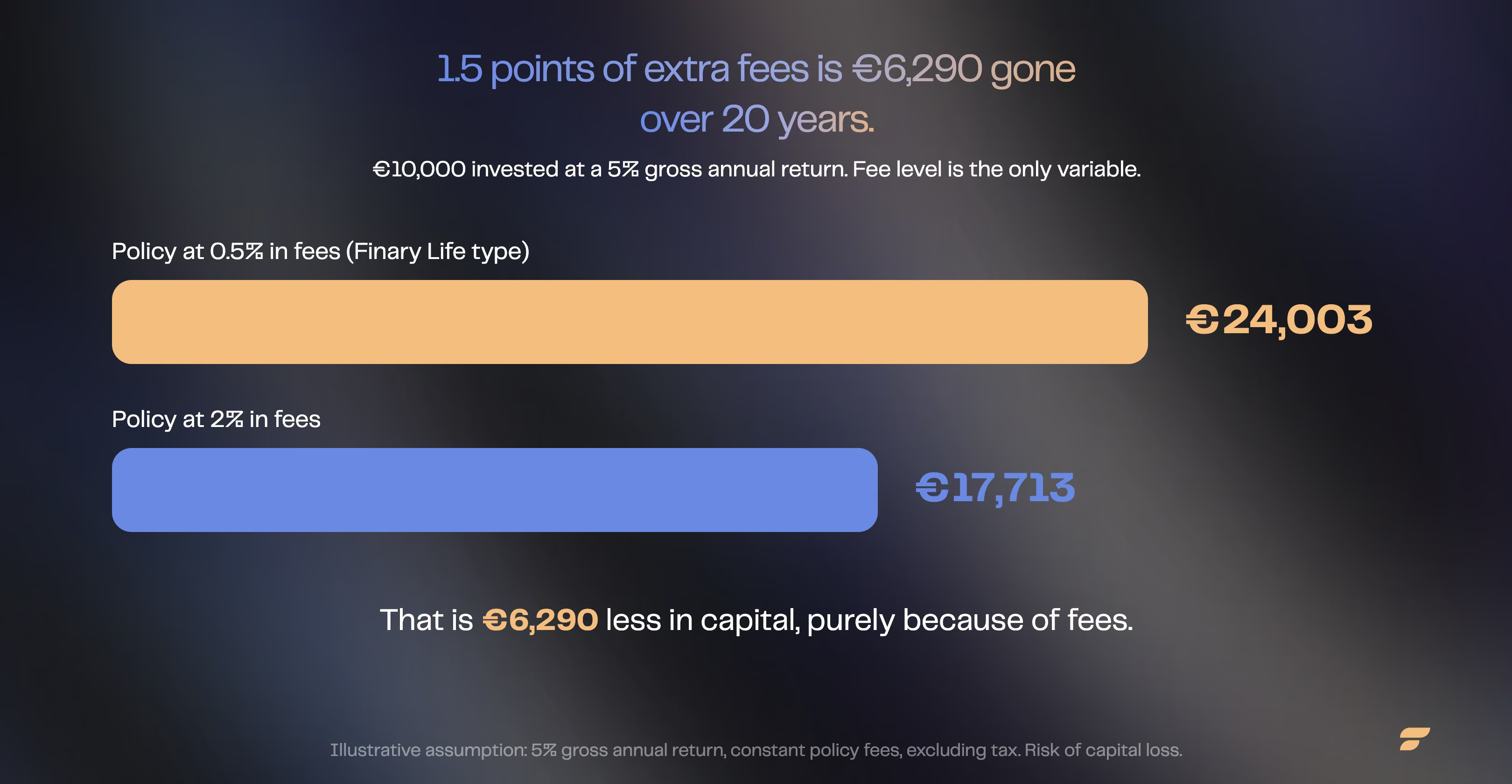
Fees look trivial over a single year. Over 20 years, they eat up a huge share of your performance, simply through compound interest working in reverse.
On a capital of €10,000 at a 5% gross return over 20 years, moving from 0.5% to 2% in annual fees costs several thousand euros in final capital. The gap does not come from market performance, but from fees alone. A low-fee policy therefore builds up, year after year, a decisive lead in net performance. Compare with our guide on life insurance returns.
How to spot a genuinely low-cost policy
Now that you know all the fees, here is the checklist for judging a policy in a few minutes, with the policy's standardised fee table in front of you.
- Entry and contribution fees: insist on 0%. That is the standard for good online policies.
- Switching fees: aim for 0%, especially if you plan to adjust your allocation.
- Annual management fees on the policy: a good level sits around 0.5% on unit-linked funds for the most competitive online policies. The market average stands at around 0.82% under self-directed management and 0.88% across all management types (France Assureurs, 2025): above 1%, be cautious.
- Fees on the underlying investment options: favour low-cost ETFs over funds charging 2%.
- Managed-portfolio service fees: only worth examining if you choose delegated management, and worth comparing.
To go further, our guide breaks down life insurance management fees.

"Fee-free" does not mean "best"
One last trap awaits. Choosing a policy on fees alone would be a mirror-image mistake. Fees matter enormously, but they are not everything.
What really matters is net-of-fee performance, the part that stays in your pocket. A policy at 0.5% that only offers mediocre funds can underperform a slightly more expensive policy with a strong lineup. So look at the whole picture: the fee level, but also the quality of the euro fund, the breadth of investment options, and the support you get.
The right way to read it is simple. Low fees are an excellent starting point, never a finish line. An ideal policy combines low fees with quality investment options.
The bottom line
So, fee-free life insurance: myth or reality? Both. Entry, contribution and switching fees really have disappeared from the best policies: that is the reality. But "100% free" remains a myth, because managing and investing your money always has a cost. The real winner is not the one chasing an absolute "zero fees", it is the one paying the fair price for a policy that performs. Aim for low fees, but never stop at the word "free".
FAQ: fee-free life insurance
Does a 100% fee-free life insurance policy exist?
No. The best policies remove entry, contribution and switching fees, but management fees on the policy and on the underlying investment options always remain.
Which fees can you actually avoid?
Entry fees, scheduled contribution fees and switching fees. On a good online policy, these three items are at 0%.
What are the unavoidable fees on a life insurance policy?
The annual management fees on the policy, charged by the insurer, and the internal fees of the investment options, such as those of ETFs or funds.
How do you know if a policy is expensive?
Add up the annual management fees on the policy and the fees on the investment options. Use the standardised fee table to help. An online policy with 0.5% in management fees and low-cost ETFs is highly competitive.
Are an ETF's fees included in the policy's fees?
No. The fees of an ETF or a fund are charged separately, directly on the performance of the investment option, and are added to the annual management fees on the policy.
Is a policy with no entry fees necessarily the best?
No. Zero entry fees is a good sign, but net performance also depends on management fees, the quality of the investment options and the euro fund.
Regulatory disclaimers:
Marketing communication. Investing carries a risk of partial or total capital loss. Past performance is not a reliable indicator of future performance. This article is provided for information and educational purposes only; it does not constitute personalised investment advice, a buy or sell recommendation, or tax advice.
The capital guarantee on euro funds is provided by the insurer and depends on its financial strength. In a severe systemic crisis, the French "Sapin 2" law allows withdrawals to be temporarily restricted (liquidity), without affecting the guaranteed capital. Unit-linked funds are not guaranteed and carry a risk of capital loss.
Before investing, read the Key Information Document (KID) and, where relevant, consult an authorised adviser.
Finary SAS, an investment firm authorised by the ACPR (no. 19283), member of AMAFI. Insurance broker registered with ORIAS (no. 21001279), member of the CNCGP (association approved by the AMF). Crypto-Asset Service Provider (CASP) authorised by the AMF under the MiCA regime, references no. A2026-026 and no. N2026-008.