Luxembourg life insurance: the security triangle explained

Updated on 6 August 2026
The Luxembourg security triangle is a tripartite mechanism that legally separates policyholders' assets from the insurer's own assets, split between a licensed custodian bank and the Commissariat aux Assurances (CAA, Luxembourg's insurance regulator). It comes with the Super Privilège, a Luxembourg legal mechanism that grants unlimited capital protection, compared with the €70,000 cap in France under the Fonds de Garantie des Assurances de Personnes (FGAP, France's life-insurance guarantee fund).

- The Luxembourg security triangle offers unique protection for policyholders' assets, with strict segregation and regular oversight.
- The Super Privilège guarantees priority, unlimited reimbursement if the insurer fails, unlike the capped systems used in other countries.
- Luxembourg policies are not subject to the French "Sapin 2" law, allowing broad freedom to manage the contract and withdraw funds under its terms.
The Luxembourg security triangle: definition and importance
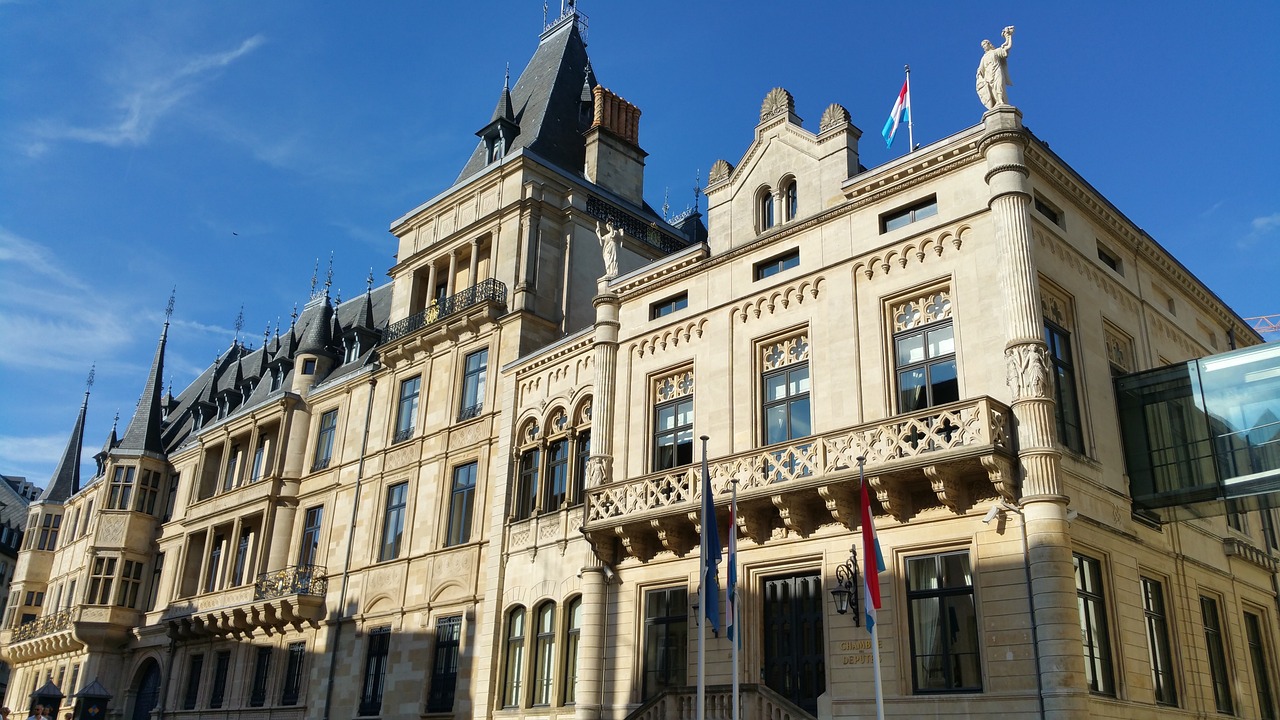
The Luxembourg security triangle is a cornerstone of Luxembourg life insurance. It offers reinforced protection, recognised across Europe. It goes beyond the traditional guarantees offered in other countries.
This mechanism rests on a tripartite agreement. It involves the insurer, a licensed custodian bank and the Commissariat aux Assurances (CAA). This structure strengthens the security of Luxembourg life insurance policyholders.
This tripartite structure embodies a firm commitment to investors' financial security. The insurer manages the policies and the underlying investments.
The custodian bank holds policyholders' assets. It keeps them separate from the insurance company's own funds. The CAA oversees the whole process. It ensures strict compliance with the regulations in force.
The security triangle's role in protecting policyholders
The security triangle effectively separates clients' holdings from the insurer's own assets. This segregation protects clients against the insurance company's potential financial difficulties. The system thereby offers exceptional protection to Luxembourg life insurance policyholders.
If the insurer runs into financial difficulty, policyholders' funds remain legally protected and held at the custodian bank.
This protection goes beyond a purely theoretical guarantee. A rigorous quarterly review by the CAA confirms that policy assets remain separate from the insurance company's other commitments.
If it finds an irregularity, the CAA can step in quickly, even freezing the insurer's accounts at the custodian bank if necessary.
The tripartite mechanism: insurer, custodian bank, Commissariat aux Assurances (CAA)
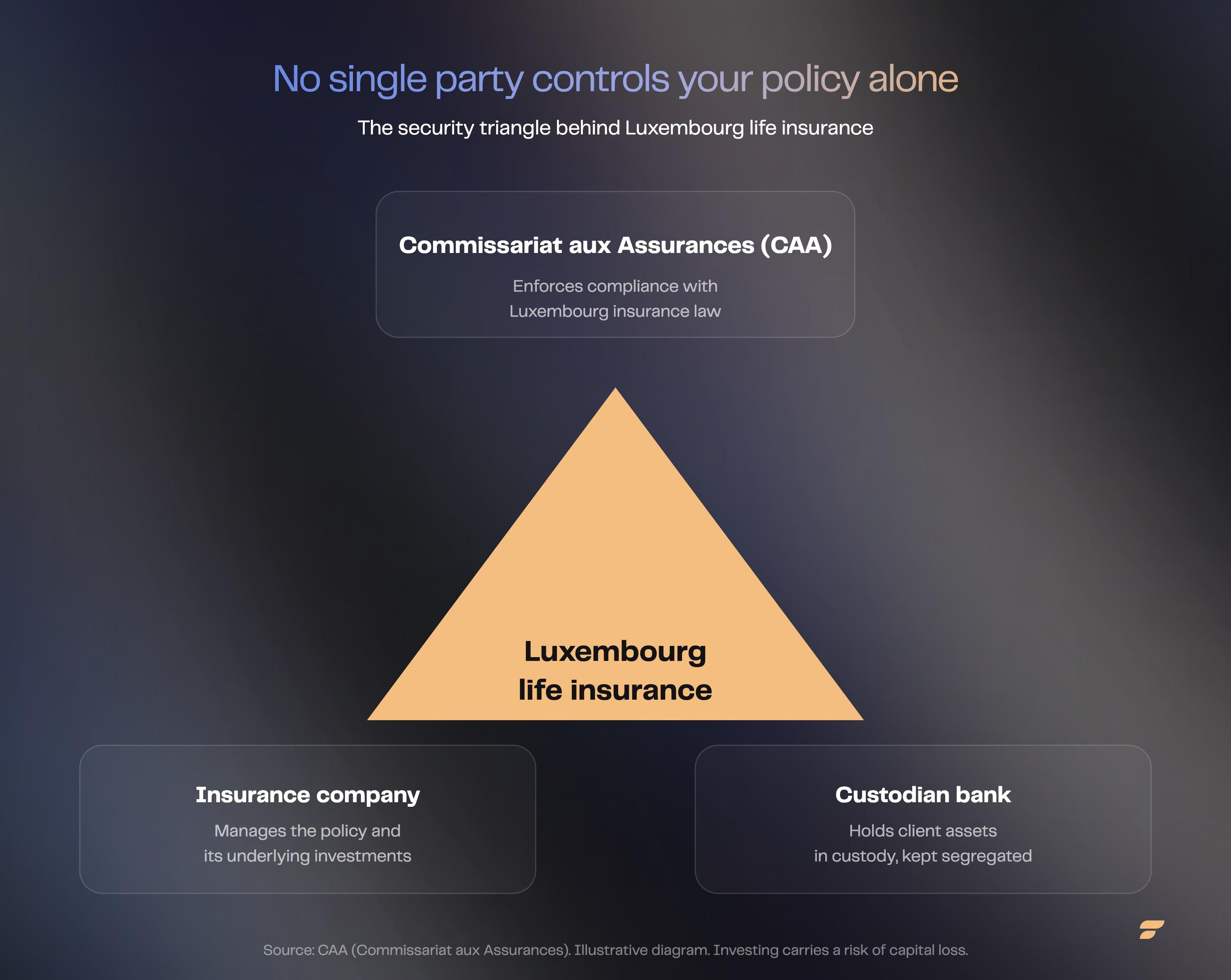
This triangle works smoothly because roles and responsibilities are clearly divided:
- Insurance company: records its commitments to policyholders as technical provisions on its balance-sheet liabilities, matched by assets of equivalent quality on the asset side.
- Custodian bank: physically holds the assets, kept separate from the insurer's own funds and from other clients' assets, to reinforce the security of the investments.
- Commissariat aux Assurances: exercises active, direct supervision, checking both levels of segregation every quarter to detect and correct any anomaly quickly.
This constant vigilance from the CAA strengthens investor confidence in the Luxembourg system.
How does asset segregation work in Luxembourg?
Asset segregation in Luxembourg operates at two levels, at the insurer and at the custodian bank, giving life insurance policyholders double financial protection. This mechanism is a pillar of the Luxembourg security triangle.
Segregation of insurers' assets from their clients' assets
At the insurer level, this segregation is both physical and legal. Policyholders' funds are strictly separated from the insurance company's own assets. This separation is not just a line item on a balance sheet.
It means clients' funds are fully isolated, placing them out of reach of the insurer's potential creditors.
If the insurer runs into financial difficulty, or even fails, clients' assets remain legally protected. They cannot be seized to repay the company's debts or to satisfy other creditors' claims.
Segregation of the custodian's assets in Luxembourg
The custodian bank plays a crucial role in reinforcing this protection. In Luxembourg, these institutions must not only separate insurance companies' funds from their own assets, but also isolate each insurance company's holdings from every other's.
This double segregation at custodian level adds an extra layer of security. It guarantees that even if the custodian bank fails, policyholders' assets remain identifiable and recoverable.
This practice contrasts sharply with the systems in place in other European countries, where clients' assets can sometimes be commingled with those of the financial institution.
Oversight and supervision by the CAA
The Commissariat aux Assurances (CAA) rigorously supervises this segregation system. Its role goes beyond simple administrative checks. The CAA carries out thorough quarterly reviews, examining both levels of segregation in detail.
These regular audits confirm that the separation of assets is real and compliant with the regulations in force.
The CAA has broad powers to step in if irregularities arise. For example, it can instantly freeze an insurer's accounts at the custodian bank if it detects an anomaly.
Want to know more about the best Luxembourg life insurance policies? Don't miss our comparison of the best Luxembourg life insurance policies.
What is the Luxembourg Super Privilège?
The Luxembourg Super Privilège is a legal mechanism unique to Luxembourg that reinforces the security triangle if the insurer fails, with no strict equivalent under French life insurance law.
Definition and explanation of the Super Privilège
The Super Privilège grants holders of Luxembourg life insurance policies first-ranking creditor status. If the insurance company fails, policyholders are the first to be repaid. They rank ahead of the State, suppliers or the insurer's employees.
Comparison with the protection offered in France
The difference between the Luxembourg system and the French system is striking. In France, the Fonds de Garantie des Assurances de Personnes (FGAP) caps protection at €70,000 per policyholder, across all policies held with the same insurer. Article L.423-1 of the French Insurance Code states that authorised insurers "join a guarantee fund designed to protect their policyholders' rights", a mechanism whose compensation cap is set by decree, currently €70,000 per policyholder and per insurer.

The security triangle, through Finary One
Finary One supports investors with €1,000,000 or more in investable assets in choosing and structuring their Luxembourg policy according to their wealth profile.
- Informed selection among 10 Luxembourg insurers (Lombard International, Wealins, Sogelife, Cardif Lux Vie, and others), with access to FID (Fonds Interne Dédié, a dedicated internal fund) from €500,000 in assets.
- A dedicated wealth advisor structures the policy in line with your overall wealth and objectives.
- Negotiation of fees and the banking margin, thanks to the volume Finary One channels through its Luxembourg partners.
Learn more about Finary One → Reserved for investors with €1,000,000 or more in investable assets. Investing carries risk, including the risk of capital loss.
Flexibility and independence from the "Sapin 2" law

One of the major advantages of Luxembourg life insurance is its independence from certain national regulations, notably the French "Sapin 2" law.
This autonomy gives policyholders greater flexibility and freedom in managing their wealth.
Article 49 of the "Sapin 2" law does not apply to Luxembourg policies
Article 49 of the "Sapin 2" law applies to French life insurance policies. It allows the Haut Conseil de Stabilité Financière (HCSF, France's Financial Stability Board) to temporarily restrict withdrawals from these policies during a major financial crisis, under the conditions set out in Article L.631-2-1 of the French Monetary and Financial Code.
This provision, although designed to protect the financial system, can be seen as a restriction on savers' freedom.
Luxembourg policies, by contrast, are not subject to this regulation. This exemption means Luxembourg life insurance policyholders keep access to their funds under the terms of the policy, subject to the liquidity of the underlying investment options.
What does this mean for investors in terms of liquidity and management?
This flexibility has a significant impact on wealth management. Investors benefit from liquidity that depends on the investment options chosen, a crucial advantage for long-term financial planning.
This management freedom encourages a more active approach to investing. Policyholders can adjust their asset allocation according to market conditions, subject to the applicable contractual terms.
This responsiveness can translate into better performance, particularly valuable in a constantly changing financial environment.
Combining this flexibility with the security triangle mechanism creates a framework suited to diversified wealth management. Investors can benefit from international diversification while keeping full control over their assets.
The Luxembourg security triangle is a major innovation in life insurance, offering investors reinforced protection along with valuable flexibility.
This unique structure, combining asset segregation, the Super Privilège and regulatory independence, positions Luxembourg as a jurisdiction of choice for international wealth management.
Frequently asked questions
Does the security triangle protect all Luxembourg life insurance policies?
Yes. The security triangle applies to every life insurance policy sold by a company licensed in Luxembourg, whatever the amount invested. Asset segregation at the custodian bank and the CAA's quarterly review cover all policyholders, regardless of their wealth profile.
What happens if the custodian bank fails?
Thanks to the double segregation imposed by the CAA, policyholders' assets stay isolated from the custodian bank's own assets. Even if that institution fails, clients' holdings remain identifiable and recoverable, because they are never merged with the bank's balance sheet.
Does the Super Privilège also apply to unit-linked funds?
Yes. The Super Privilège grants first-ranking creditor status over the assets held at the custodian bank, with no cap, for both the euro fund and unit-linked funds. The protection applies to the policy's legal structure, not to the underlying investment option; unit-linked funds still carry a risk of capital loss.
What is the difference between the Luxembourg security triangle and the FGAP guarantee in France?
In France, the FGAP caps the guarantee at €70,000 per policyholder if the insurer fails. In Luxembourg, the security triangle and the Super Privilège provide unlimited protection, with no cap, because the policyholder ranks as a first-priority creditor over the assets segregated at the custodian bank.
Sources
Commissariat aux Assurances (CAA), Luxembourg's insurance sector supervisory authority
Fonds de Garantie des Assurances de Personnes (FGAP), the guarantee cap for life insurance policies
Regulatory disclaimers: Marketing communication. Investing carries a risk of partial or total capital loss. Past performance is not a reliable indicator of future performance. This article is provided for information and educational purposes only; it does not constitute personalised investment advice, a buy or sell recommendation, or tax advice. The capital guarantee on euro funds is provided by the insurer and depends on its financial strength. In a severe systemic crisis, the French "Sapin 2" law allows withdrawals to be temporarily restricted (liquidity), without affecting the guaranteed capital. Unit-linked funds are not guaranteed and carry a risk of capital loss. Before investing, read the Key Information Document (KID) and, where relevant, consult an authorised adviser. Finary SAS, an investment firm authorised by the ACPR (no. 19283), member of AMAFI. Insurance broker registered with ORIAS (no. 21001279), member of the CNCGP (association approved by the AMF). Crypto-Asset Service Provider (CASP) authorised by the AMF under the MiCA regime, references no. A2026-026 and no. N2026-008.