Life Insurance in France or Luxembourg: Key Differences

Updated on 7 August 2026
Luxembourg life insurance offers unlimited capital protection (versus €70,000 per policyholder in France via the FGAP guarantee fund) and a wider choice of investment options, but generally requires a minimum entry ticket of €250,000, compared with €300 for a French policy. For a French tax resident, the taxation of both contracts is identical.

- Capital protection: €70,000 per policyholder in France (FGAP), unlimited in Luxembourg thanks to the super-privilege.
- Entry ticket: from €300 in France (e.g. Finary Life, underwritten by Generali Vie), from €250,000 in Luxembourg.
- Identical taxation for a French tax resident, regardless of which country the policy is held in.
Summary table of differences
To better understand the nuances between French and Luxembourg life insurance, let's look at their main features side by side. This comparison highlights the essential points that set these two investment options apart.
| Feature | French life insurance | Luxembourg life insurance |
|---|---|---|
| Capital protection | Capped at €70,000 per policyholder per insurer (FGAP) | "Super-privilege" with no cap |
| Investment flexibility | Narrower range of investment options | Open architecture with a wide choice of investment options |
| Regulation | Subject to the Sapin II law | Not subject to the Sapin II law |
| Entry ticket | Accessible from €300 | Generally from €250,000 |
| Management | Often digitalised and simplified | Less digitalised, more complex management |
| Euro funds | Historically higher returns, depending on the year | Often less attractive returns |
| Taxation for French residents | Tax regime specific to life insurance | Taxation similar to that of French policies |
Which country best protects invested capital: France or Luxembourg?
Luxembourg protects capital better thanks to its "super-privilege" mechanism, with no contractual cap, versus €70,000 per policyholder per insurer in France via the FGAP. This difference in protection comes with an overall higher level of security on Luxembourg policies.
Capital protection in France and Luxembourg
In France, the capital invested in a life insurance policy is protected by the Fonds de Garantie des Assurances (FGAP), the French insurance guarantee fund. This mechanism, while reassuring, covers only €70,000 per policyholder per insurer. For holders of larger contracts, this cap can prove restrictive.
Luxembourg has put in place a significantly more advantageous protection system. The Luxembourg "super-privilege" ranks the policyholder as a priority creditor if the insurer defaults.
This provision grants priority claim status with no contractual cap, within the limits of available assets. For substantial estates, this advantage can prove decisive.
The Impact of the Sapin II Law on Life Insurance
The Sapin II law adds another dimension to the comparison between the two types of policy. In the event of a major financial crisis, this law allows withdrawals to be temporarily blocked on French life insurance policies.
Such a measure aims to prevent a collapse of the financial system, but it can be seen as an infringement on savers' freedom.
For modest estates, the French guarantee may prove sufficient. For investors with substantial capital, or those particularly concerned about security, the Luxembourg option may be worth considering.
The greater security offered by Luxembourg policies usually comes with higher fees and a substantial entry ticket. These factors must be weighed in the overall assessment of the investment opportunity.
Which investment options are available in France and Luxembourg?
French policies give access to euro funds, standard unit-linked funds (FCP, SICAV), and SCPI, while Luxembourg policies open the door, through their open architecture, to structured products, alternative funds, ETFs, and direct securities.
Diversification of Investment Options: France vs Luxembourg
French policies generally offer a fairly standard range of investment options:
- Euro funds
- Unit-linked funds made up of FCP and SICAV
- Real-estate options such as SCPI (French non-listed real-estate investment funds) or SCI (French real-estate civil companies)
This range satisfies many savers, but it can seem limited for investors seeking greater diversification.
Luxembourg life insurance, meanwhile, is characterised by its "open architecture". This approach gives access to a much wider range of investment options:
- Structured products
- Alternative funds
- ETFs
- Direct securities
This diversity gives investors the ability to build more sophisticated portfolios, potentially better suited to their specific goals.
The Option to Invest in Foreign Currencies
Another significant advantage of Luxembourg policies lies in the ability to invest in foreign currencies. While French policies are generally denominated in euros, Luxembourg policies often allow investing in several currencies within the same contract.
This feature can be particularly useful for:
- Hedging against currency fluctuations
- Diversifying a portfolio geographically
Investing in foreign currencies is not risk-free. Exchange-rate movements can affect the policy's overall performance, both upwards and downwards.
Types of Funds (Dedicated, Collective Internal Funds, etc.)
Luxembourg policies also stand out for the variety of fund types on offer. They offer more tailored options, such as:
- Fonds Internes Dédiés (FID, dedicated internal funds): accessible above a certain investment threshold (generally around €250,000). Bespoke portfolio management, tailored to risk profile and goals.
- Fonds Internes Collectifs (FIC, collective internal funds): an intermediate solution between standard funds and FID. Pooled investments from several policyholders, with some flexibility in management.
The greater flexibility of Luxembourg policies often comes with greater management complexity.
These policies require closer monitoring and can benefit from the support of a specialised adviser. In addition, the associated fees are often higher, especially for bespoke management options.
Access to Real-Estate Funds (SCI, SCPI) on French Policies
A significant advantage of French policies lies in easier access to real-estate funds, notably Sociétés Civiles Immobilières (SCI, real-estate civil companies) and Sociétés Civiles de Placement Immobilier (SCPI, a French non-listed real-estate investment fund, comparable to a REIT).
These investment options let savers diversify their portfolio with exposure to the property market, without the constraints of directly managing it.
French policies include SCPI and SCI. These real-estate options offer attractive distribution rates, generally between 4% and 6% in 2025 according to ASPIM, but this return is neither guaranteed nor linear: the capital valuation of some SCPI remains under pressure. They combine the liquidity and tax advantages specific to life insurance.
Life Insurance in France or Luxembourg: the Finary One View
Finary One supports investors with €1,000,000 in investable assets in choosing and structuring their life insurance, French or Luxembourg, based on their overall wealth situation.
- A dedicated wealth advisor who analyses your situation and identifies the right policy (high-end French vs Luxembourg) based on your wealth, goals and mobility.
- Access to the best Luxembourg policies (Lombard International, Wealins, Sogelife, Cardif Lux Vie, etc.), with fees negotiated thanks to the volume handled by Finary One.
- A 360° wealth view combining French life insurance, Luxembourg life insurance, real estate, private equity and Lombard lending in a single platform.
Learn more about Finary One → Reserved for investors with €1,000,000 in investable assets. Investing carries risk, including the risk of capital loss.

Regulation and Legal Framework
The regulatory and legal framework plays a crucial role in the security and appeal of life insurance policies. Luxembourg stands out with a particularly favourable environment for investors, while France offers a well-established but sometimes more restrictive framework.
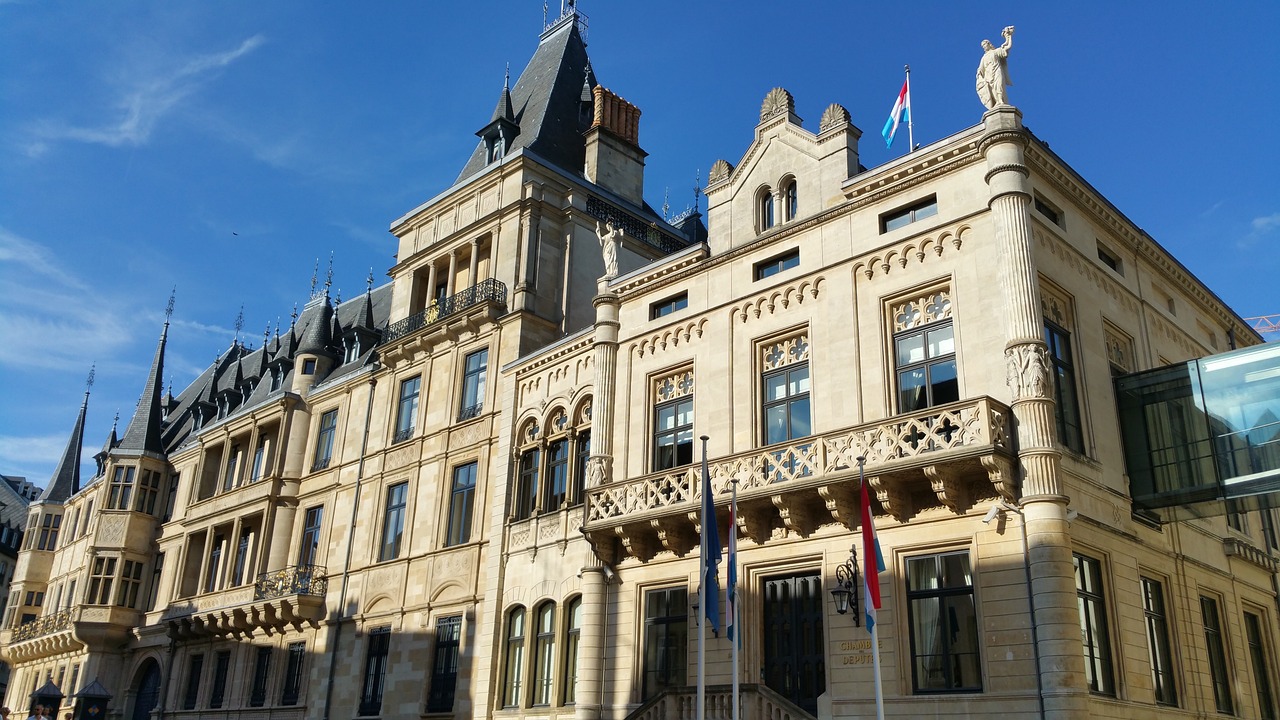
Financial Regulation in Luxembourg
Luxembourg has developed a sophisticated regulatory framework for its financial sector, recognised for its rigour and efficiency. The Commissariat aux Assurances (CAA), Luxembourg's insurance supervisory authority, closely monitors compliance with applicable standards. This strict oversight contributes to the reliability reputation of Luxembourg's financial sector.
A key element of this regulation is the security triangle. This mechanism involves:
- Strict separation between the insurer's assets and those of clients
- An independent depositary bank
This three-way structure offers enhanced protection for investors, considerably limiting the risks if the insurer were to default.
Luxembourg imposes high solvency requirements on insurance companies. Solvency ratios for Luxembourg insurers have historically been high according to the Commissariat aux Assurances (CAA), exceeding minimum European requirements (Solvency II). This financial strength is a source of security for policyholders.
Luxembourg's Economic and Political Stability
The economic and political stability of Luxembourg is a major asset for its financial sector. The country currently holds a AAA rating from the main credit rating agencies (S&P, Moody's, Fitch - subject to change), reflecting its financial strength and prudent management.
This stability reassures international investors and adds to the appeal of Luxembourg life insurance policies.
What is the entry ticket and ease of management for policies in France and Luxembourg?
A French policy is accessible from €300, while a Luxembourg policy generally requires at least €250,000, with management typically more digitalised on the French side.
The Entry Ticket for Luxembourg Life Insurance
One of the most striking differences lies in the minimum amount required to take out a policy.
French life insurance policies are very accessible, with entry tickets as low as €300 (e.g. Finary Life, from €300 for the first payment, €150 for scheduled payments). This democratisation lets a broad audience access this type of investment.
By contrast, Luxembourg life insurance is clearly positioned in the high-end segment of the market. The minimum amount for these policies is generally around €250,000, or even more for certain more sophisticated products. This high barrier to entry restricts access to these policies to investors with substantial wealth.
To illustrate this difference:
- The Profolio policy from Bâloise Vie Luxembourg requires an initial payment of €100,000
- The Assurance Vie One Lux policy from CNP requires a minimum subscription premium of €500,000
These amounts contrast sharply with the few hundred euros needed to open a standard policy in France.
Compare the fees of both options with our life insurance fee simulator.
Digitalisation and Ease of Management: France vs Luxembourg
Day-to-day policy management is another notable point of divergence between French and Luxembourg offerings.
French policies are often more digitalised, with online interfaces and intuitive mobile apps. This modernisation makes it easier to track investments, switch funds and carry out routine transactions.
For example, many French insurers offer:
- Online platforms for viewing the portfolio's composition in real time
- Options for switching funds in a few clicks
- The ability to schedule regular payments
This ease of use meets the expectations of a client base increasingly used to managing its finances online.
To discover the leading Luxembourg life insurance policies and compare offers, feel free to consult our dedicated guide.
Conversely, managing Luxembourg policies tends to be less digitalised and more tedious. Transactions may require more formal steps, sometimes involving paper document exchanges or longer procedures.
Specialised Support for Luxembourg Policies

The greater complexity of Luxembourg policies often calls for specialised support. Unlike French policies, which can be managed fairly independently, Luxembourg policies generally benefit from the expertise of wealth management advisors dedicated to them.
These professionals play a crucial role in:
- The initial structuring of the policy
- Choosing investment options
- Tax optimisation
Their input aims to make the most of the specific features of Luxembourg policies, particularly in terms of diversification and customisation.
For example, for a Luxembourg policy offering a Fonds Interne Dédié (FID, dedicated internal fund), the advisor will work closely with the client to define a tailor-made investment strategy.
However, this specialised support comes at a cost. The management fees on Luxembourg policies are generally higher than those on French policies.
Is taxation different between a French policy and a Luxembourg policy?
No: for a French tax resident, the taxation of withdrawals is identical regardless of which country the policy is held in (flat tax (PFU) at 30% before 8 years, annual tax allowance after 8 years).
Taxation of withdrawals
For French tax residents, the taxation of withdrawals on Luxembourg policies is aligned with that of French policies. The basic principle remains the same: only the portion of realised gains is subject to tax.
Choosing Between the Flat Tax (PFU) and the Progressive Scale
As with French policies, holders of Luxembourg policies can choose between the flat tax (Prélèvement Forfaitaire Unique, PFU) and taxation on the progressive income-tax scale.
The PFU stands at 30% (12.8% income tax + 17.2% social contributions) for policies under 8 years old. Life insurance is explicitly excluded from the increase to 31.4% (18.6% social contributions) applied since 1 January 2026 (LFSS, France's Social Security Financing Act, 2026, law no. 2025-1403 of 30 December 2025) to other financial products. After 8 years, an annual tax allowance of €4,600 (€9,200 for a couple) applies to gains, and the income-tax rate is reduced to 7.5% below certain payment thresholds. This option can prove advantageous for taxpayers whose marginal tax rate is above 12.8%.
Do Luxembourg euro funds pay out less than French ones?
Yes, generally: French euro funds have historically posted higher returns than their Luxembourg counterparts, which favour a more conservative approach.
Differences in Investment Strategy
Investment strategy also explains this performance gap. French euro funds take a more dynamic approach. They include more risk assets, such as equities or real estate. However, they still guarantee the capital.
Conversely, Luxembourg funds favour security. They take a more conservative approach, which can reduce their return.
It should be noted, however, that this performance gap tends to narrow in a persistently low-rate environment.
The choice between France and Luxembourg ultimately comes down to a trade-off between immediate accessibility and maximum protection: taxation, for its part, never tips the balance either way.
While French policies excel in simplicity and accessibility, Luxembourg policies offer a specific protection framework and greater flexibility for substantial estates.
Frequently asked questions
Can you hold Luxembourg life insurance while living in France?
Yes. For a French tax resident, the taxation of withdrawals on a Luxembourg policy is aligned with that of a French policy (30% flat tax or progressive scale, allowance after 8 years). The choice between the two countries mainly comes down to the level of capital protection, the entry ticket and the range of investment options, not a tax advantage.
Luxembourg or French life insurance: which one should you choose based on your wealth?
Luxembourg policies become relevant from around €250,000 in investment, the threshold at which open architecture and unlimited capital protection start to make sense. For estates above €1,000,000 in investable assets, Finary One helps choose between a high-end French policy and a Luxembourg policy based on the overall wealth situation.
What fees should you expect for a Luxembourg policy compared with a French one?
The average annual management cost is around 0.90% in Luxembourg, versus around 1.35% for a high-end French policy, the gap being explained by the bespoke management services (FID, FIC) often included in Luxembourg policies. This difference can amount to several thousand euros a year on a substantial capital.
Can you transfer a French life insurance policy to a Luxembourg one?
No, French regulations do not allow a direct transfer between a French policy and a Luxembourg policy. Withdrawing from the French policy, with its own tax treatment on the gains, is required before taking out a new Luxembourg policy, which means losing the tax seniority already built up.
Sources
Fonds de Garantie des Assurances de Personnes (FGAP)
Commissariat aux Assurances (CAA), Luxembourg
LFSS 2026, law no. 2025-1403 of 30 December 2025 (Légifrance)
impots.gouv.fr, taxation of life insurance withdrawals
ASPIM, fundraising and performance of retail real-estate funds in 2025
CNP Luxembourg, One Lux subscription terms
Regulatory disclaimers: Marketing communication. Investing carries a risk of partial or total capital loss. Past performance is not a reliable indicator of future performance. This article is provided for information and educational purposes only; it does not constitute personalised investment advice, a buy or sell recommendation, or tax advice. The capital guarantee on euro funds is provided by the insurer and depends on its financial strength. In a severe systemic crisis, the French "Sapin 2" law allows withdrawals to be temporarily restricted (liquidity), without affecting the guaranteed capital. Unit-linked funds are not guaranteed and carry a risk of capital loss. Before investing, read the Key Information Document (KID) and, where relevant, consult an authorised adviser. Finary SAS, an investment firm authorised by the ACPR (no. 19283), member of AMAFI. Insurance broker registered with ORIAS (no. 21001279), member of the CNCGP (association approved by the AMF). Crypto-Asset Service Provider (CASP) authorised by the AMF under the MiCA regime, references no. A2026-026 and no. N2026-008.