Luxembourg life insurance ETFs in France: your complete guide

Updated on 7 August 2026
For French residents, an ETF held within a Luxembourg life insurance policy remains a unit-linked fund subject to market risk, with fees well below those of actively managed funds (0.03% to 0.5% versus around 2%) and access to almost any ETF with an ISIN code. This guide covers the available policies, fees and allocation strategies.

- Luxembourg life insurance lets you invest in almost any ETF with an ISIN code, unlike the limited ETF range available in French policies.
- ETFs typically carry management fees of 0.03% to 0.5%, versus around 2% for many actively managed funds.
- Access to this architecture usually requires a minimum investment of €125,000 to €250,000, depending on the insurer.
- Above €500,000 in investable assets, Dedicated Internal Funds (FID) make it possible to include non-UCITS US ETFs through a bespoke structure (Finary One supports investors with at least €1,000,000 in investable assets).
This guide covers the ETFs available in Luxembourg life insurance, the policies most open to an ETF architecture, wrapper fees versus ETF fees, and buy-and-hold or tactical allocation strategies. Sources used: public 2026 fee schedules from distributors, and Luxembourg's insurance regulator (Commissariat aux Assurances, CAA).
What is an ETF in Luxembourg life insurance?
ETFs, or Exchange Traded Funds, are a major innovation in investing. These exchange-listed index funds track the performance of stock market indices, bonds, precious metals and even cryptocurrencies. Combining them with Luxembourg life insurance brings together two complementary financial instruments.
Within Luxembourg life insurance, ETFs function as unit-linked funds. Unlike France, where the range of ETFs available in life insurance is limited, Luxembourg lets you invest in almost any ETF with an ISIN code.
This flexibility opens the door to greater diversification and more sophisticated investment strategies.
ETF replication methods
ETF replication comes in two main methods:
- Physical: Physical replication means directly buying the securities that make up the index. This method, favoured by many investors, offers greater transparency and minimises counterparty risk. For example, an ETF that physically replicates the S&P 500 will actually hold shares in the 500 largest US companies.
- Synthetic: Synthetic replication uses derivatives such as swaps to reproduce the index's performance. This approach can be useful for tracking hard-to-access indices or for improving performance by reducing transaction costs. However, it introduces a counterparty risk that should be taken into account.
For more on ETFs, see our complete guide to ETFs.
Access requirements for ETFs in Luxembourg life insurance
Accessing ETFs through Luxembourg life insurance comes with conditions. An overall minimum investment is generally required, most often between €125,000 and €250,000 depending on the insurer and the strategy chosen, rising above €250,000 for access to dedicated funds (see our article on the minimum investment for Luxembourg life insurance). This entry barrier positions this type of investment as a solution aimed at affluent or high-net-worth clients.
Specific benefits of the Luxembourg framework
Integrating ETFs into Luxembourg life insurance brings unique advantages. Luxembourg's Security Triangle, made up of the insurer, an approved custodian bank and the Commissariat aux Assurances, guarantees strict segregation of client assets. This structure offers stronger protection against the insurer's potential financial difficulties.
In addition, Luxembourg's super-privilege ranks the policyholder as a first-tier creditor if the insurer becomes insolvent. This capital protection, unlimited unlike the €70,000 cap per insurer in France (FGAP, the French deposit guarantee fund), is a notable feature, though unit-linked funds still remain subject to market risk.

Non-contractual document for promotional purposes. Finary One is Finary's private wealth management offer, reserved for investors with at least €1,000,000 in investable assets. Investing carries risks, including partial or total capital loss. Finary SAS - 58 rue de Monceau 75380 Paris 8 - ORIAS no. 21001279, supervised by the AMF and the ACPR.
What are the benefits of ETFs in Luxembourg life insurance?
ETFs in Luxembourg life insurance offer lower management fees, instant diversification, favourable tax treatment after 8 years of holding, and daily liquidity, unlike traditional funds priced only once a day. This combination brings significant benefits for savvy investors.
Lower management fees
ETFs stand out for their particularly low management fees. Unlike actively managed funds, which can charge annual fees of around 2%, ETFs typically carry fees of between 0.03% and 0.5% a year. This difference can have a considerable impact on your investment's long-term return.
Take the example of a €100,000 investment over 20 years, with a hypothetical annual return of 7%. With management fees of 2%, the theoretical capital would reach around €265,330 (hypothetical example, excluding taxation, performance not guaranteed).
By contrast, with fees of 0.2% typical of ETFs, this same theoretical investment would reach around €372,000 (hypothetical example, performance not guaranteed). This difference of more than €80,000 illustrates how much fees matter for long-term performance.
Investment diversification
ETFs offer instant diversification, giving investors access to a wide range of assets in a single transaction.
For example, an ETF like the Vanguard FTSE All-World exposes you to more than 3,000 companies across 47 countries, covering around 98% of global stock market capitalisation. Replicating this level of global diversification on your own would be costly and complex.
Within Luxembourg life insurance, this diversification takes on an extra dimension. You can combine equity, bond and commodity ETFs, and even ETFs focused on emerging markets or tech sectors, all inside a single, tax-efficient wrapper.
Tax efficiency and Luxembourg-specific benefits
Luxembourg life insurance offers favourable tax treatment, particularly attractive for French residents. After 8 years of holding, you benefit from an annual allowance of €4,600 (€9,200 for a couple) on gains, under the tax rules in force at the time of writing, followed by a reduced tax rate of 7.5% excluding social contributions on the surplus for contributions up to €150,000 (12.8% beyond that). Tax rules may change and depend on your personal situation.
In addition, this policy is not subject to Article 49 of the French "Sapin 2" law, which allows withdrawals and switches to be frozen in France during a financial crisis.
This greater management freedom, even in turbulent times, is a major advantage for investors who want to keep control of their wealth.
Continuous pricing and greater liquidity
Unlike traditional funds, which are priced only once a day, ETFs are quoted continuously on stock markets. This gives investors greater flexibility to react quickly to market moves.
Illustrative ETF examples
Within Luxembourg life insurance, choosing the right ETFs is critical to optimising your investment strategy. Here is a selection of well-performing, diversified ETFs suited to different investor profiles and financial goals.
Global equity ETFs
Vanguard FTSE All-World: This ETF stands out for its global coverage and competitive management fee of 0.14% (unhedged USD share class, ISIN IE00BK5BQT80, lowered from 0.19% to 0.14% on 28 July 2026). It offers exposure to more than 3,000 companies in 47 countries. Ideal for international diversification within your Luxembourg life insurance policy.
SPDR MSCI World: For those wanting exposure to developed markets, the SPDR MSCI World is an interesting alternative. With a management fee of 0.12%, it offers exposure to large- and mid-cap companies in developed countries.
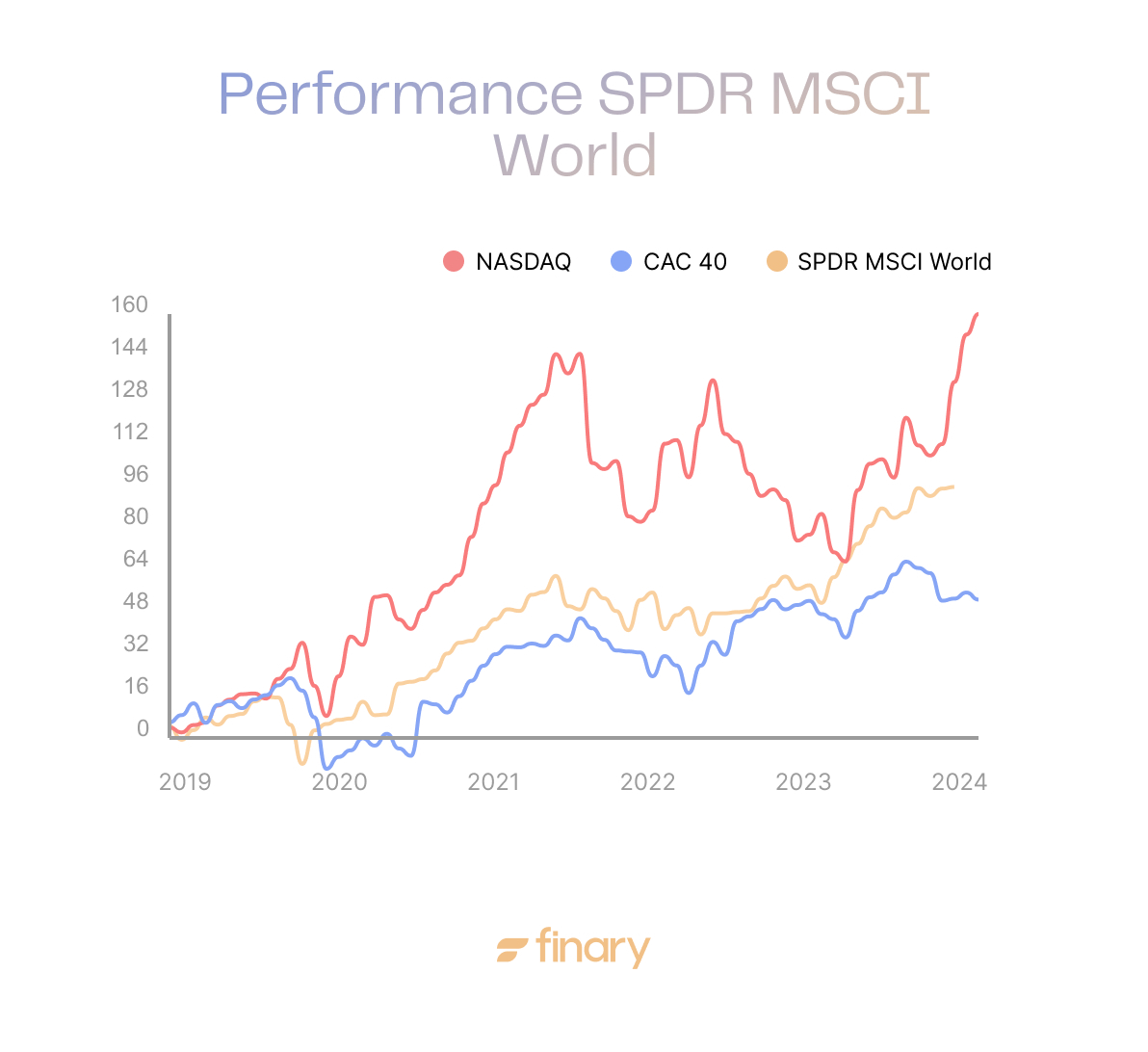
Its balanced mix of the United States, Europe and Asia-Pacific ensures effective geographic diversification.
US equity ETFs
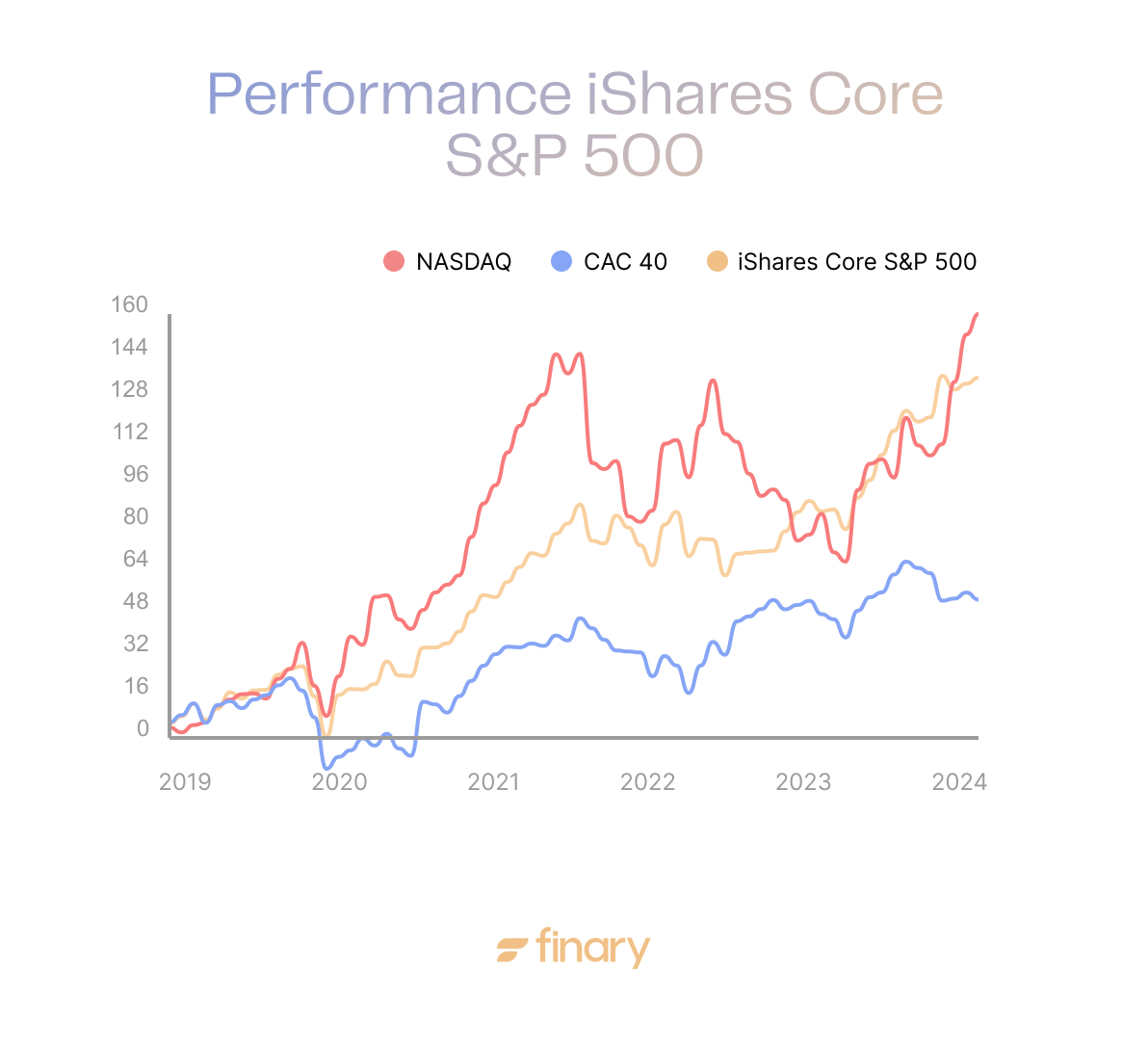
iShares Core S&P 500: This ETF stands out for its extremely low fee of 0.07% and its faithful tracking of the S&P 500 index. With a historical annualised return of around 10.9% over 30 years with dividends reinvested, as of end of July 2026 (source: S&P Dow Jones Indices). Past performance does not predict future performance; it remains a solid core holding for exposure to large US companies within your Luxembourg life insurance policy.
Amundi Nasdaq-100 UCITS ETF (formerly Lyxor Nasdaq-100, now part of the Amundi ETF range): For investors drawn to the tech sector, this ETF offers exposure to the 100 largest non-financial companies listed on the Nasdaq. With an annualised return of around 14% since the Nasdaq-100 index launched in 1985 (source: Nasdaq, Inc., as of end of 2025), it can add significant growth potential to your portfolio, though with higher volatility.
European equity ETFs
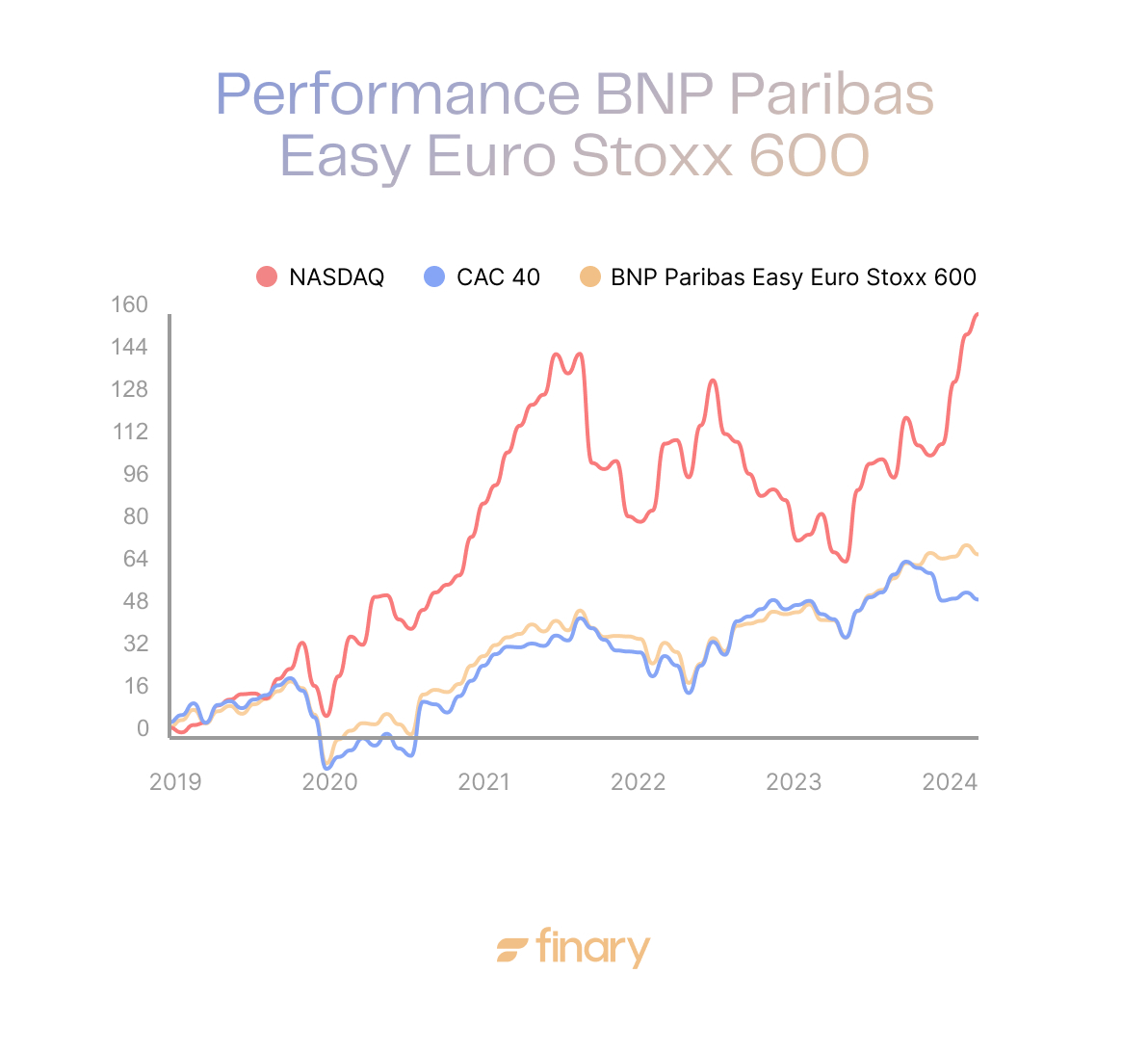
BNP Paribas Easy STOXX Europe 600: This ETF covers 600 companies across 17 European countries. With a historical annualised return of around 7.3% with dividends reinvested, as of end of 2025 (source: STOXX). Past performance does not predict future performance. It lets you diversify your portfolio geographically and benefit from European growth.
Emerging markets ETFs
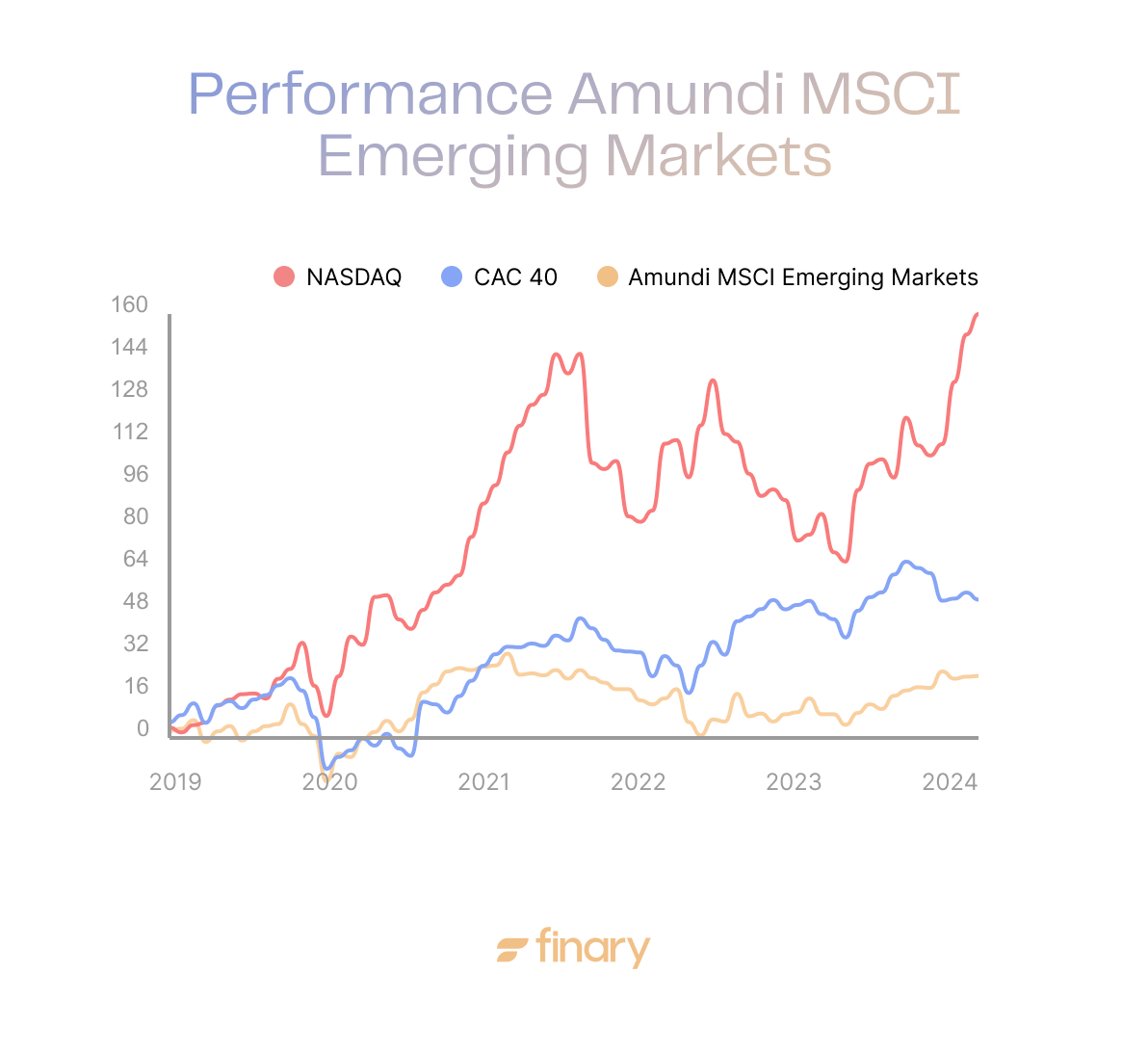
Amundi MSCI Emerging Markets: This ETF is eligible for both the PEA (a French tax-advantaged equity savings account) and life insurance, with a historical annualised return of around 5% since the index launched in 2001, as of end of May 2026 (source: MSCI, past performance not guaranteed). It exposes your portfolio to developing economies, adding long-term growth potential and greater geographic diversification to your Luxembourg life insurance policy.
Bond ETFs
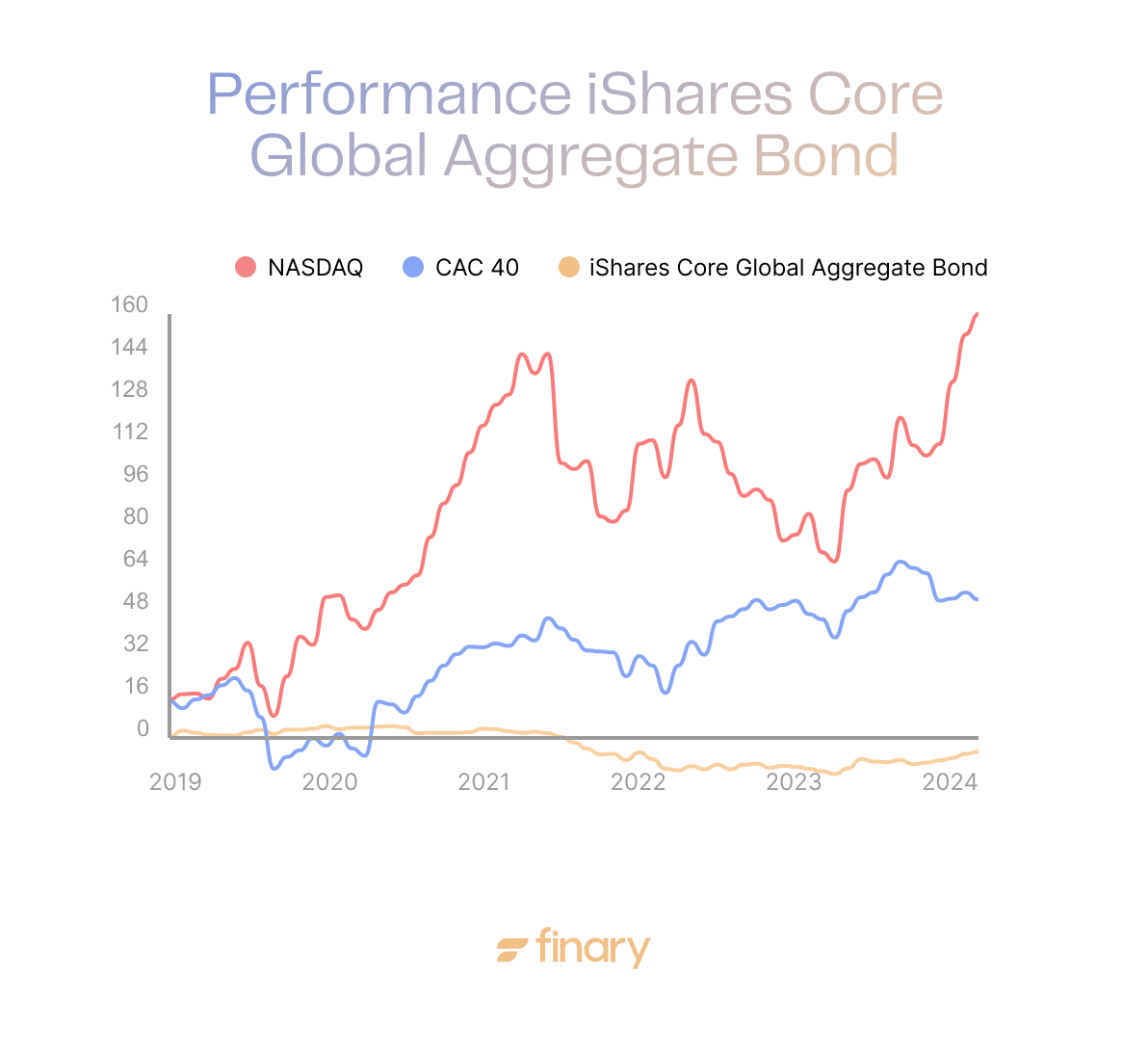
iShares Core Global Aggregate Bond EUR Hedged: With a management fee of 0.10%, this ETF offers diversified exposure to global bonds. It hedges currency risk for euro-based investors.
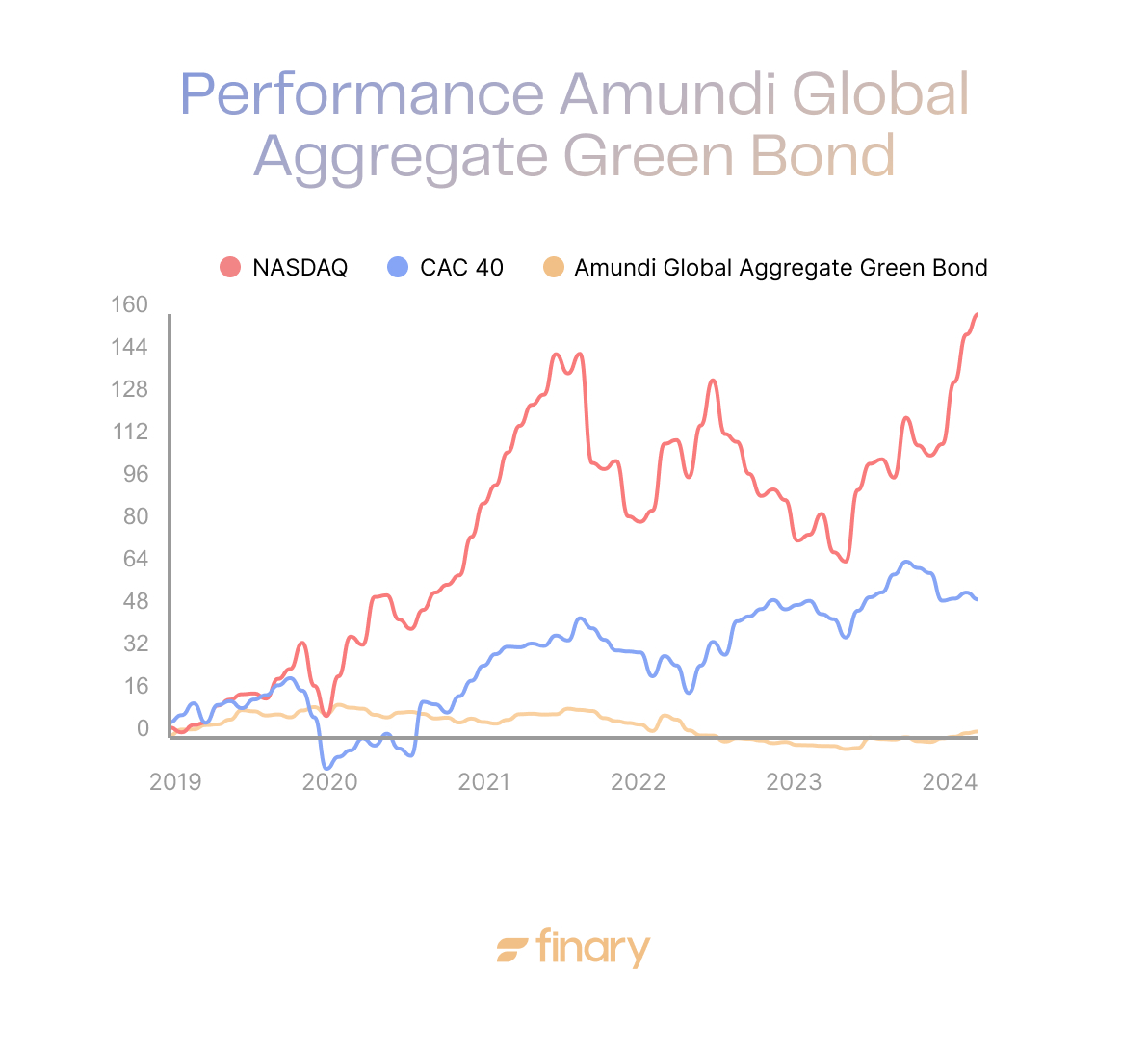
Amundi Global Aggregate Green Bond EUR Hedged: For environmentally conscious investors, this ETF is an interesting option. While its management fee is slightly higher (0.30%), it allows investment in green bonds, combining potential returns with a positive environmental impact.
For more detail, see our complete guide to the best ETFs.
Past performance does not guarantee future results. Selecting ETFs for your Luxembourg life insurance policy should align with your risk profile, investment goals and time horizon.
ETFs in Luxembourg life insurance with Finary One
Finary One supports investors with €1,000,000 or more in investable assets in choosing and structuring their Luxembourg policy according to their wealth profile.
- Informed selection among 10 Luxembourg insurers (Lombard International, Wealins, Sogelife, Cardif Lux Vie, and others), with access to dedicated internal funds (FID) from €500,000 in assets.
- A dedicated wealth advisor who structures the policy to fit your overall wealth and goals.
- Negotiation of fees and banking margins thanks to the volume Finary One processes with its Luxembourg partners.
Learn more about Finary One → Reserved for investors with €1,000,000 or more in investable assets. Investing carries risks, including capital loss.
What allocation strategies work with ETFs in Luxembourg life insurance?
In Luxembourg life insurance, ETF strategies range from diversified buy-and-hold allocation to tactically adjusting equity/bond exposure across market cycles, relying on ETFs' daily liquidity and low fees.
ETFs versus traditional funds
The SPIVA study provides revealing data on ETF performance versus actively managed funds. Over the long term, most active funds struggle to beat their benchmark indices. This trend strengthens over time, underlining how effectively ETFs capture market performance.
According to the SPIVA U.S. Scorecard (mid-2025 edition, the latest available), 94.79% of active funds underperformed the S&P 500 over a 20-year period, a figure that rises to 97.65% for large-cap growth funds against the S&P 500 Growth index.
These statistics show how hard it is for active managers to consistently beat the market over the long term.
How fees affect returns
One of the major advantages of ETFs lies in their low fees, which have a significant impact on long-term performance. Take a concrete example: a €100,000 investment over 20 years, with a hypothetical annual return of 7%.
With an ETF charging management fees of 0.20%, typical of many products, the theoretical capital would reach around €372,700 (hypothetical example, performance not guaranteed). By contrast, an actively managed fund with fees of 2% would generate around €265,330 (hypothetical, educational example, excluding taxation). This difference of more than €80,000 shows how crucial fees are to long-term performance.
Asset allocation strategies with ETFs
Luxembourg life insurance makes it possible to build diversified portfolios by combining different ETFs. Purely for illustration, with no personalised advice intended, an allocation could look like this (this does not constitute a recommendation):
- A US equity sleeve (e.g. S&P 500)
- A European equity sleeve (e.g. Euro Stoxx 600)
- A Japanese equity sleeve (e.g. TOPIX)
- An emerging markets sleeve (e.g. MSCI EM)
Illustrative, educational example. Does not constitute personalised advice. Any allocation should be defined according to your risk profile, time horizon and goals.
This allocation offers geographic diversification while maintaining balanced exposure to the world's major economies. Using ETFs makes it possible to implement this strategy efficiently and at low cost within your Luxembourg life insurance policy.
Dynamic portfolio adjustment
The liquidity of ETFs makes it possible to adjust your asset allocation as markets evolve and your goals change. For example, during periods of high volatility, some investors adjust their bond exposure to manage their portfolio's overall risk.
Conversely, during economic recoveries, overweighting equity ETFs is sometimes considered, with no guarantee of performance.
This flexibility, combined with the favourable structure of Luxembourg life insurance, makes it possible to adjust your allocation over time, responding to market opportunities and risks.
Can traditional funds outperform ETFs in Luxembourg life insurance?
Yes, in certain less efficient segments such as small caps or emerging markets, active funds can consistently outperform their benchmark index, and Luxembourg life insurance also provides access to unlisted private equity, out of reach for standard ETFs. This nuance matters in the context of Luxembourg life insurance, which allows you to combine both ETFs and active funds.
Where traditional funds outperform ETFs
In certain less efficient market segments, particularly emerging markets or small caps, active managers can exploit inefficiencies to generate outperformance.
For example, in the French small-cap market, some active funds have shown a consistent ability to beat their benchmark index.
Luxembourg life insurance offers a unique opportunity to invest in private equity, an asset class generally reserved for institutional investors. This flexibility gives individuals access to unlisted investments with strong growth potential.
Luxembourg policies can include diversified private equity funds, offering exposure to different sectors and stages of company development.
Funds' ability to adapt quickly
Active funds stand out for their ability to navigate complex market environments.
This performance comes from the manager's ability to dynamically adjust the portfolio's allocation based on market conditions, a flexibility that ETFs, being more static by nature, cannot offer.
Optimal allocation strategy
Within Luxembourg life insurance, a balanced approach combining ETFs and active funds can make sense. A typical allocation could look like this:
- An ETF sleeve for large caps in developed markets.
- An active-fund sleeve for niche markets.
- A bond sleeve for risk management.
Illustrative example, not prescriptive. The optimal allocation depends on each individual profile and should be set with an authorised adviser.
This allocation captures the benefits of ETFs (low costs, diversification) while tapping into the outperformance potential of active funds in specific segments.
Integrating ETFs into Luxembourg life insurance offers unique opportunities for diversification and cost optimisation. That said, an approach combining ETFs and active funds can bring together the strengths of each instrument.
Frequently asked questions
What is the minimum investment to hold ETFs in Luxembourg life insurance?
An overall minimum investment is generally required, most often between €125,000 and €250,000 depending on the insurer. This threshold positions this architecture as a solution for affluent or high-net-worth clients.
Can you hold any ETF in a Luxembourg policy?
Luxembourg lets you invest in almost any ETF with an ISIN code, unlike France, where the range of ETFs available in life insurance remains limited. Above €500,000 in assets, Dedicated Internal Funds (FID) also make it possible to include non-UCITS US ETFs.
Are ETFs in Luxembourg life insurance subject to the Sapin 2 law?
No. Luxembourg life insurance does not fall within the scope of Article 49 of the French "Sapin 2" law, which only applies to policies governed by French law. Unit-linked funds, including ETFs, nonetheless remain subject to market risk.
What fees should you compare between an ETF and an active fund in Luxembourg life insurance?
ETFs typically carry management fees of 0.03% to 0.5% a year, versus around 2% for many actively managed funds. Over the long term, this fee gap has a significant impact on the final capital, for the same gross return.
Sources
S&P Dow Jones Indices, SPIVA Europe study
impots.gouv.fr (French tax authority), how life insurance policies are taxed upon full withdrawal
Commissariat aux Assurances (CAA), Luxembourg's insurance regulator
JustETF, Vanguard FTSE All-World UCITS ETF factsheet
JustETF, SPDR MSCI World UCITS ETF factsheet
JustETF, iShares Core S&P 500 UCITS ETF factsheet
JustETF, BNP Paribas Easy STOXX Europe 600 UCITS ETF factsheet
JustETF, Amundi MSCI Emerging Markets UCITS ETF factsheet
JustETF, iShares Core Global Aggregate Bond UCITS ETF EUR Hedged factsheet
JustETF, Amundi Global Aggregate Green Bond UCITS ETF EUR Hedged factsheet
Regulatory disclaimers: Marketing communication. Investing carries a risk of partial or total capital loss. Past performance is not a reliable indicator of future performance. This article is provided for information and educational purposes only; it does not constitute personalised investment advice, a buy or sell recommendation, or tax advice. The capital guarantee on euro funds is provided by the insurer and depends on its financial strength. In a severe systemic crisis, the French "Sapin 2" law allows withdrawals to be temporarily restricted (liquidity), without affecting the guaranteed capital. Unit-linked funds are not guaranteed and carry a risk of capital loss. Before investing, read the Key Information Document (KID) and, where relevant, consult an authorised adviser. Finary SAS, an investment firm authorised by the ACPR (no. 19283), member of AMAFI. Insurance broker registered with ORIAS (no. 21001279), member of the CNCGP (association approved by the AMF). Crypto-Asset Service Provider (CASP) authorised by the AMF under the MiCA regime, references no. A2026-026 and no. N2026-008.