Lombard Loan in France: Which Assets Are Eligible as Collateral?

In France, a Lombard loan lets you obtain financing secured by a securities portfolio, without selling your assets, subject to conditions that vary by institution.
This is already a reality for holders of a large enough securities portfolio, thanks to the Lombard loan. Under certain conditions, crypto-assets such as Bitcoin and Ethereum can be pledged as collateral, just like your Total shares or your French government bonds.
Understanding the Lombard loan and how it works
A vault full of securities, bonds, equities or life insurance often sits as a simple store of value. It is usually only opened in an urgent need or for a major project.
The Lombard loan offers another option: putting that wealth to work without selling it, in exchange for a pledge (leverage carries a risk of amplified losses). It is like having access to an engine's power without emptying the tank.
The principle is simple. You deposit your financial assets with a bank or a specialised institution. In exchange, you receive a credit line whose amount depends on the nature, quality and liquidity of your assets. You keep collecting the income generated by your investments while having immediate cash available to fund a project, invest elsewhere or seize an opportunity.
Eligible assets as collateral for a Lombard loan
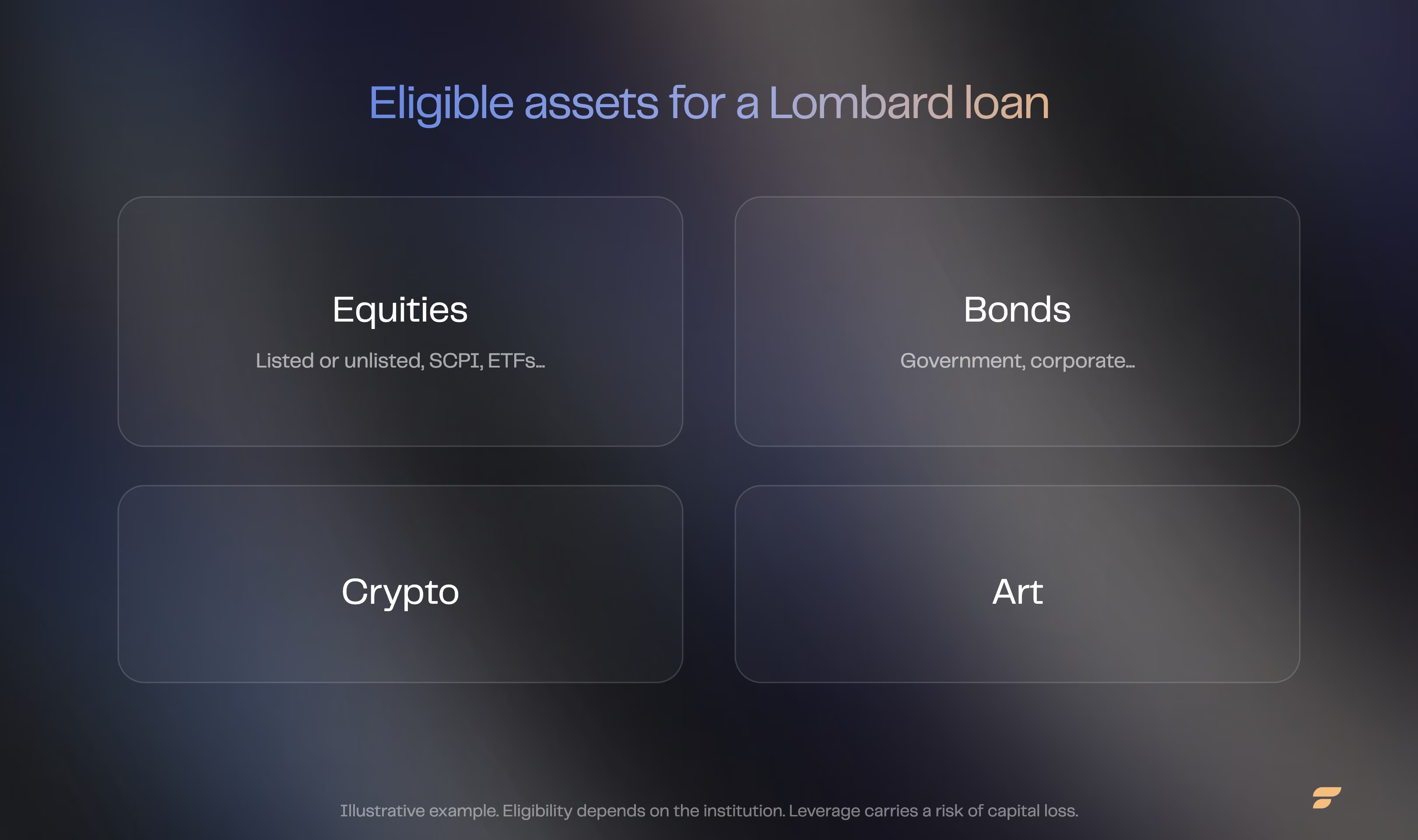
Equities and bonds, the traditional pillars of collateral
With a Lombard loan, equities and bonds are among the assets most commonly accepted as collateral. Banks, whether Swiss or French, first assess the liquidity and stability of these securities.
Shares in large market caps, listed on Euronext or the NYSE, are especially sought after. Their high trading volume allows a quick sale without disrupting the market.
Bonds appeal for their predictability. A German or French government bond, for example, offers stable pricing with little volatility.
Banks apply different financing ratios depending on the asset:
- A CAC 40 stock lets you borrow up to around 80% of its value.
- A lower-rated corporate bond caps out at 50%.
These differences do not depend on yield alone. Volatility, market depth and the issuer's credit rating all play a key role.
ETFs replicate entire indices and are gaining popularity thanks to their diversification. Some institutions, however, remain cautious with thematic or exotic ETFs.
Life insurance and capitalization contracts: stability and favourable taxation
Life insurance is a cornerstone of French wealth planning, valued for its stability. A well-managed multi-asset policy delivers steady growth and favourable taxation.
For the borrower, this makes it possible to put savings to work without losing the tax benefits. The policy stays active, the tax treatment remains attractive, and liquidity is immediate if needed.
Capitalization contracts, often overlooked, add extra flexibility. They appeal particularly to non-residents or those looking to optimise the transfer of their wealth.
Some institutions, such as Swiss Life, accept these contracts as collateral, provided they are well structured and diversified. Transparency on the underlying holdings and the ability to value the contract quickly in the event of a margin call are essential.
Securities accounts and the PEA: flexibility and tax benefits
The securities account offers great freedom: equities, bonds, funds, ETFs, anything goes. Banks value this flexibility but keep an eye on the portfolio's composition.
Unlisted securities or positions held under the SRD (France's deferred-settlement trading service) are often excluded, seen as too risky or illiquid.
The PEA (a French tax-advantaged equity savings account) combines lighter taxation with the ability to pledge the securities inside it without affecting the wrapper. The PEA-PME, however, is generally excluded, as small-cap volatility runs too high.
One important point concerns profiled management. Some automatically managed contracts or wrappers are excluded from collateral. Banks need to be able to value the assets precisely, without relying on opaque management.
Cryptocurrencies, a new asset class for the Lombard loan

Since May 2025, France has legalised pledging cryptocurrencies as collateral. This shift turns an experiment into a credible option for sophisticated investors.
Only the most liquid, established cryptocurrencies, such as Bitcoin, Ethereum or Solana, are accepted. Banks apply conservative financing ratios, around 60% at most.
Volatility remains a major point of caution.
Access to this type of credit remains demanding: it typically requires a crypto portfolio worth several hundred thousand euros.
This market, still reserved for a sophisticated clientele, could become more widely accessible as regulation evolves.
Alternative assets: private equity, SCPI and artworks

Some innovative banks now accept as collateral assets that used to be excluded.
Private equity appeals to entrepreneurs and wealthy families. Units in unlisted funds or start-up shares are conceivable, but with very conservative financing ratios.
SCPI (a French non-listed real-estate investment fund, comparable to a REIT) represent an interesting alternative. Their periodic valuation and professional management are reassuring, but their limited liquidity means modest financing ratios.
Finally, artworks are a sophisticated form of collateral. A few private banks, such as Société Générale Private Banking, accept paintings or sculptures as pledges.

How banks decide which assets to accept
Liquidity and volatility: key factors in the assessment
Liquidity plays a crucial role in granting a Lombard loan. Banks assess not only an asset's value but also how quickly it can be turned into cash without disrupting the market.
A portfolio of CAC 40 stocks or French government bonds, for example, sells easily even in turbulent times. By contrast, shares in small caps listed on Euronext Growth or SCPI units can take weeks, even months, to sell, with an uncertain final price.
Volatility acts as a safety filter. Banks study the history of price movements to anticipate swings that could affect the value of the collateral. An S&P 500 ETF inspires confidence, as it experiences fewer extreme swings than a basket of exotic cryptocurrencies.
The more volatile an asset, the more conservative its loan-to-value (LTV) ratio becomes. The bank's goal is to be able to liquidate the collateral without taking a loss.
In credit committees, these criteria rely on internal models that are often confidential. Some institutions, for example, impose a high cover ratio on portfolios (check with each bank).
Ratings and asset quality: what banks expect
Assessing assets goes beyond the simple “equity” or “bond” category. Private banks rely on external ratings (Moody's, S&P, Fitch) as well as their own internal evaluations.
A government bond rated AAA, for example, does not carry the same weight as a corporate bond rated BBB-, even if the yield differs.
Portfolio diversification plays a decisive role. A set of equities spread across several sectors and regions is more reassuring than a concentrated portfolio, even one with a higher value.
Some banks grant an LTV bonus for well-diversified portfolios, since they reduce the risk of a sudden drop.
“Premium” assets benefit from more favourable terms. These notably include:
- Large-cap stocks
- Sovereign bonds
- Labelled funds
Conversely, unlisted securities, complex structured products or recent cryptocurrencies undergo rigorous scrutiny and are often excluded.
Quality is not limited to past performance. It also covers transparency, governance, income regularity and the strength of the underlying market.
Restrictions and exclusions: ineligible assets
The Lombard loan does not accept every asset. Certain categories remain systematically excluded, whatever their value.
These exclusions include:
- Securities held under the SRD, seen as too speculative and unpredictable
- PEA-PME holdings, rarely accepted due to the high volatility of small caps
- Life insurance policies under profiled management
- Unlisted securities without an independent valuation
- Units in exotic funds
Even artworks, sometimes accepted by specialist private banks, undergo a rigorous assessment. This assessment covers:
- Independent appraisal
- Insurance
- Provenance history
Their low liquidity and the subjectivity of their value limit their use in practice.
Cryptocurrencies, now eligible in France, are not accepted unconditionally. Only the most liquid, established digital assets are considered, with conservative financing ratios.
Lesser-known altcoins and NFTs remain excluded.
Each bank adjusts its acceptance criteria and exclusion list according to its risk appetite, expertise and client profile. What one accepts, another may refuse. These criteria evolve with financial innovation and market conditions.
Optimising how you pledge your assets as collateral
Diversifying collateral to reduce risk
Relying on a single type of asset can seem simple, especially when you know your portfolio well. Yet diversifying your collateral can reduce exposure to sector-specific swings.
An investor who pledges only technology stocks, for example, is exposed to a sector correction. This can cause the value of their collateral to drop quickly and trigger an immediate margin call.
Spreading collateral across equities, bonds, life insurance and SCPI limits these shocks. Banks value this approach. A diversified portfolio often secures a higher financing ratio, since overall risk is lower.
Depending on the case, this approach can improve the amount you can borrow, though results are not guaranteed.
Calculating the loan-to-value (LTV) ratio to maximise financing
The loan-to-value (LTV) ratio determines the power of a Lombard loan. Experienced investors do not simply accept the ratio the bank first offers. The ratio can be negotiated with the institution, depending on how the portfolio is composed.
A portfolio made up mostly of government bonds and large-cap equities gets a higher LTV than a basket of emerging-market ETFs or cryptocurrencies.
Banks apply different safety coefficients depending on the asset:
- AAA-rated bonds: 80%
- Blue-chip equities: 60%
- Diversified funds: 50%
- Alternative assets: sometimes below 30%
Some borrowers adjust their portfolio's composition before applying, taking their personal and tax situation into account.
This preparation can influence the terms on offer.
| Asset type | Typical LTV ratio | Points to watch |
|---|---|---|
| AAA government bonds | 70-80% | Interest-rate sensitivity |
| Large-cap equities | 60-70% | Volatility, sector risk |
| Diversified funds (UCITS) | 50-60% | Actual diversification of the fund |
| SCPI | 30-50% | Limited liquidity, valuation |
| Cryptocurrencies | 30-60% | Extreme volatility, high thresholds |
Setting up hedging strategies to limit margin calls
The margin call is a major risk of the Lombard loan. At any point, the bank can ask for additional collateral if the value of the assets drops.
To anticipate this risk, some borrowers use hedging instruments, which carry their own specific risks. They set automatic stop orders on their portfolios or use hedging options, such as equity puts or interest-rate swaps on bonds, to protect the value of their collateral.
It is common to negotiate custom alert thresholds or extra safety margins with the bank, even if that ties up more assets.
The key is to anticipate stress scenarios, simulate market downturns and keep cash that can be mobilised quickly.
The most advanced investors use wealth stress-testing tools. These tools factor in the correlation between assets to visualise the domino effect of a crisis. This active risk management goes beyond simple caution.
Using real-time monitoring tools to track the value of your collateral
Managing a Lombard loan without visibility is inefficient today.
Some add custom alerts and dynamic dashboards, and connect their banking and market data feeds.
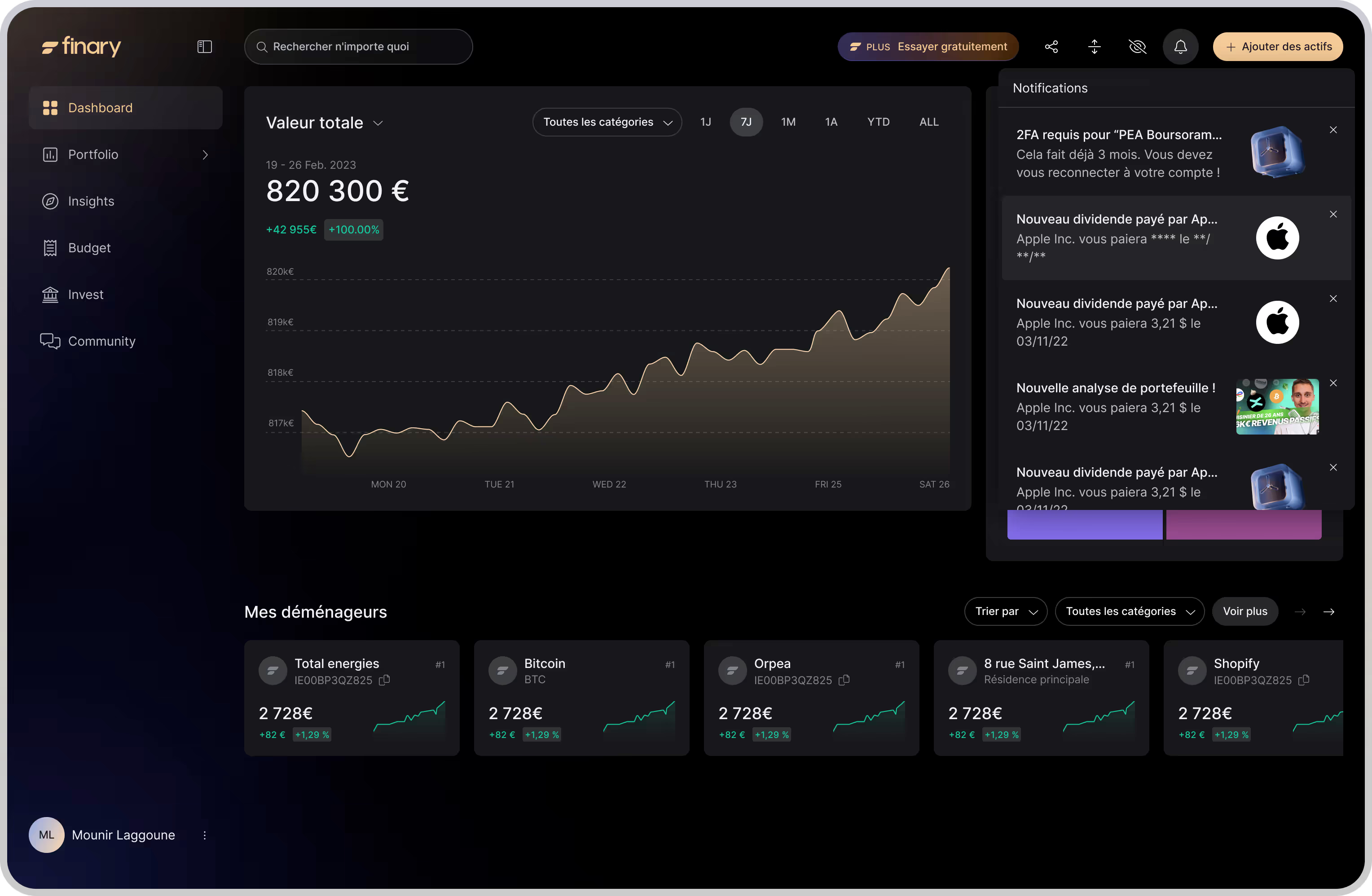
This transparency makes it easier to adjust collateral at any time. It allows you to switch between assets or inject cash before a margin call.
The most tech-savvy investors automate certain actions, such as transferring assets, partial sales or hedging through conditional orders.
This real-time monitoring turns the Lombard loan into an agile wealth management tool, far from the static image of a loan backed by a fixed portfolio.
Technology becomes a natural extension of your wealth strategy, in the service of performance and peace of mind.
The future of the Lombard loan: towards more personalised collateral
The landscape of Lombard loan collateral assets is changing fast, moving from traditional securities to cryptocurrencies. This gives investors an unprecedented range of financing solutions.
This diversification widens the range of assets that can be pledged. Understanding the monitoring and hedging mechanisms remains essential, given the risks involved (margin call, forced liquidation, capital loss).

Regulatory disclaimers:
Marketing communication. Investing carries a risk of partial or total capital loss. Past performance is not a reliable indicator of future performance. This article is provided for information and educational purposes only; it does not constitute personalised investment advice, a buy or sell recommendation, or tax advice.
Borrowing amplifies losses as well as gains and can result in a loss greater than the capital invested (you remain liable for the loan). Complex, high-risk product.
Before investing, read the Key Information Document (KID) and, where relevant, consult an authorised adviser.
Finary SAS, an investment firm authorised by the ACPR (no. 19283), member of AMAFI. Insurance broker registered with ORIAS (no. 21001279), member of the CNCGP (association approved by the AMF). Crypto-Asset Service Provider (CASP) authorised by the AMF under the MiCA regime, references no. A2026-026 and no. N2026-008.